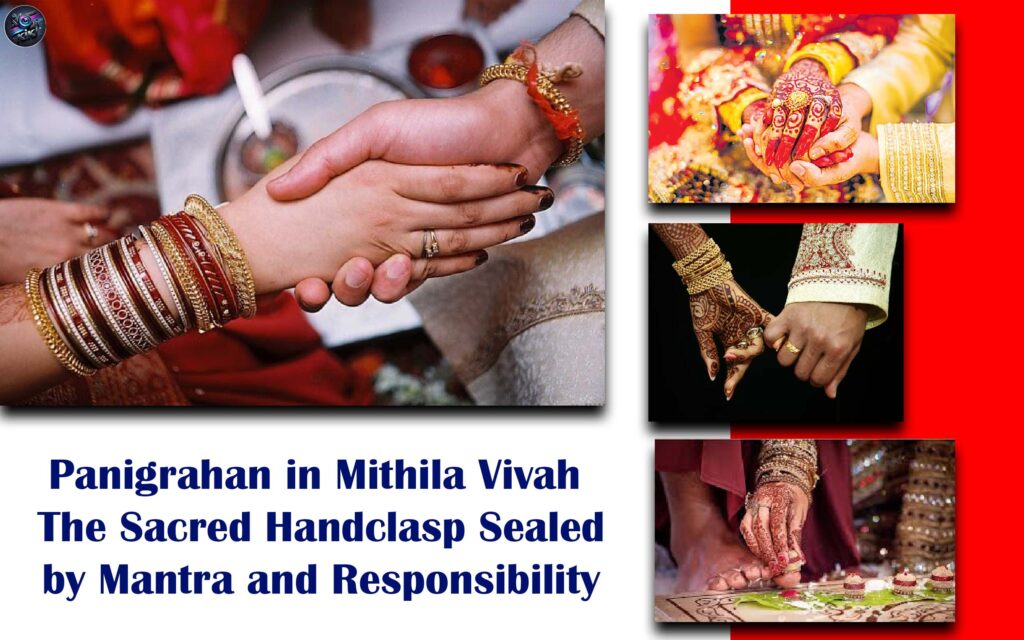
In the sacred ritual order of Mithila Vivah, Panigrahan is one of the most spiritually charged moments. It is here that marriage moves beyond arrangement and emotion into conscious responsibility. When the groom gently holds the bride’s hand before the sacred fire, he does so under the authority of Vedic mantras—making his promise moral, social, and lifelong.
In Maithil tradition, Panigrahan is the moment when duty becomes visible.
The Cultural Meaning of Panigrahan
The Sanskrit term Panigrahan means “acceptance of the hand.” In Mithila, this acceptance signifies
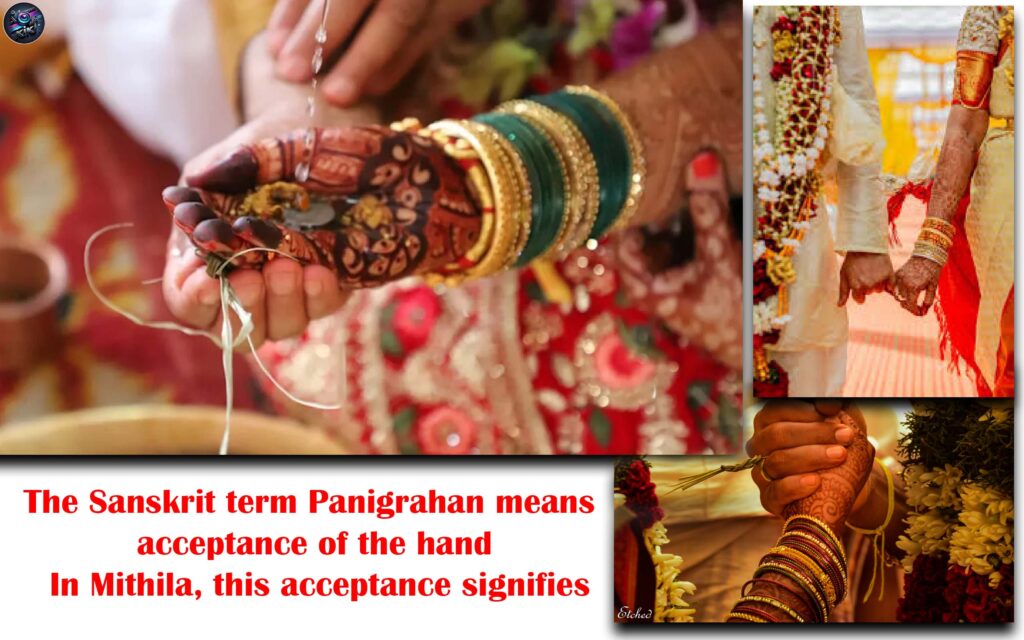
- Willing assumption of lifelong responsibility
- Recognition of the bride as an equal life partner (Sahadharmini)
- Commitment to shared decision-making and protection
- Elders often say that while Kanyadaan offers trust, Panigrahan accepts accountability.
- Primary Panigrahan Mantra (Acceptance of the Hand)
As the groom holds the bride’s right hand, the priest guides him to recite the central Panigrahan mantra:
पाणिं गृह्णामि सौभगत्वाय हस्तं
मया पत्या जरदष्टिर्भव।
भगो अर्यमाऽस्मान् सविता पुरन्धिः
मह्यं त्वादुर्गार्हपत्याय देवाः॥
Pandit’s Explanation
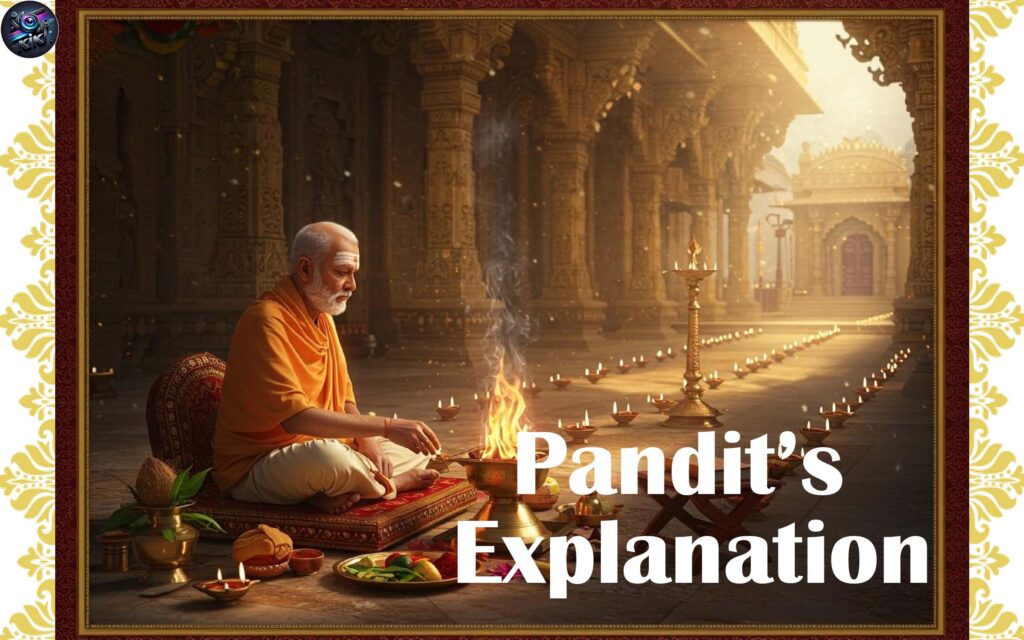
“I take your hand so that we may walk together toward prosperity and well-being. May we remain companions until old age. May divine forces bless our household life.”
This mantra is significant because:
- The groom explicitly speaks of companionship through old age
- The vow is made before Agni and divine witnesses
- The bride is not claimed—she is accepted as a partner
- Mantra of Strength and Shared Path
- Immediately following, another mantra emphasizes unity and direction:
इमां त्वमिन्द्र मीढ्वः सुपुत्रां
सुभगां कृणु।
दसस्याम् अस्मै।
Explanation
“May this union be strengthened with virtue, strength, and good fortune. May this household flourish.”
Pandits explain that this mantra establishes the shared life path, not dominance of one over the other.
How Panigrahan Is Performed in Mithila
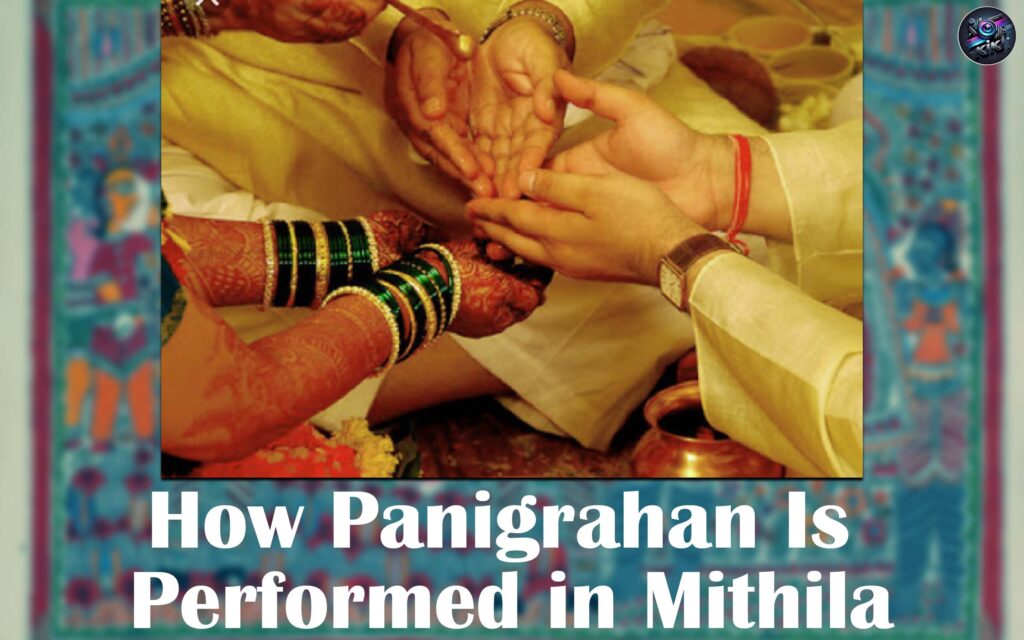
Panigrahan is conducted:
- In front of the sacred fire (Agni)
- With precise mantra pronunciation
- Under the supervision of elders and priests
The groom holds the bride’s hand firmly yet gently—symbolizing care without control.
Agni acts as Sākṣī (eternal witness), reminding the couple that vows spoken here are remembered beyond human memory.
Essential Elements of the Panigrahan Ritual
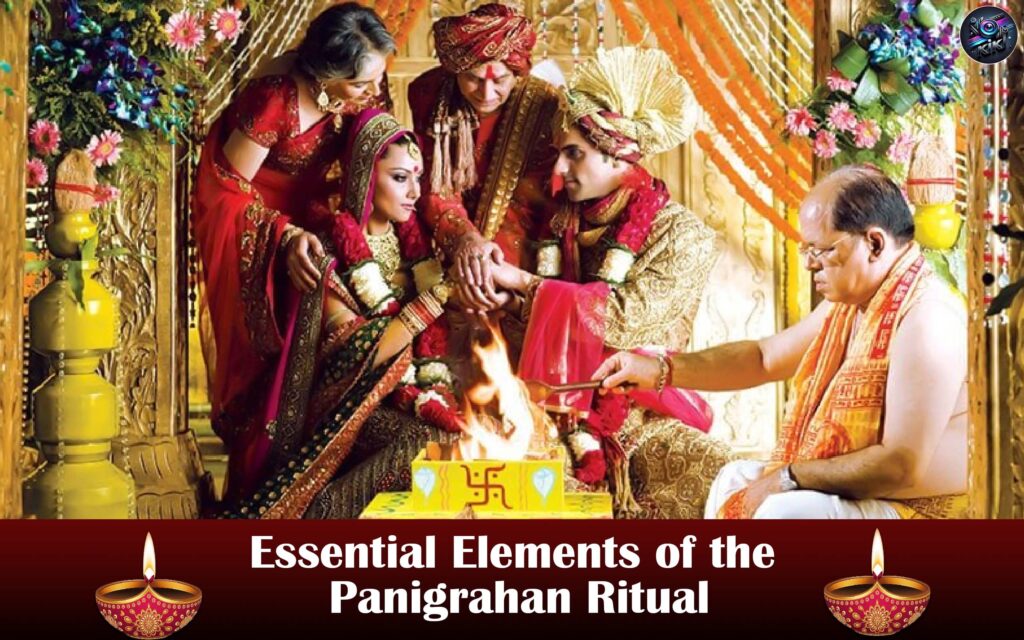
- Sacred Fire (Agni): Represents truth, continuity, and accountability.
- Vedic Mantras: Transform emotion into ethical duty.
- Handclasp (Hasta-Grahana): Symbolizes acceptance of responsibility, not ownership.
- Elders’ Blessings: Ensure cultural continuity and moral seriousness.
Panigrahan in the Sequence of Mithila Vivah
Mithila Vivah follows a precise ethical structure
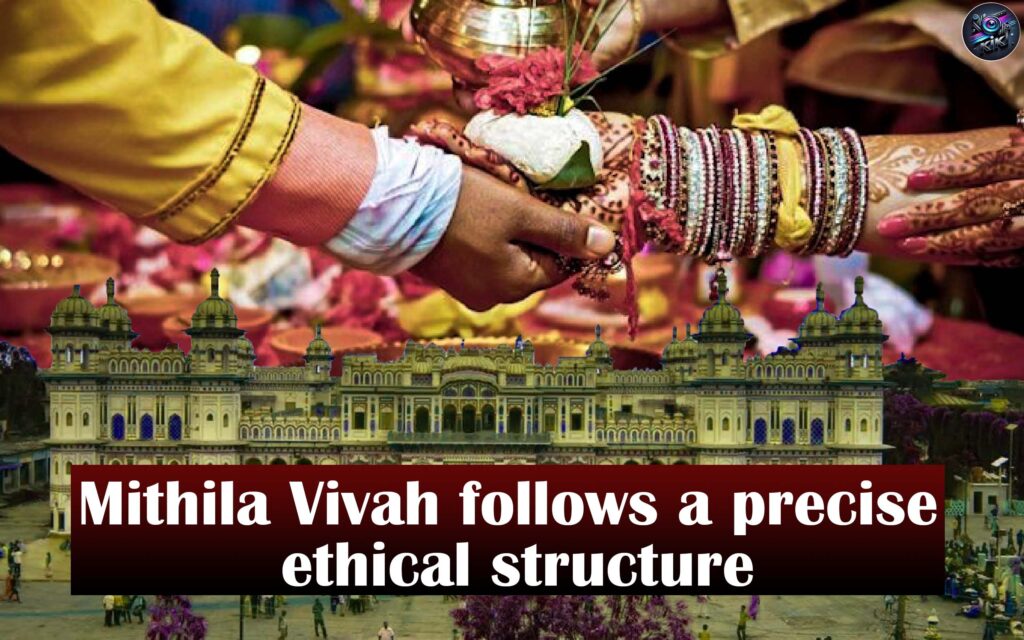
- Tilak → Respect
- Public acceptance and honor of the groom:- Kanyadaan → Trust
- Parental entrustment with blessings:- Panigrahan → Responsibility
- Personal acceptance of duty by the groom:- Saptapadi → Promise
- Expansion of responsibility into seven lifelong vows.
- Pandits emphasize that Panigrahan is the bridge between trust and promise.
- Modern Relevance: Partnership, Not Hierarchy
For modern couples—especially those connecting through platforms like mithila-vivah.in—Panigrahan resonates deeply as a ritual of equality and shared life vision.
It reinforces:

- Mutual respect
- Shared household and financial responsibility
- Emotional support and communication
- Personal and professional encouragement
- Panigrahan makes partnership public, sacred, and accountable.
- Preparing Emotionally for Panigrahan
Priests often advise couples to internalize the ritual through conversation:
- Roles and expectations within families
- Financial planning and transparency
- Career and lifestyle alignment
- Long-term responsibilities
When these discussions exist, Panigrahan becomes lived practice, not symbolic formality.
The Role of Elders and Pandits
- Elders and Pandits ensure
- Correct mantra recitation
Preservation of Mithila’s ritual nuance - Ethical seriousness of the vow
Their presence reminds the couple that marriage is not private alone—it is socially and morally anchored.
Panigrahan: Where Love Accepts Duty
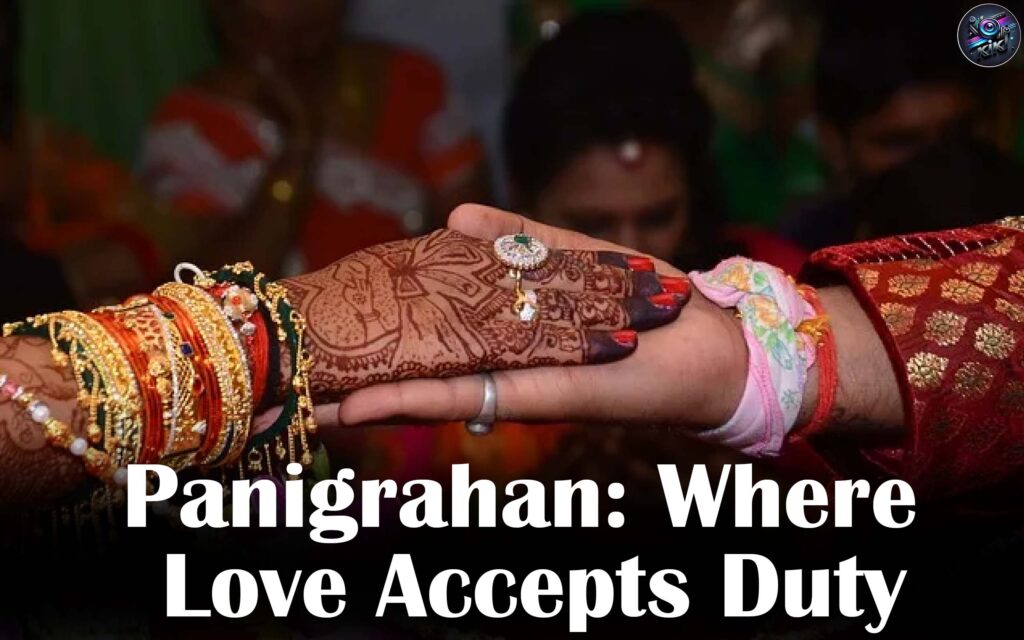
Before the seven steps of Saptapadi are taken, Panigrahan quietly defines marriage. It is the moment where love bows to responsibility and commitment is spoken into existence through mantra.
A Mithila Vivah where Panigrahan is understood becomes not just a union—but a lifelong moral promise.