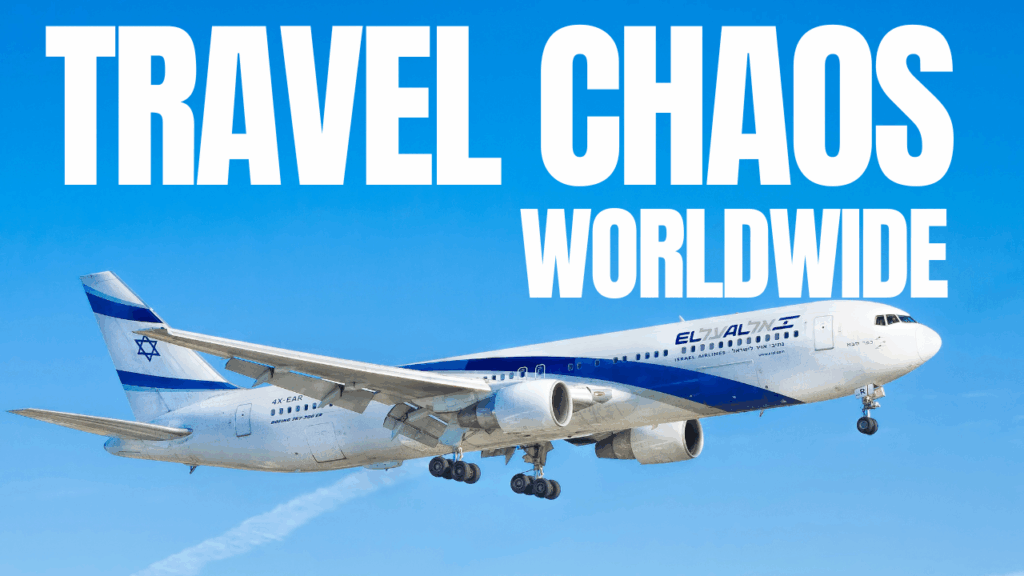
International travel has always been vulnerable to geopolitical tensions, but the current crisis involving Iran is demonstrating just how quickly a regional conflict can disrupt global aviation. With the Middle East acting as one of the most important crossroads for international flights, instability in this region is now affecting travellers across the world. From rising ticket prices and flight cancellations to rerouted journeys and uncertain schedules, millions of travellers are facing unexpected challenges while planning or undertaking international trips.
The Gulf region plays a crucial role in global aviation. Major cities such as Dubai, Doha and Abu Dhabi serve as key transit hubs connecting Asia, Europe, Africa and North America. Airlines have built vast route networks through these hubs, allowing travellers to connect between continents with relatively short stopovers. However, when conflict disrupts this central aviation corridor, the consequences ripple across the entire global travel system.
The current situation has already led to the closure of large portions of Middle Eastern airspace because of the risk of missile and drone attacks. Safety concerns have forced airlines to avoid certain flight corridors, leading to tens of thousands of flight cancellations, reroutings and schedule adjustments. For travellers, this has translated into delayed journeys, missed connections and sudden changes in travel plans. Many passengers have found themselves stranded in transit airports or forced to rebook flights at significantly higher prices.
Even in countries where airspace remains partially open, operations have been severely affected. Airports in Saudi Arabia and the United Arab Emirates continue to function, but the number of flights departing for destinations such as the United Kingdom has been drastically reduced. Airlines are operating cautiously, constantly monitoring the situation and adjusting schedules depending on security developments in the region. This uncertainty means that flights can be changed or cancelled with very little notice.
As a result, airlines have begun advising passengers not to go to the airport unless they have received confirmation that their flight is operating as scheduled. Travellers are being asked to monitor airline websites and official updates carefully before leaving for the airport. For many people planning holidays or business trips, this uncertainty has created significant stress and confusion.
To maintain safety, airlines are now rerouting aircraft to avoid the most sensitive areas of airspace. Instead of flying directly over the Middle East, some flights are being diverted north of Iranian airspace while others take longer southern routes. These detours significantly increase flight distance and travel time. Longer routes also mean higher fuel consumption, which eventually leads to higher ticket prices for passengers.
However, rerouting flights is not as simple as it may sound. Airports around the world operate under strict slot systems that determine when planes can take off and land. Most large international airports already run close to their maximum capacity during peak hours. When airlines attempt to add additional flights or reschedule delayed aircraft, the system quickly becomes congested. Aviation experts point out that airlines cannot simply deploy extra aircraft at short notice because airports must manage runway space, air traffic control capacity and gate availability.
Airspace capacity also plays a crucial role in aviation safety. Air traffic controllers must ensure that aircraft maintain safe distances from each other while approaching or leaving airports. This means there is a strict limit on how many planes can be waiting to land in a particular region at any given time. Even if airlines want to add additional flights to compensate for cancelled ones, the available airspace may not allow it.
Because of these operational constraints, it is unlikely that airlines will be able to fully accommodate all passengers whose flights have been cancelled or delayed. Instead, travellers may face longer waiting times for alternative flights or be forced to change travel dates entirely. Holiday plans that were arranged months in advance can quickly fall apart when flights are disrupted at this scale.
Another major problem is the rising cost of air travel. Longer routes require more fuel, and disruptions in global oil supply routes have already increased aviation fuel prices. When airlines face higher operating costs, they usually pass some of those expenses on to passengers through higher ticket prices. This means travellers booking international flights in the coming months may notice a significant increase in fares, particularly on long-haul routes connecting Asia, Europe and Africa.
For international travellers, the situation highlights how interconnected global aviation has become. A conflict in one region can rapidly spread its effects across the entire network of international flights. When the Middle East — one of the world’s busiest transit corridors — experiences instability, the consequences are felt in airports and travel plans across multiple continents.
The current crisis serves as a powerful reminder that global travel systems are deeply interconnected. When a key aviation corridor faces disruption, the effects can cascade worldwide, turning a regional conflict into a global travel problem for millions of passengers. For now, travellers planning international trips must remain prepared for sudden changes and evolving travel conditions until stability returns to the region.