Explosions in the Gulf, rising tensions, and what it really means for travelers, investors, and expats
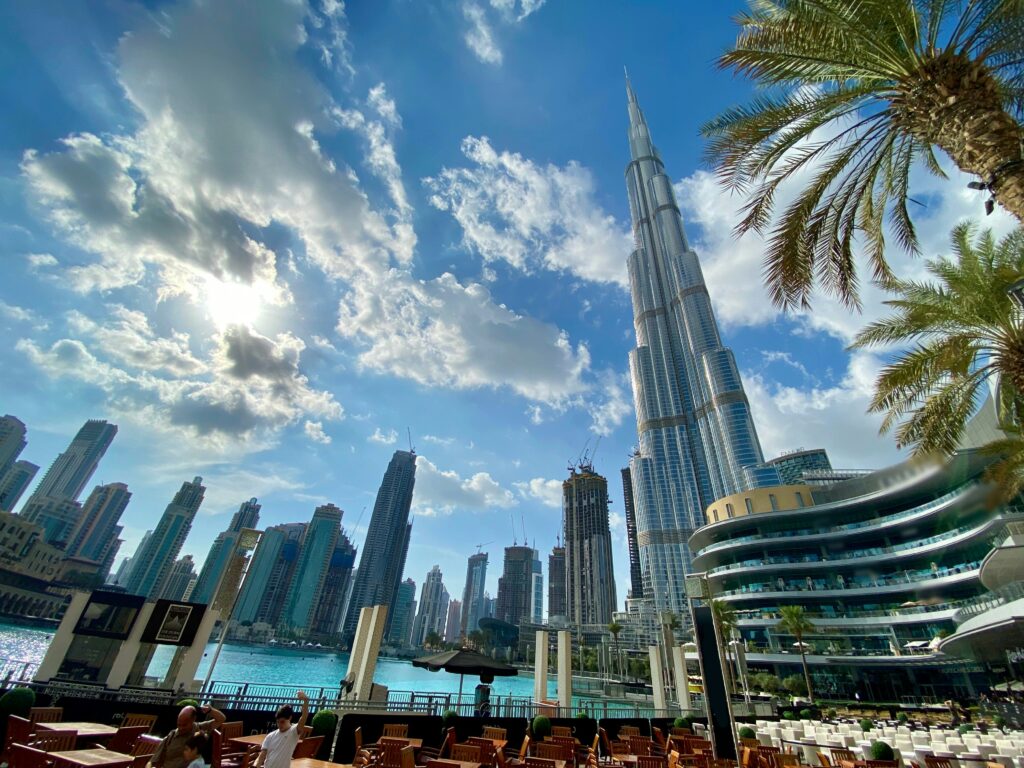
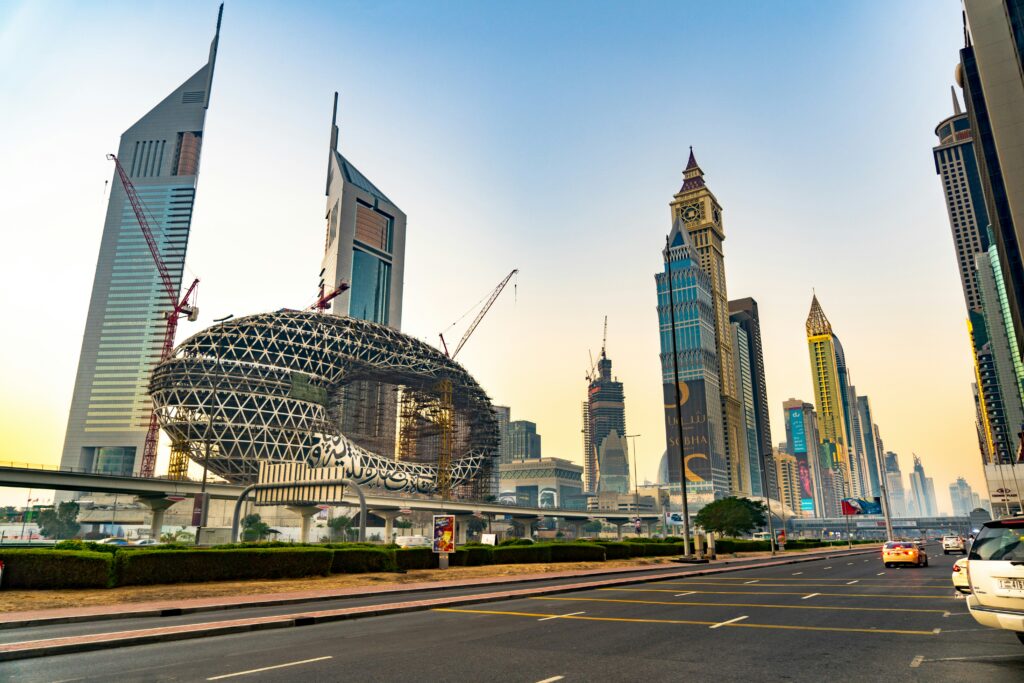
For decades, Dubai has marketed itself — and successfully so — as the Middle East’s safest gateway. A city of glass towers and golden skylines. A place where business thrives regardless of regional politics. A hub where East meets West without friction.
But when explosions are reported across the Gulf, when missile interceptions light up the sky over major cities, when ports and airports become strategic targets, one question begins to echo louder than ever:
Can Dubai’s safe haven status survive a full-scale regional conflict?
Recent developments in the Gulf have shaken the perception of absolute stability. Explosions heard in Dubai, Doha, and Manama. Drone strikes reported near major ports. Missile interceptions visible in the skies. Civilian casualties confirmed in the UAE. US military bases across the Gulf targeted in retaliatory attacks. Regional air defense systems activated. Oil routes threatened.
This is not routine geopolitical tension. This is escalation.
And for a city like Dubai — whose brand is built on calm amid chaos — perception matters as much as protection.
Let’s break it down carefully, analytically, and practically.
Dubai’s Brand: Stability as Strategy
Dubai’s rise was not accidental. It was strategic.
While the broader Middle East faced cycles of conflict — Iraq wars, Syrian civil war, Yemen crisis, Arab Spring uprisings — Dubai positioned itself differently:
- Politically neutral
- Militarily secure
- Economically diversified
- Globally connected
Unlike oil-dependent economies, Dubai invested in:
- Aviation (Emirates Airline)
- Logistics (Jebel Ali Port)
- Finance (DIFC)
- Tourism & luxury real estate
- Global trade corridors
The message was clear:
“Whatever happens around us, business continues here.”
But what happens when conflict is no longer around — but within reach?
The Current Escalation: Why This Is Different
The recent wave of strikes across Gulf states marks a new phase in regional dynamics.
According to official statements:
- Iranian forces launched missiles and drones across multiple Gulf states.
- Missile interceptions were reported over Dubai’s skies.
- Jebel Ali port saw visible smoke after reported impacts.
- Abu Dhabi airport confirmed casualties during an “incident.”
- Doha and Manama reported explosions and air defense activation.
- US bases across the Gulf were targeted.
- Over 200 casualties reported in Iran following retaliatory strikes.
- If sustained, this level of military engagement transforms the Gulf from a “tension zone” into an active conflict corridor.
- And Dubai sits directly inside that corridor.
- The Psychological Shock Factor
- Physical damage is one thing.
- Perception damage is another.
- Dubai’s power lies not just in infrastructure — but in trust.
Investors trust:
- Contracts will be honored.
- Trade routes will remain open.
- Airspace will stay operational.
- Daily life will continue uninterrupted.
Tourists trust:
- Hotels are safe.
- Airports function normally.
The city remains insulated from regional unrest.
Expats trust:
- Stability of employment.
- Predictable governance.
- Secure living conditions.
When missile interceptions become visible in city skies, even if defenses work perfectly, something subtle changes.
Confidence becomes cautious.
And in global finance, caution slows movement.Hotels are safe.
Airports function normally.
The city remains insulated from regional unrest.
Expats trust:
Stability of employment.
Predictable governance.
Secure living conditions.
When missile interceptions become visible in city skies, even if defenses work perfectly, something subtle changes.
Confidence becomes cautious.
And in global finance, caution slows movement.
Aviation: The Lifeline Under Pressure
ubai International Airport is not just an airport. It is:
- The world’s busiest for international passenger traffic.
- The backbone of Emirates Airline’s global network.
- A transit bridge between Asia, Europe, Africa, and North America.
Any strike near airport infrastructure creates immediate ripple effects:
- Insurance premiums surge.
- Airlines reroute.
- Airspace restrictions increase.
- Tourism bookings freeze.
Even temporary closure can cause:
- Billions in losses.
- Global flight disruptions.
- Supply chain complications.
If Gulf airspace becomes militarized for weeks, Dubai’s aviation dominance faces its toughest test yet.
Jebel Ali Port: Global Trade at Risk
Jebel Ali is one of the largest and busiest ports in the Middle East.
It handles:
- Container traffic linking Asia to Europe.
- Re-export trade across Africa.
- Energy shipments and industrial goods.
- A strike on port facilities does more than damage cranes or warehouses.
It affects:
- Global shipping confidence.
- Maritime insurance pricing.
- Trade flows to India, East Africa, and Europe.
- Logistics companies headquartered in Dubai.
If the Strait of Hormuz becomes unstable, shipping through the Gulf slows dramatically.
And that affects not just Dubai — but global inflation.
Oil Shock and the Strait of Hormuz
Around 20–30% of global oil passes through the Strait of Hormuz.
If escalation continues:
- Oil prices could spike beyond $150 per barrel.
- Inflation would hit oil-importing countries hard.
- Asian economies — including India — would feel severe pressure.
For India, which has millions of workers in the Gulf:
- Higher oil prices mean higher inflation at home.
- Slower Gulf economies may reduce hiring.
- Remittance flows could tighten.
Dubai’s economy is diversified — but the broader Gulf slowdown would still impact it.
Expats: The Silent Backbone
The UAE’s population is majority expatriate.
Recent confirmed casualties included Pakistani, Nepalese, and Bangladeshi nationals — highlighting a stark reality:
In conflict scenarios, foreign workers often face disproportionate risk.
If escalation continues:
- Some expats may relocate temporarily.
- Families may avoid travel to the region.
- Skilled professionals could explore alternatives in Singapore or Europe.
However, history shows something interesting:
During previous regional crises — Lebanon collapse, Syrian war, sanctions on Russia — Dubai often absorbed capital and talent rather than losing it.
The key difference now?
This time, the threat is closer.
Military Calculus: UAE’s Defense Advantage
The UAE is not defenseless.
It possesses:
- Advanced missile interception systems.
- US military coordination.
- Strong intelligence networks.
- Rapid response capabilities.
Missile interceptions visible in skies indicate that defense systems are functioning.
Unlike fragile states in past conflicts, the UAE:
- Maintains high fiscal reserves.
- Has strong global alliances.
- Prioritizes stability above all.
If conflict remains short-lived, Dubai could rebound quickly.
But if escalation drags on for months?
Economic endurance will be tested.
Tourism: The Immediate Casualty
Tourism operates on emotion.
Fear reduces bookings faster than infrastructure damage.
If travelers see:
- Footage of smoke near landmarks.
- Airports listed in conflict reports.
- Regional instability headlines.
They postpone trips.
Luxury travel may survive better than mass tourism, but overall arrivals would dip sharply in a prolonged crisis.
Dubai’s global events calendar — expos, business summits, sporting tournaments — depends on uninterrupted normalcy.
Disruption weakens momentum.
The Neutrality Question
Dubai’s diplomatic balancing has been key to its success.
It maintains relations with:
- Western powers.
- Regional neighbors.
- Asian economic giants.
But if regional conflict forces clear alignment, neutrality becomes harder.
Should Dubai:
- Become a logistics base for Western military operations?
- Take a stronger public stance?
- Increase defense coordination visibility?
Each choice affects perception in different ways.
- The strength of Dubai has always been its careful balancing act.
- Conflict pressures that balance.
Could Dubai Actually Benefit?
Paradoxically, yes — under certain scenarios.
If conflict ends decisively and quickly:
- Capital fleeing unstable countries may flow into Dubai.
- Reconstruction contracts may pass through Dubai firms.
- Defense and security sectors may expand.
- Financial activity may increase.
- Dubai has historically acted as a “shock absorber” for regional instability.
- But only when instability stays outside its borders.
- If missiles regularly enter its airspace, the calculus changes.
Scenario Forecasts
Scenario 1: Conflict lasts 2–3 weeks
- Temporary tourism decline.
- Market volatility.
- Recovery within 12–18 months.
Scenario 2: Conflict lasts several months
- Property market correction.
- Airline network restructuring.
- Reduced investor confidence.
- Slower GDP growth.
Scenario 3: Prolonged regional war
- Structural change in Gulf power balance.
- Military-heavy environment.
- Long-term repositioning of Dubai’s brand.
For Indian Travelers: What It Means
If you’re planning travel:
- Monitor official travel advisories.
- Check airline operational updates.
- Purchase comprehensive travel insurance.
- Avoid non-essential travel during peak escalation.
If flights continue normally and airports remain functional, short-term travel may still proceed — but flexibility is essential.
For Indian Expats
- Stay registered with embassy alerts.
- Follow local authority advisories.
- Avoid sharing unverified information.
- Maintain emergency preparedness plans.
The UAE government historically prioritizes civilian protection and rapid response — and that remains a stabilizing factor.
- The Bigger Picture
- The Middle East has endured wars before.
- But Dubai’s modern identity was built in an era of relative Gulf stability.
If that stability is deeply tested, Dubai must evolve from:
to
“Resilient Stronghold.”
There is a difference.
- A safe haven avoids storms.
- A stronghold withstands them.
Final Verdict: Will Dubai Survive as a Safe Haven?
In the short term:
Yes — if escalation is contained.
In the medium term:
Stability depends on duration.
In the long term:
Dubai’s survival as a safe haven depends less on military strength — and more on global confidence.
If the world continues to believe in Dubai’s resilience, it will recover.
If confidence erodes deeply, rebuilding trust may take years.
Dubai has survived oil crashes.
It survived the 2008 financial crisis.
It survived pandemic shutdowns.
Now it faces perhaps its most complex test — regional military escalation.
The skyline still stands.
Air defense systems operate.
Financial markets function.
But the question is no longer just about buildings.
It is about belief.
And belief, once shaken, must be rebuilt carefully.