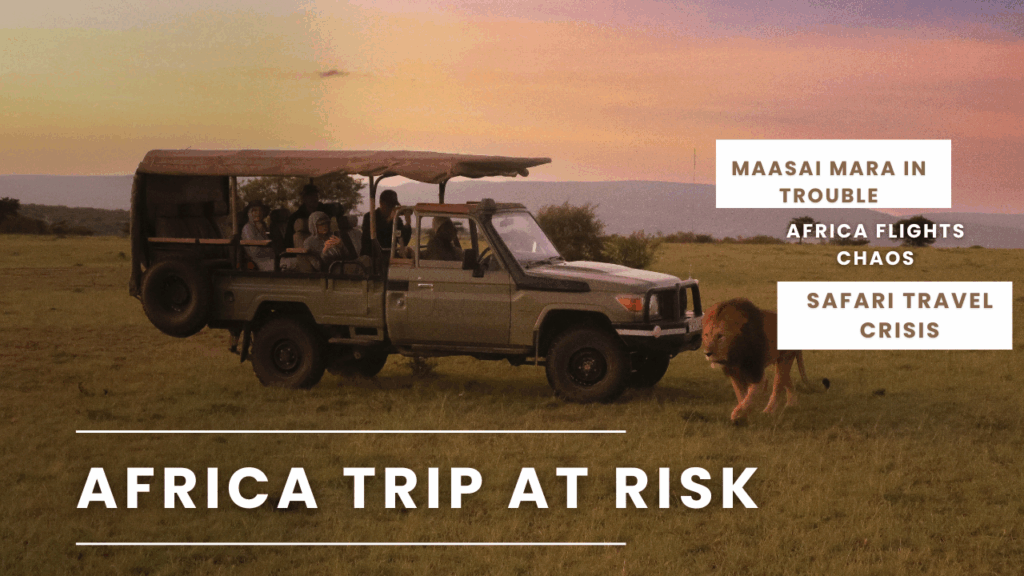
For decades, an African safari in the famous Maasai Mara National Reserve has been one of the most sought-after travel experiences in the world. Tourists visit this spectacular wildlife reserve to witness the great migration, spot lions and elephants, and experience the vast open landscapes of Kenya. However, recent geopolitical tensions in the Middle East are unexpectedly making it more difficult and risky for international travelers to reach this iconic destination. The conflict involving Iran, Israel, and the United States has disrupted aviation routes that connect Asia with Africa, and this disruption is creating serious logistical challenges for safari tourism across East and Southern Africa.
Travelers from India and many parts of Asia typically reach East Africa through Middle Eastern aviation hubs. Cities such as Dubai, Doha, and Abu Dhabi serve as major transit points linking Asia to African destinations. Before the current crisis, the most common route to visit the Maasai Mara was relatively straightforward. A traveler from Mumbai or Delhi would first take an international flight to one of these Gulf hubs. From there, another flight would connect to Nairobi, the capital city of Kenya. Nairobi acts as the main gateway for safaris in East Africa. Once travelers arrive there, they continue the journey to the Maasai Mara either by a small charter aircraft from Wilson Airport or by road in a safari vehicle. The short domestic flight usually takes less than an hour, while the road journey can take five to six hours depending on road conditions.
However, the ongoing conflict in the Middle East has begun disrupting this travel system. Airlines are increasingly cautious about flying through sensitive airspace, and several flights have already been cancelled or rerouted. When aviation hubs in the Gulf face disruptions, the effects spread globally because these cities handle a huge portion of international transit traffic. Flights between Asia and Africa often rely on these routes, so when the network becomes unstable, reaching destinations like the Maasai Mara becomes more complicated and expensive.
Another major issue is the rapid increase in aviation fuel costs. Much of the world’s oil supply travels through the strategic Strait of Hormuz, and tensions in the region can affect global fuel markets. When oil prices rise, airlines immediately feel the pressure because fuel is one of their largest operating costs. As a result, airfares increase and long-haul travel becomes significantly more expensive. Safari tourism is particularly sensitive to this change because travelers must already take long international flights and then additional regional flights to reach remote wildlife reserves.
The journey to Maasai Mara itself is not simple even in normal times. After reaching Nairobi, travelers usually transfer to smaller aircraft that land on remote airstrips located inside the wildlife reserve. These flights operate on tight schedules and depend on favorable weather conditions. If an international flight is delayed or cancelled, travelers may miss these connecting safari flights, which can disrupt the entire itinerary. Road travel is possible, but it involves rough terrain and long driving hours through rural regions, which may not be comfortable for all visitors.
The difficulties do not stop in Kenya. Many tourists combine a Maasai Mara safari with trips to neighboring countries such as Tanzania and Zambia. In Tanzania, travelers often visit the famous Serengeti National Park, which shares a natural ecosystem with the Maasai Mara. However, crossing between Kenya and Tanzania can be complicated because many park airstrips do not have immigration facilities. Tourists sometimes have to fly to a border town, cross the frontier by road, and then board another aircraft to continue their safari. This adds extra time, cost and complexity to the travel plan.
In Zambia, travelers frequently combine safari trips with a visit to the spectacular Victoria Falls, one of the largest waterfalls in the world. However, reaching Zambia usually requires multiple connecting flights, often through Nairobi or Middle Eastern hubs. With aviation disruptions in the Gulf region, these connections are becoming less predictable and more expensive. Travelers may need additional transit stops, longer travel times and higher ticket prices.
Tanzania’s coastal destinations also form part of many safari itineraries. After visiting Maasai Mara or Serengeti, tourists often fly to the beautiful island of Zanzibar to relax on its beaches and explore historic Stone Town. But again, this route usually requires flying from the safari airstrip to Nairobi or another major airport before connecting onward to Zanzibar. When international flights become uncertain, the entire chain of travel arrangements can be affected.
Safari tourism is particularly vulnerable to disruptions because it depends on a carefully coordinated sequence of flights, vehicles, park permits and lodge reservations. If one part of the travel chain breaks, the entire journey can collapse. A missed flight connection might mean losing a charter flight to a remote airstrip or missing a scheduled wildlife safari drive that cannot easily be rescheduled. For travelers who have already spent large amounts of money on safari packages, such disruptions can be both costly and frustrating.
The financial impact can also be significant. A week-long safari in Kenya already costs a substantial amount due to park fees, lodge accommodations and specialized vehicles. When international airfares rise due to fuel costs or rerouted flights, the overall expense of the trip increases dramatically. For many travelers, this may force them to postpone their safari plans or choose destinations that are easier to reach.
For travelers dreaming of witnessing the great migration in the Maasai Mara, careful planning has become more important than ever. Flexible tickets, longer transit times and awareness of alternative routes may help mitigate the risks. Until geopolitical stability returns to the Middle East, reaching one of the world’s greatest safari destinations may require more patience, preparation and flexibility than before.