Rising quietly from the Arabian Sea, just off the coast near Virar in Maharashtra, Arnala Fort is one of the most underrated yet historically rich sea forts in India. Surrounded by water on all sides and shaped by centuries of wind, waves, and warfare, Arnala Fort is not only a reminder of coastal power struggles but also a place of deep calm, silence, and visual beauty. Unlike crowded tourist forts, Arnala offers space—to walk, to think, to observe, and to feel history rather than just read about it.
Location and Setting

Arnala Fort is located on Arnala Island, near Arnala Beach, approximately 45–50 km north of Mumbai. The fort is accessible via a short boat ride from the Arnala jetty, which itself adds to the experience. As the mainland slowly fades and the fort grows larger on the horizon, visitors begin to sense that this is not just a monument, but a transition into another time.
Built on a low rocky island, Arnala Fort appears to rise naturally from the sea. The constant sound of waves, salty air, and open sky creates a setting that feels both powerful and peaceful.
How to Reach Arnala Fort (Near Virar, Maharashtra)
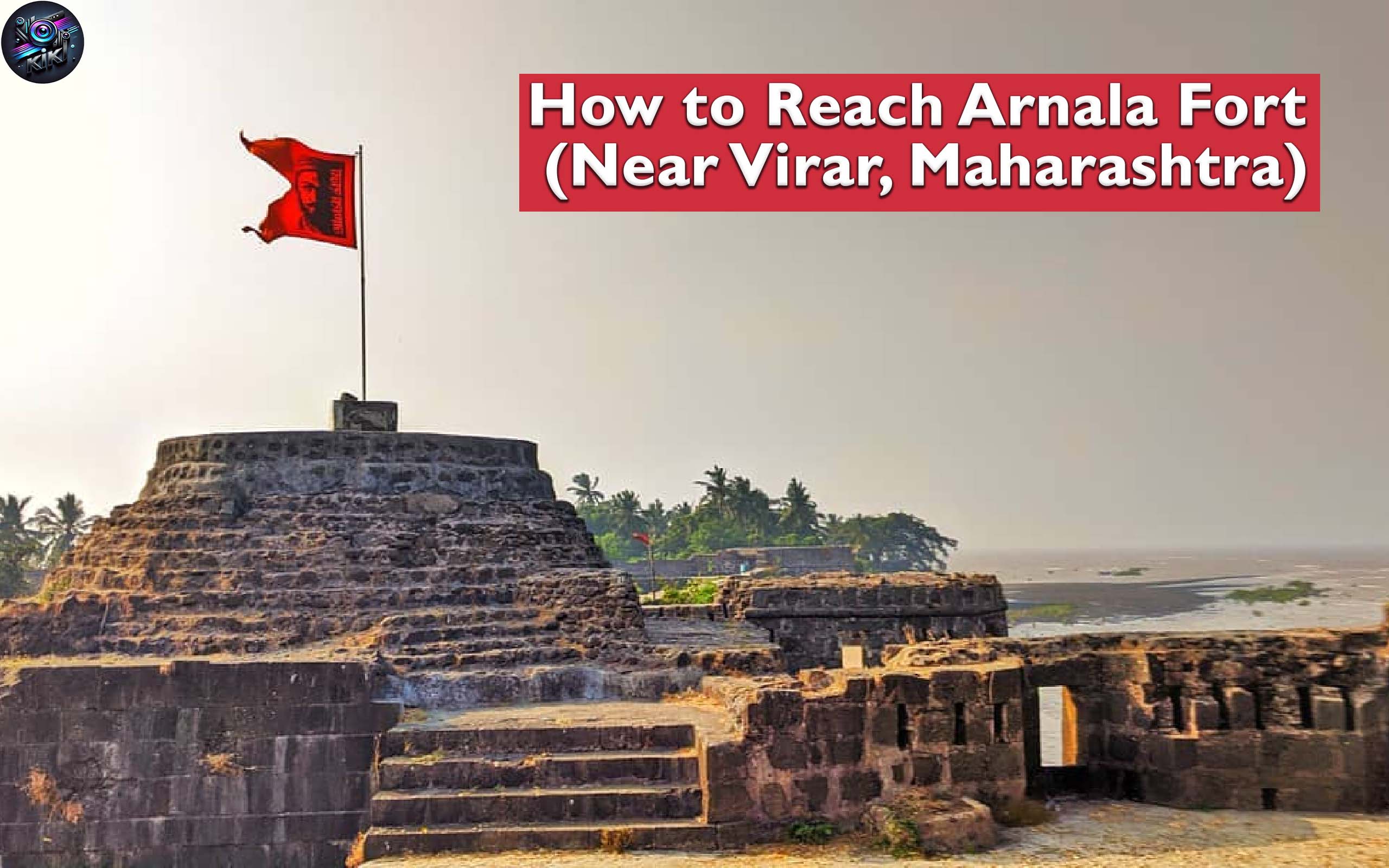
Arnala Fort is located on Arnala Island, just off Arnala Beach, near Virar. Reaching the fort is easy and happens in two stages:
reaching Arnala Beach
taking a boat to the fort
- Reach Virar (Main Entry Point)
By Local Train (Most Convenient)
Take a Western Railway local train towards Virar
Get down at Virar Station
Exit on the West side
Virar is well-connected from Mumbai, Borivali, Andheri, and Churchgate. - Virar Station to Arnala Beach
From Virar West, you have multiple options:
Auto / Taxi : Distance: ~8–10 km
Time: 20–30 minutes
Ask for: Arnala Beach / Arnala Jetty
Bus
MSRTC or local buses available from Virar West
Affordable but slightly slower - Arnala Beach to Arnala Fort (Boat Ride)
From Arnala Jetty, small boats/ferries operate regularly
Boat ride duration: 5–10 minutes
Cost: Very affordable (usually ₹20–₹30 per person)
Boats run frequently during daylight hours
This short boat ride is part of the experience, offering beautiful views of the sea and the fort.
By Road (From Mumbai / Gujarat Side)
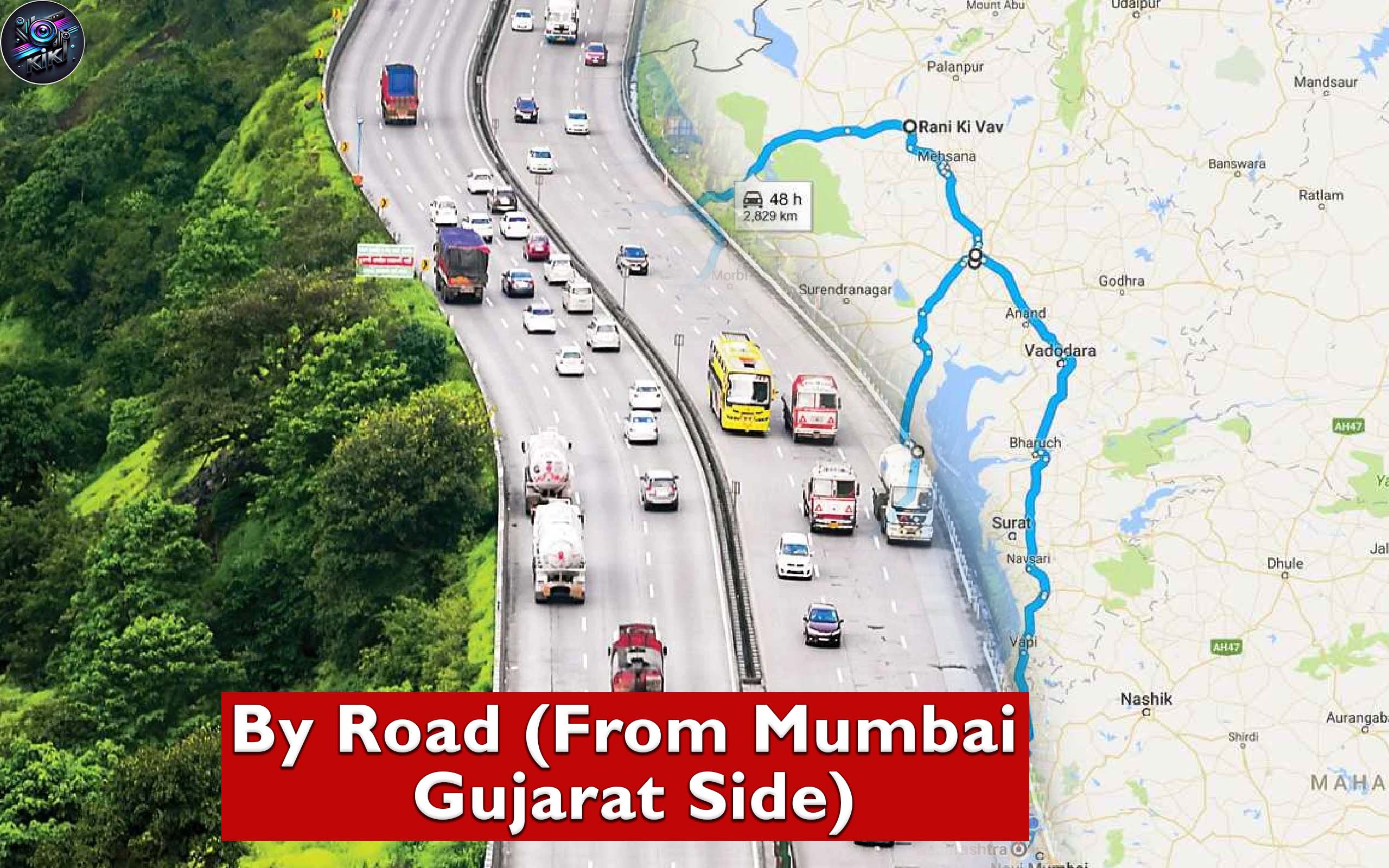
- Drive via Western Express Highway / NH48
- Take the Virar exit, then head towards Arnala Beach
- Parking available near the jetty
- Best for people traveling in groups or with camera gear.
Best Time to Travel

- Early morning: Calm sea, soft light, fewer crowds
- Avoid late evening: Boats usually stop after sunset
- Monsoon: Boat services may be limited due to rough sea
Historical Background

The history of Arnala Fort stretches back to the 16th century, during the period of Portuguese dominance along India’s western coast. Recognizing the strategic importance of the island for controlling maritime trade routes, the Portuguese constructed a fort here and named it Ilhas de Arnala.
However, the fort’s true significance grew under the Maratha Empire. In 1670, Chhatrapati Shivaji Maharaj captured Arnala Fort, understanding its value in strengthening Maratha naval power. Later, the fort came under the control of the Peshwas, and it served as a key defensive outpost protecting the northern Konkan coastline.
During the British period, Arnala Fort briefly changed hands again, reflecting the constant struggle for dominance over India’s western sea routes. Each ruling power left its mark, making the fort a layered historical site rather than a single-era structure.
Architecture and Layout

Arnala Fort is compact yet well-planned. Thick stone walls encircle the island, designed to withstand both cannon fire and harsh marine weather. The main entrance is sturdy and understated, leading into open courtyards and pathways that curve naturally with the shape of the island.
Inside the fort, one can find:
- Freshwater tanks, essential for survival during sieges
- Temple and mosque structures, indicating religious coexistence
- Ruins of administrative and residential spaces
Unlike hill forts with vertical dominance, Arnala’s strength lies in its horizontal spread and sea-facing defenses. The fort was designed to work with nature rather than against it.
Arnala Fort as a Photographer’s Paradise
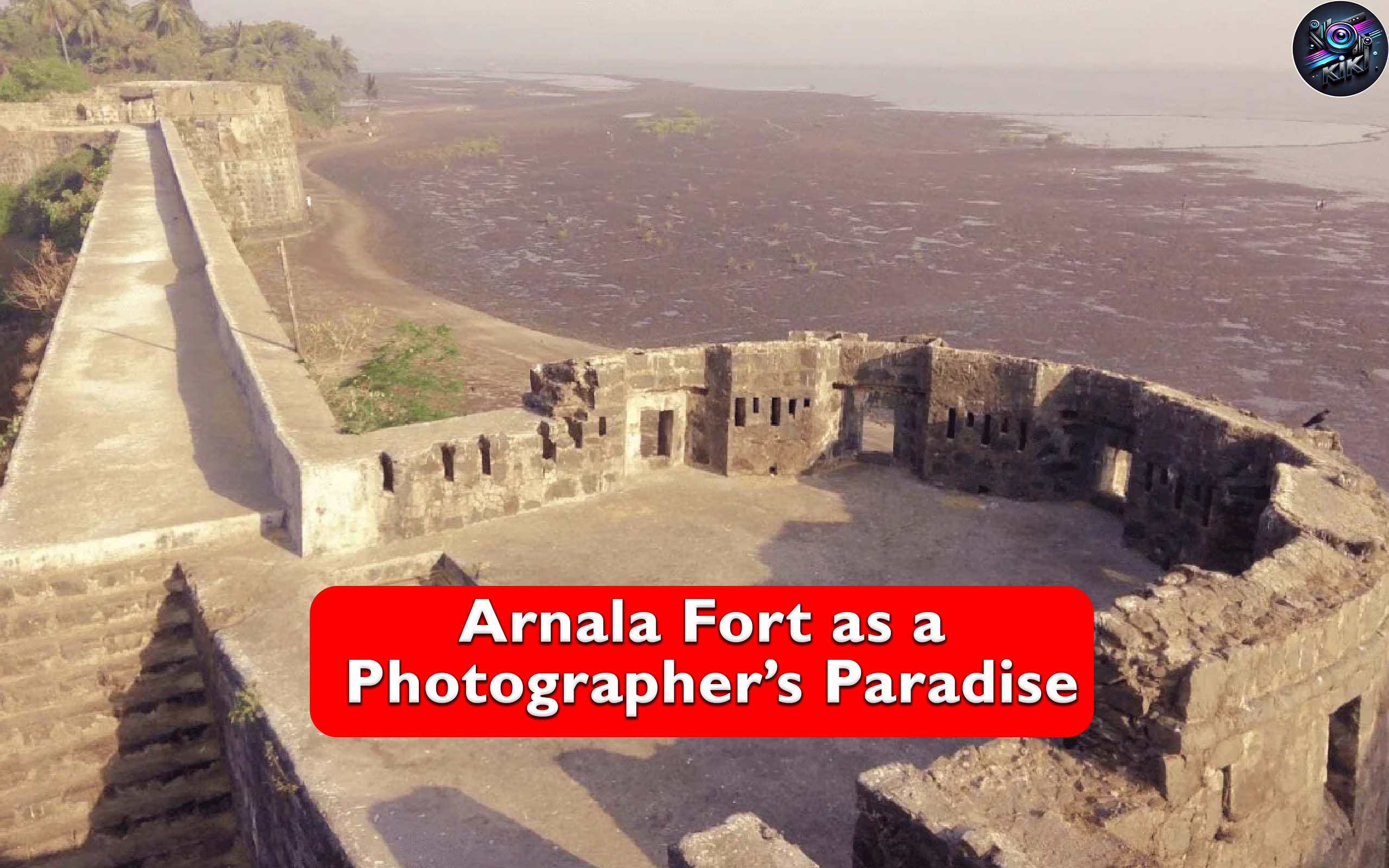
Arnala Fort is widely regarded as a heaven for photographers, and for good reason. The combination of sea, sky, stone, and silence creates endless visual possibilities.
- Golden hour light paints the fort walls in warm tones
- Monsoon clouds add drama and mood
- Textures of weathered stone tell stories of time and endurance
- Wide sea views allow minimal, cinematic compositions
What makes Arnala special is that it rewards patience. The best photographs here are not rushed. They emerge slowly—through light shifts, moving clouds, and quiet observation.
Silence and Emotional Experience

One of Arnala Fort’s most striking qualities is its silence. Even on busy days, the fort feels calm. The soundscape is dominated by wind and waves, not traffic or crowds. This makes Arnala a place where visitors often slow down naturally.
Walking alone along the fort walls, watching the sea stretch endlessly, one becomes aware of time in a different way. Arnala does not demand attention; it invites reflection.
Modern Relevance of Arnala Fort

- The importance of coastal history in shaping India
- The role of patience and strategy, not speed
- The value of silence in understanding both past and present
For content creators, historians, travelers, and photographers, Arnala Fort is not just a destination—it is an experience that grows deeper the longer you stay.
Best Time to Visit
- October to March: Pleasant weather and clear skies
- Monsoon (June to September): Visually stunning but requires caution
- Early morning or late afternoon: Best light and fewer crowds
Conclusion
Arnala Fort stands quietly in the sea, not demanding fame or attention. It has survived empires, storms, and centuries, yet remains humble and open. Whether you visit for history, photography, or inner stillness, Arnala Fort offers something rare—a chance to connect with time, nature, and silence all at once.