The Ultimate 12–14 Day Himalayan Journey from Bagdogra
There are mountain trips. And then there are journeys that feel like crossing spiritual borders.
A combined Bhutan + Sikkim itinerary is not just about covering two destinations. It is about experiencing two Himalayan identities:
- One, an Indian state shaped by democracy and diversity.
- The other, a Himalayan kingdom shaped by monarchy and Gross National Happiness.
- Both are deeply spiritual. Both are stunningly beautiful. Both move at a slower rhythm than the rest of South Asia.
- If you begin from Bagdogra Airport or Siliguri, this is the most seamless, culturally rich Himalayan road journey you can take.
- This 5000-word guide covers everything — route, permits, pacing, budgeting, luxury upgrades, and storytelling flow.
Why Combine Bhutan and Sikkim?
Most travelers visit them separately.
But together, they create a powerful contrast:
Sikkim Bhutan
Indian democracy Constitutional monarchy
Mix of Nepali, Bhutia & Lepcha culture Deeply preserved Bhutanese identity
Faster growth Carefully controlled tourism
Bustling markets Minimal commercial noise
A combined itinerary lets you feel the transition, especially when crossing the border overland.
Ideal Duration for Bhutan + Sikkim
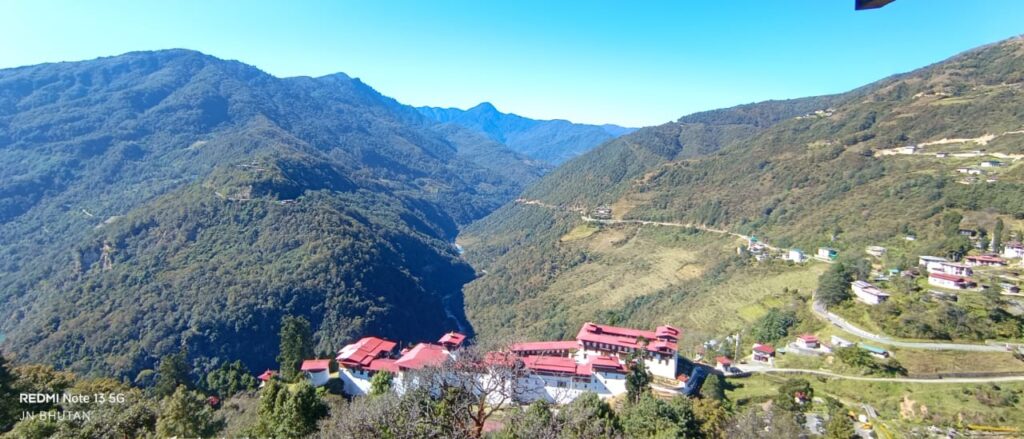
Minimum recommended: 12 days
Ideal: 14 days
Less than that feels rushed. Remember, mountains demand time.
Route Overview
Arrival: Bagdogra → Gangtok → North Sikkim → Return to Siliguri → Cross into Bhutan (Phuentsholing) → Thimphu → Punakha → Paro → Departure
This circular route is practical and emotionally powerful.
PART 1: SIKKIM (Days 1–6)
Day 1: Arrival at Bagdogra → Drive to Gangtok
- Fly into Bagdogra Airport.
- Drive time to Gangtok: 4–5 hours.
- Destination: Gangtok
The drive follows the Teesta River, winding through hills and suspension bridges.
Evening in Gangtok:
- Walk on MG Marg
- Try local momos and thukpa
- Relax after travel
- Stay overnight in Gangtok.
Day 2: Exploring Gangtok
Gangtok is vibrant yet peaceful.
Visit:
- Rumtek Monastery:- One of the most important monasteries in Sikkim, associated with the Karma Kagyu lineage.
- Tashi View Point:- Clear mornings offer views of Kanchenjunga.
- Namgyal Institute of Tibetology:- For those interested in Buddhist philosophy.
Gangtok feels lively compared to Bhutan’s capital — and that contrast becomes important later.
Day 3: Tsomgo Lake & Nathula Pass
Excursion to:
- Tsomgo Lake
- Located at 12,300 feet, this high-altitude glacial lake changes color with seasons.
- Optional (subject to permit): Nathula Pass (India–China border)
Expect:
- Cold weather
- Yak rides
- Dramatic mountain backdrope
Return to Gangtok for overnight stay.
Day 4: Gangtok to Lachen (North Sikkim)
Drive to:
- Lachen
- Road conditions can be rough. But landscapes are spectacular.
- North Sikkim feels remote, raw, and less commercial.
Overnight in Lachen.
Day 5: Gurudongmar Lake & Transfer to Lachung
Early morning drive to:
- Gurudongmar Lake
- At over 17,000 feet, this is one of the highest lakes in the world.
- The silence here feels otherworldly.
Later drive to:
- Lachung
- Overnight stay in Lachung.
Day 6: Yumthang Valley → Return to Gangtok
- Visit Yumthang Valley (Valley of Flowers).
- Seasonal blooms make it magical in spring.
- Return to Gangtok by evening.
PART 2: TRANSITION TO BHUTAN (Day 7)
Drive from Gangtok to Jaigaon (6–7 hours).
Cross border into:
- Phuentsholing
- Complete entry permit formalities.
- This moment is symbolic.
- India’s energy fades. Bhutan’s calm begins.
- Stay overnight in Phuentsholing.
PART 3: BHUTAN (Days 8–14)
Day 8: Phuentsholing to Thimphu
- Drive 5–6 hours into the mountains.
Arrive in: Thimphu
Notice immediately:
- No traffic lights
- Traditional architecture
- Clean streets
- No honking
Evening free to explore Norzin Lam.
Day 9: Exploring Thimphu
Visit: Buddha Dordenma
- Sunrise here is serene.
- Tashichho Dzong
- Seat of the Bhutanese government and monarchy.
Thimphu feels quieter than Gangtok — less commercial, more contained.
Day 10: Thimphu to Punakha
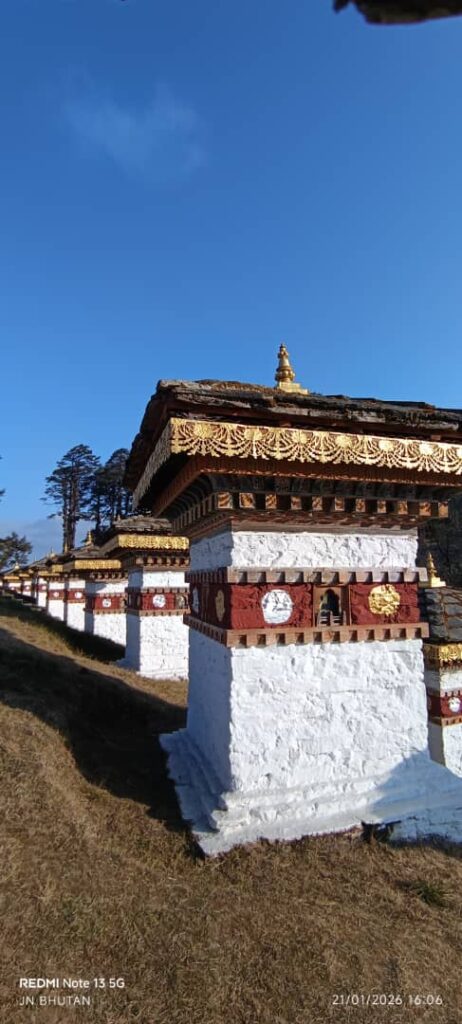
Cross Dochula Pass (108 stupas).
Arrive in: Punakha
Warmer climate, rice fields, rivers.
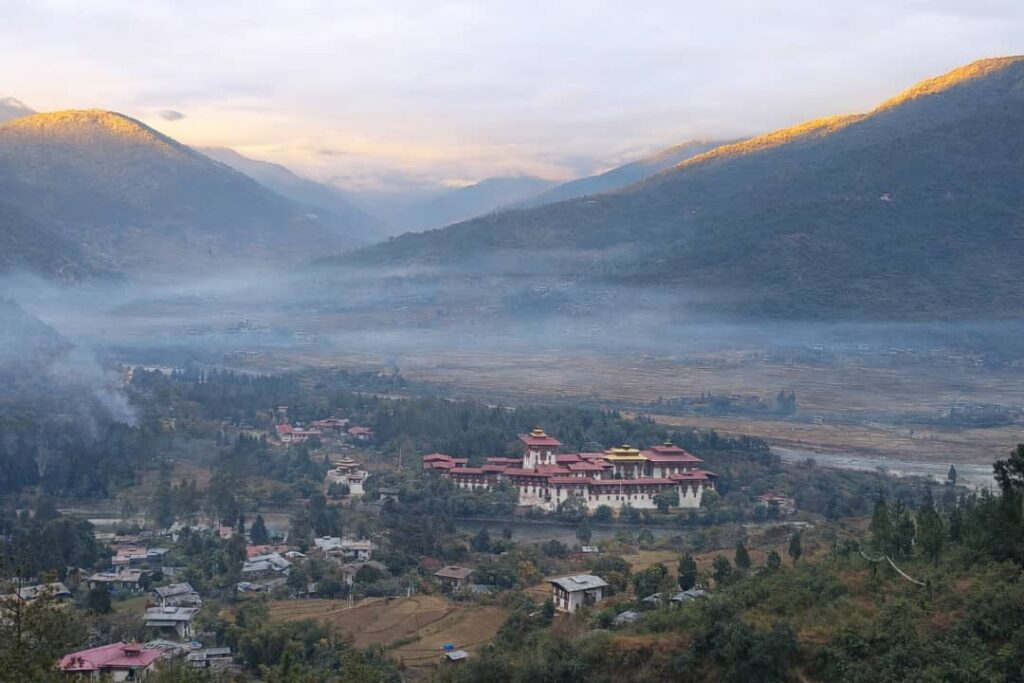
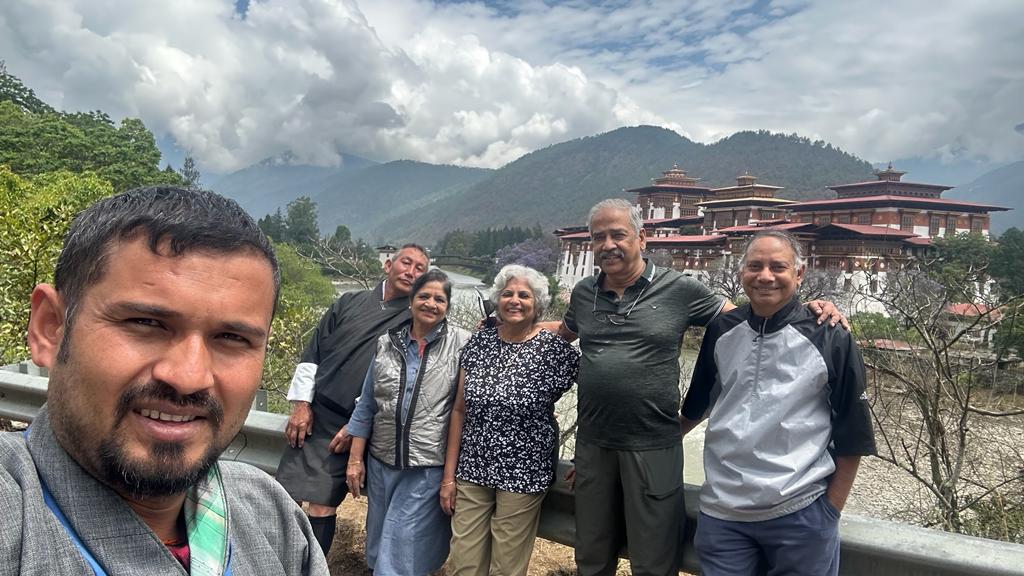
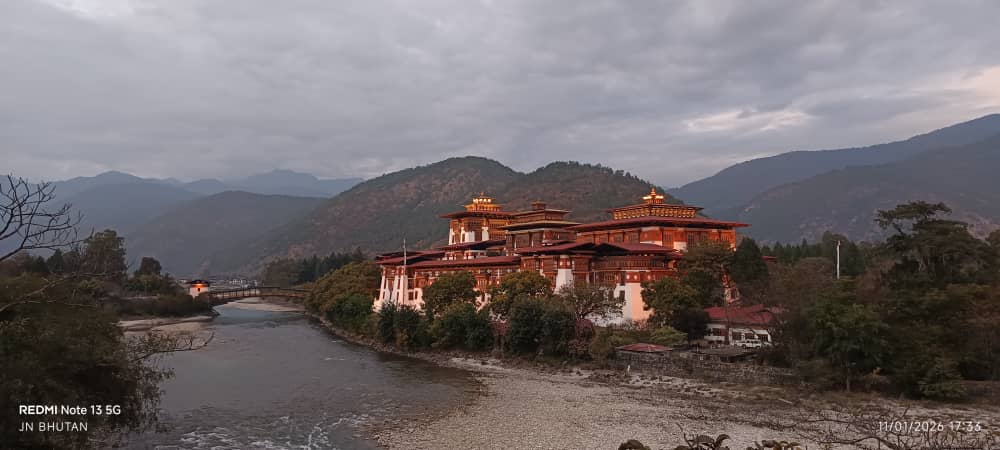
Visit: Punakha Dzong
Perhaps the most beautiful fortress in Bhutan.
Optional:
- River rafting
- Suspension bridge walk
- Stay overnight in Punakha.
Day 11: Punakha to Paro
Drive back toward Paro.
Destination: Paro
Evening:
- Visit local market
- Try hot stone bath
- Paro is smaller and more traditional than Thimphu.
Day 12: Tiger’s Nest Hike
Visit: Tiger’s Nest Monastery
- 4–6 hour hike.
- This is the emotional highlight of the trip.
Compared to Sikkim’s raw high-altitude lakes, Tiger’s Nest feels deeply spiritual and intimate.
Day 13: Paro Exploration
Visit: National Museum
- Kyichu Lhakhang
- Rinpung Dzong
- Slow down. Reflect.
Day 14: Departure from Paro or Return to India
Fly out from Paro or drive back to Phuentsholing → Siliguri.
Budget Estimate (Per Person)
Mid-range 12–14 days:
₹1.2L – ₹1.8L (excluding flights)
Luxury version:
₹2.5L – ₹4L+
Budget vs Luxury Combined Trip
Budget Style:
- Standard hotels
- Fixed itinerary
- Faster pacing
Luxury Style:
- Boutique lodges in Punakha & Paro
- Slower pace
- Private guided experiences
- Curated dining
Luxury makes Bhutan especially transformative.
Best Time for Bhutan + Sikkim
Spring (March–May):
- Rhododendrons in Sikkim
- Clear skies in Bhutan
Autumn (Sept–Nov):
Best visibility
Festival season in Bhutan
- Avoid peak monsoon (landslide risk in Sikkim).
- Key Differences You’ll Notice
After crossing into Bhutan:
- No billboards
- Fewer commercial hoardings
- Uniform architecture
- Calm traffic
Sikkim feels vibrant.
Bhutan feels contemplative.
That contrast is the magic of this combined journey.
Who Should Do This Trip?
Ideal for:
- Couples seeking meaningful travel
- Women-only curated departures
- Spiritual explorers
- Content creators
- Urban professionals seeking detox
Not ideal for:
- Party-focused travelers
- Ultra-budget backpackers
Why This Journey Works Emotionally
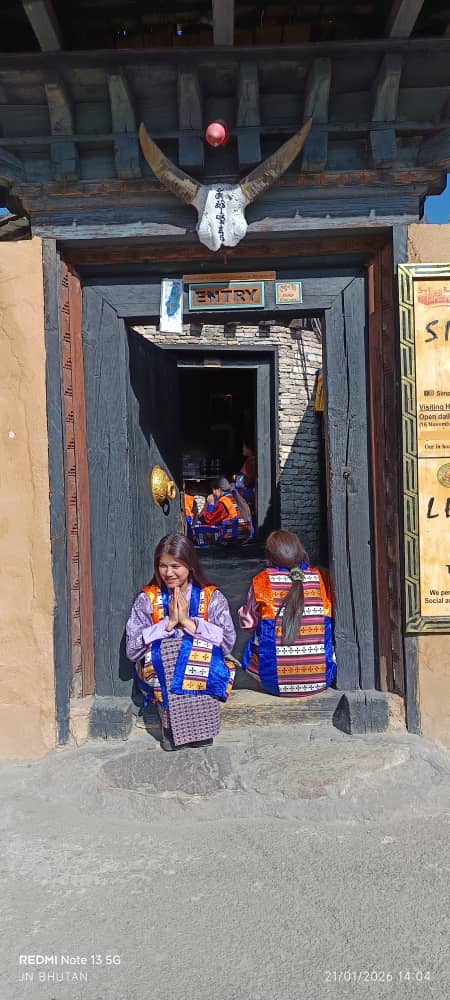
- Sikkim introduces you to Himalayan culture gently.
- North Sikkim shows you raw landscapes.
- Bhutan then slows you down.
- By the time you climb Tiger’s Nest, you are already mentally quieter.
- This is not coincidence. It is flow.
Final Thoughts
A Bhutan + Sikkim combined itinerary is not about ticking off two destinations.
It is about witnessing how two Himalayan regions evolved differently — yet remain spiritually connected.
You begin by following rivers in Sikkim.
You end by climbing toward a monastery carved into a cliff in Bhutan.
Somewhere in between, something changes.
Mountains do not rush.
Monasteries do not shout.
And happiness, in Bhutan at least, is measured quietly.