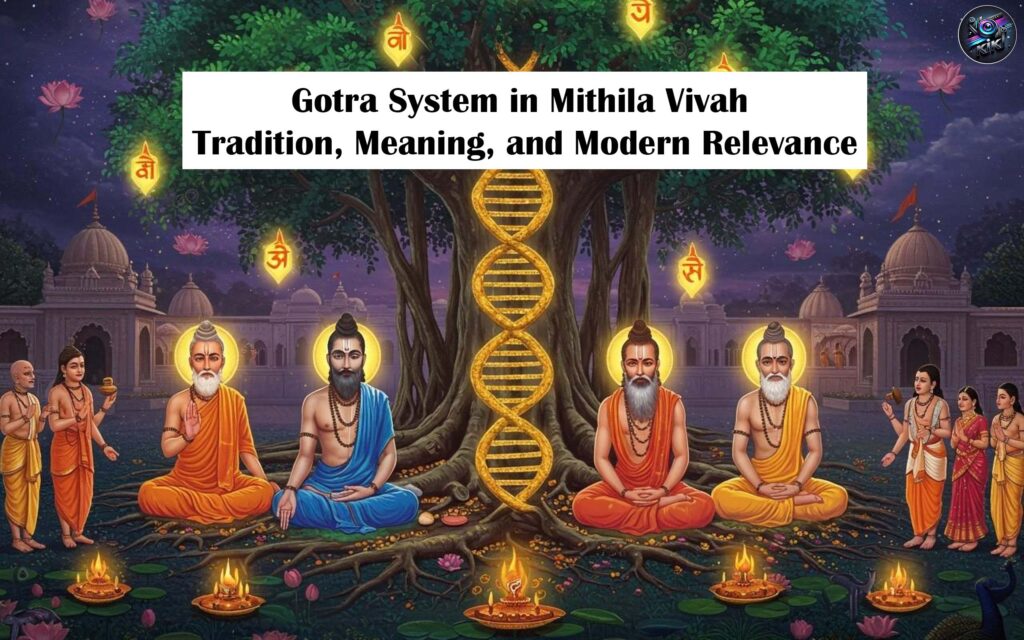
Marriage in Mithila is not merely a social contract; it is a sacred samskara deeply rooted in Vedic philosophy. Among the many rituals that define Mithila Vivah, the Gotra system holds a position of profound importance. It reflects ancestral lineage, cultural continuity, and ethical responsibility passed down through generations.
In this blog, we explore what Gotra means, its ritual importance in Mithila marriages, relevant Sanskrit shlokas with meanings, and how the system is viewed in the modern context.
What Is Gotra?
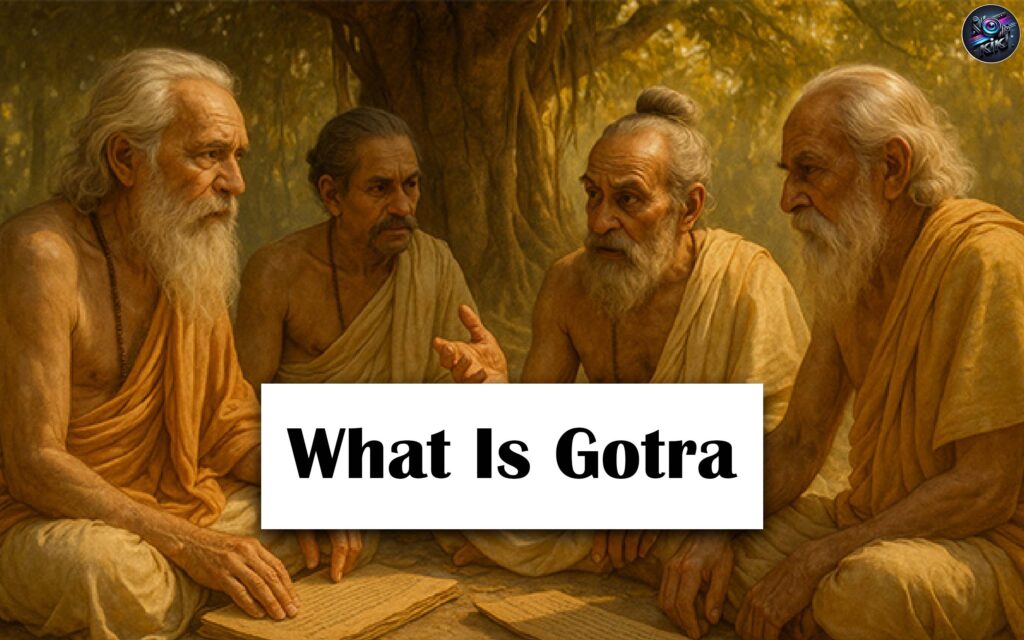
Gotra refers to one’s ancestral lineage, traditionally traced to a revered Rishi (sage) of the Vedic era. In essence, Gotra identifies a person’s spiritual clan, not just a family name.
In Mithila society, marriage within the same Gotra is traditionally avoided, as individuals of the same Gotra are considered symbolically akin to siblings, descended from the same ancestral sage. This practice reflects an early understanding of genetic diversity, social harmony, and moral discipline.
Purpose of Gotra Matching in Mithila Vivah
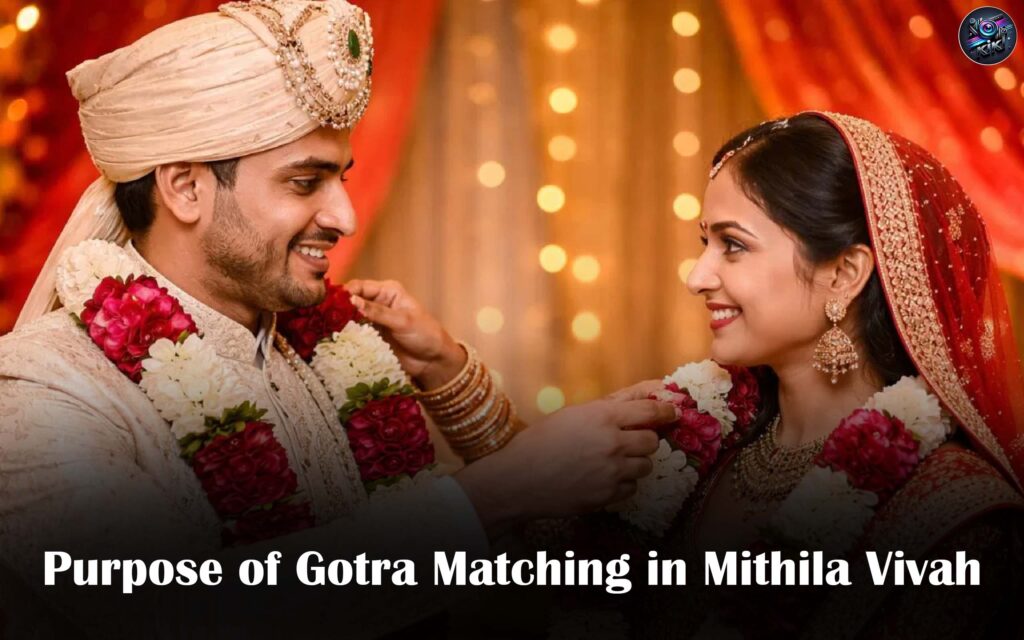
- Preserves ancestral purity
- Maintains social structure
- Encourages genetic diversity
- Upholds Vedic marital ethics
- Sanskrit Perspective on Lineage
Sanskrit Shloka
“गोत्रं नाम ऋषेः सन्ततिः”
Meaning
Gotra signifies the lineage that originates from a particular Rishi.
This concise definition captures the essence of the Gotra system—marriage is not just between two individuals, but between two lineages, two streams of cultural memory.
Ritual Importance of Gotra in Mithila Vivah
In Mithila weddings, Gotra is formally announced and acknowledged at multiple stages, emphasizing its sacred role.
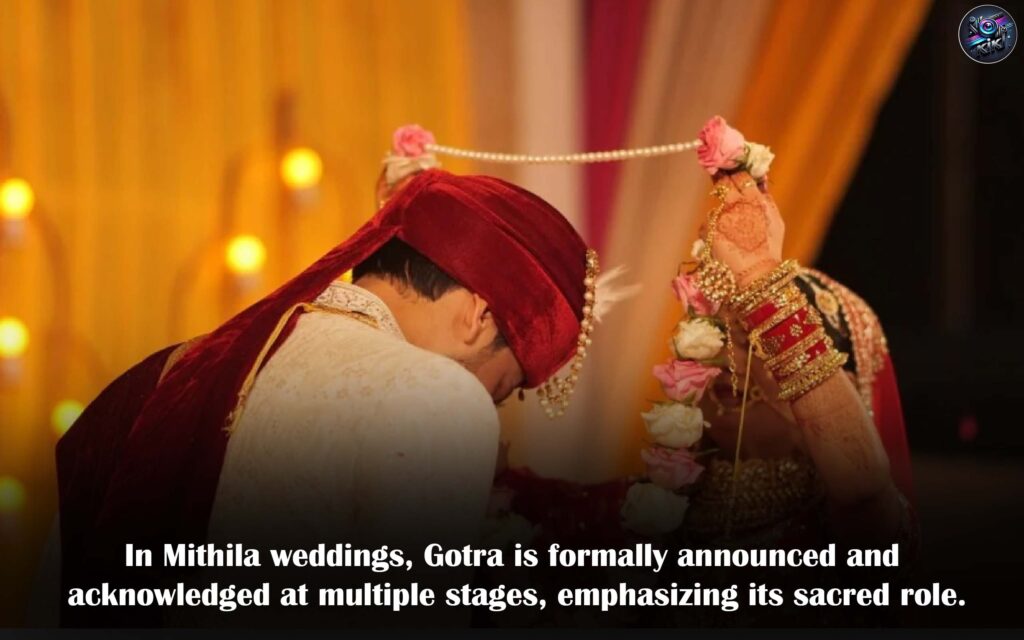
Kanyadaan
During Kanyadaan, the bride’s father solemnly declares the Gotra of the bride while offering her hand to the groom.
Significance
Confirms cultural and ritual compatibility
Symbolizes the transfer of lineage responsibility
Ensures adherence to dharmic norms
Shloka Reference
“इयं कन्या मम सुता गोत्रोत्पन्ना सुसंस्कृता”
Meaning
This daughter of mine, born of this Gotra and nurtured with values, is offered in marriage.
- Tilak Ceremony
The Tilak ceremony formally introduces both families, where Gotra acts as an identifier of ancestral roots.
Significance
Establishes mutual recognition of lineage
Strengthens trust between families
Reinforces social bonds
- Panigrahan Sanskar
In Panigrahan, the groom accepts the bride’s hand along with the responsibilities of her lineage.
Significance
Acceptance of shared dharma
Respect for ancestral traditions
Commitment beyond individual identity
Shloka
“पाणिं गृह्णामि सौभग्यार्थं”
Meaning
I accept your hand for prosperity and righteousness. - Saptapadi
The seven sacred steps finalize the marriage, symbolizing lifelong unity grounded in shared values.
Significance
Lifelong companionship
Mutual respect for traditions
Cultural understanding beyond Gotra
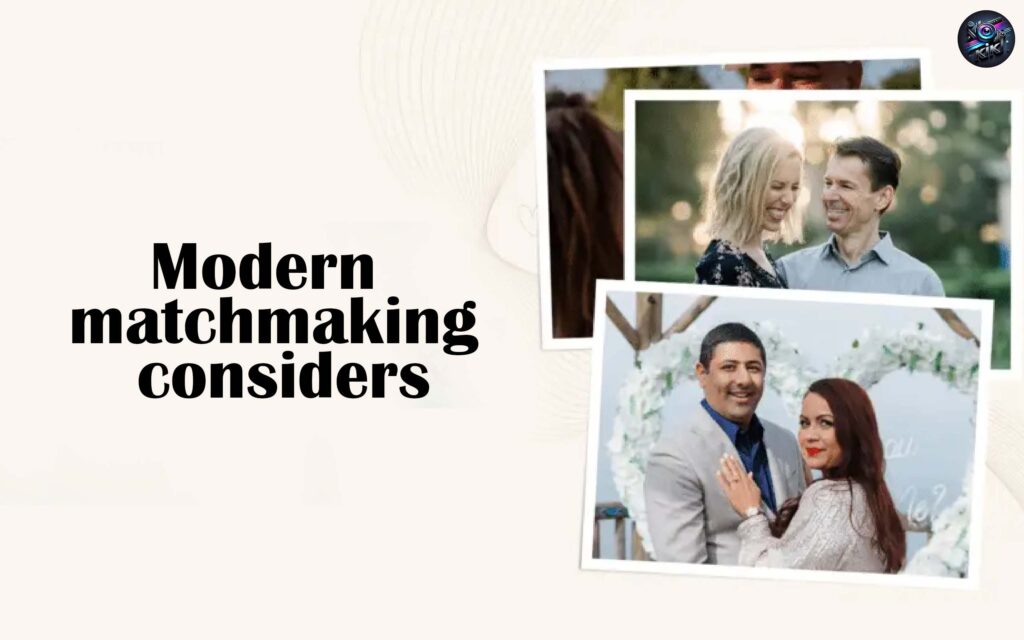
Modern matchmaking considers:
Modern Perspective on Gotra
Today’s Mithila youth deeply respect tradition, yet approach marriage with a broader lens. While Gotra remains culturally important, it is no longer viewed as the sole deciding factor.
Education and career goals
Emotional maturity
Compatibility and communication
Shared values and life vision
Gotra, therefore, becomes one component of a comprehensive compatibility framework rather than a rigid constraint
A Balanced Approach to Gotra in Today’s Mithila Society
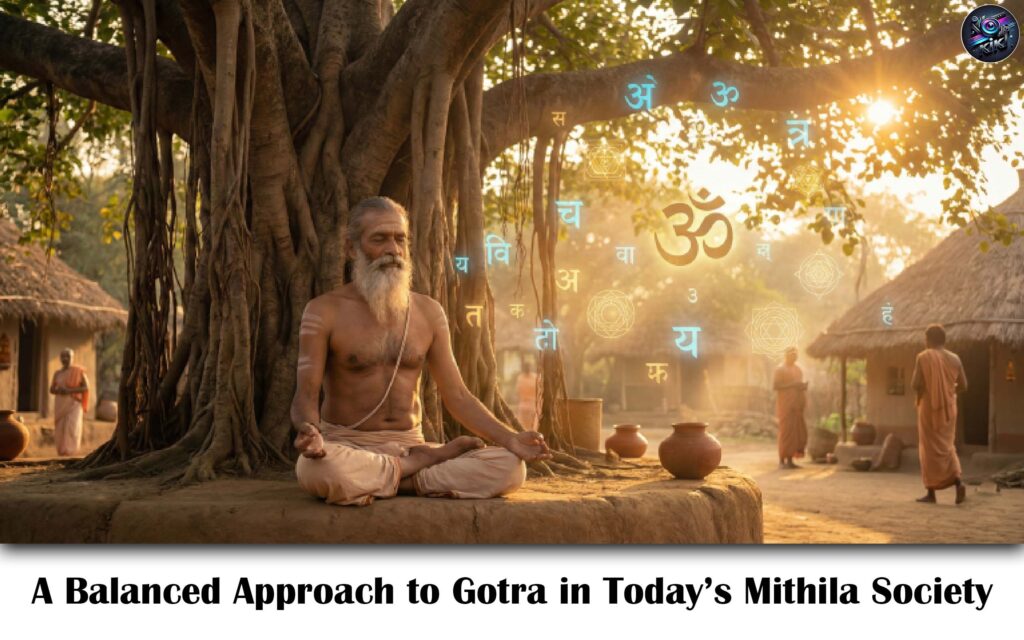
A harmonious path lies in balance, not conflict.
- Respect tradition while understanding its purpose
- Discuss Gotra openly and transparently during matchmaking
- Ensure both families feel comfortable and heard
- Focus on long-term emotional, intellectual, and ethical compatibility
Tradition thrives not by resisting change, but by adapting with wisdom.
Conclusion
The Gotra system in Mithila Vivah is not about restriction; it is about responsibility, respect, and remembrance—a reminder that marriage connects past, present, and future.
In honoring Gotra while embracing modern sensibilities, Mithila society continues its legacy of thoughtful, value-driven marriages, where culture and consciousness walk hand in hand.