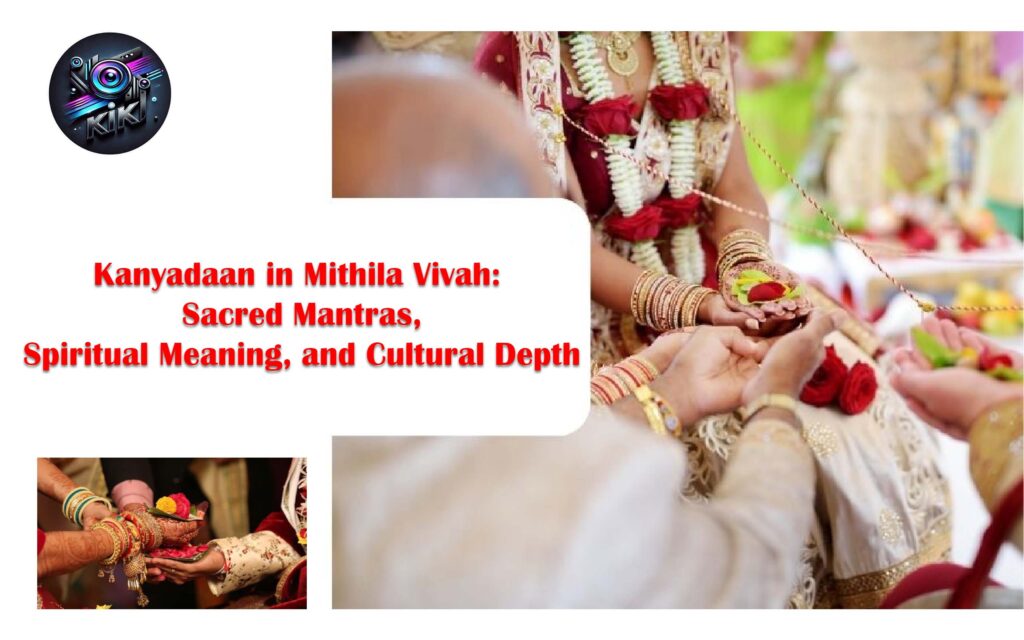
In the Mithila tradition, Kanyadaan is not a symbolic gesture—it is a Vedic sacrament (Saṁskāra) governed by precise mantras, intentions, and ethical responsibility. Performed at the most emotionally charged moment of Mithila Vivah, Kanyadaan represents the spiritual entrustment of the bride’s life, dignity, and future to the groom, under divine witness.
Understanding the mantras of Kanyadaan is essential, because in Vedic culture, mantra is not poetry—it is authority.
The Spiritual Status of Kanyadaan in Shastra
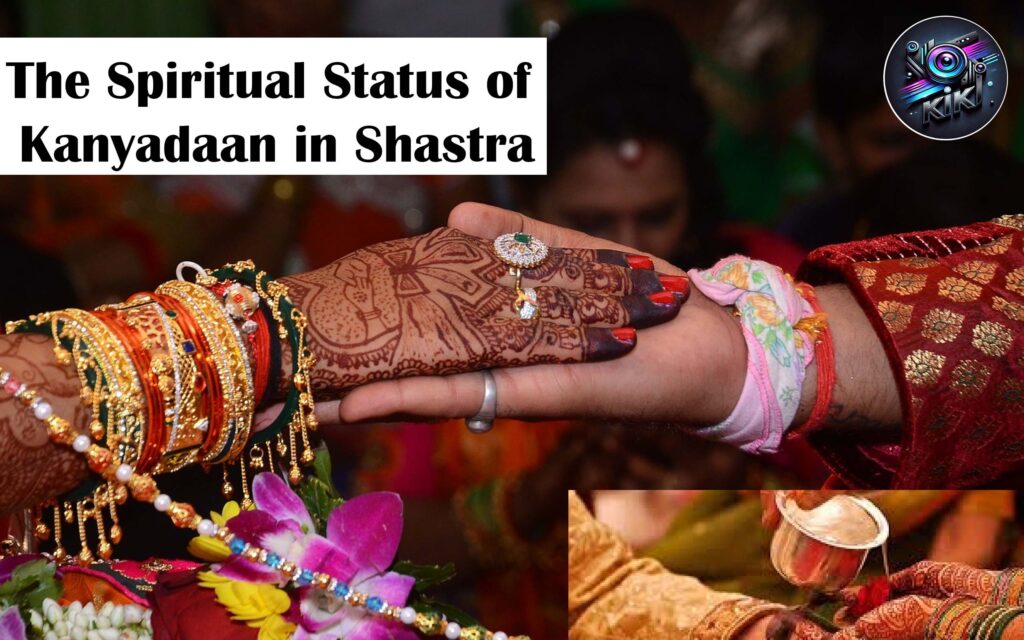
Ancient Dharma texts regard Kanyadaan as one of the highest forms of merit. This is expressed in the widely cited shastric line:
“कन्यादानं महादानं सर्वदानात् विशिष्यते।”
Meaning:
Kanyadaan is the greatest of all gifts, surpassing every other form of charity.
Pandits emphasize that this “greatness” does not arise from ownership over the daughter, but from the renunciation of ego and the fulfillment of parental dharma. The parents do not “give” the daughter—they offer their responsibility to a new guardian chosen through dharmic processes.
Primary Kanyadaan Sankalpa Mantra (Father’s Role)

Before the actual act of Kanyadaan, the bride’s father performs a Sankalpa—a conscious declaration of intent, lineage, and duty. In Mithila, this step is taken very seriously.
“इमां कन्यां मम सुतां धर्मार्थकामसिद्धये।
त्वदर्थं सम्प्रदास्यामि पाणिं गृह्णीष्व पाणिना॥”
Pandit’s Explanation:
“I offer my daughter to you for the fulfillment of Dharma (righteous duty), Artha (shared responsibility), and Kama (emotional harmony). Accept her hand with yours.”
This mantra clarifies three crucial truths:
This mantra clarifies three crucial truths:
- Marriage is a shared life pursuit, not a ritual contract
- The groom is being entrusted with ethical responsibility, not authority
- The bride’s role is central to all three goals of life
- In Mithila tradition, this is why the groom must respond with humility, not pride.
- Water Offering (Jala-Pradāna) Mantra and Its Meaning
- During Kanyadaan, sacred water is poured through the parents’ hands—a ritual known as Jala-Pradāna, symbolizing purity and irreversible commitment.
अद्य ब्राह्मणकुलसम्भूतां कन्यां विधिवत् प्रददामि।
Explanation:
“Today, in accordance with sacred law, I offer this daughter born in a Brahmin lineage.”
Pandits explain that water here represents

- Continuity of lineage
- Flow of responsibility
- Witness of cosmic order (Ṛta)
- Once water flows, the Sankalpa is considered complete and unbroken.
- Bride’s Status in Kanyadaan: Not an Object, but a Dharma-Sahachari
- Contrary to superficial interpretations, no Kanyadaan mantra describes the bride as property. Instead, she is addressed as a Sahadharmini—an equal partner in dharma.
This understanding becomes clear in the transition to Panigrahan, where the groom accepts responsibility:
पाणिग्रहणसंस्कारं करिष्ये सहधर्मचारिणीम्।
Meaning:
“I take your hand to walk together as partners in dharma.”
In Mithila, Pandits insist that Kanyadaan is incomplete without this acceptance. The ritual is not about giving—it is about mutual obligation sanctified by mantra.
Why Kanyadaan Comes Before Panigrahan
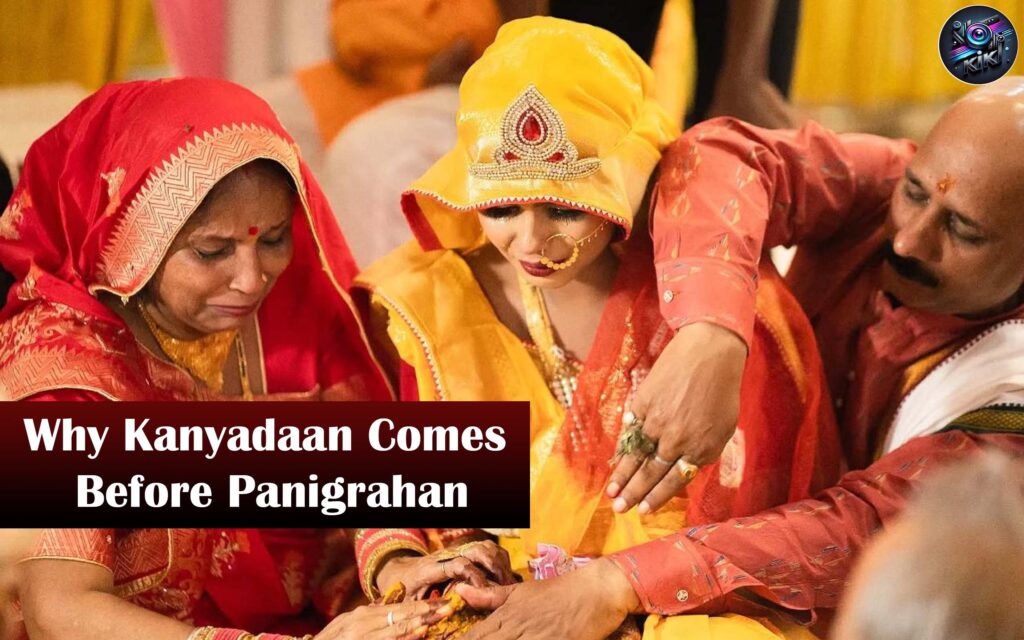
From a ritual science perspective:
- Kanyadaan establishes ethical permission
- Panigrahan establishes personal responsibility
- Without Kanyadaan, Panigrahan lacks social legitimacy. Without Panigrahan, Kanyadaan lacks completion. This sequential order reflects Mithila’s deep respect for moral structure over emotion alone.
- Modern Interpretation Without Loss of Shastric Meaning
Contemporary Mithila families increasingly explain Kanyadaan as:
- A parental blessing, not transfer of ownership
- A declaration of trust in the groom’s values
- A sacred reminder that marriage begins with responsibility
- Pandits often clarify during ceremonies that the daughter remains emotionally and socially connected to her parental home. Kanyadaan signifies expansion of family, not separation.
Choosing a Partner Who Understands Ritual Responsibility

A marriage rooted in Mithila Vivah succeeds when both partners understand not just the ritual, but its ethical demand. Platforms like Mithila Vivah help families find alliances where:
- Kanyadaan is respected, not rushed
- Mantras are understood, not ignored
- Tradition is lived, not performed
Conclusion: Kanyadaan as a Moral Foundation
Kanyadaan is the moment when love becomes law, emotion becomes duty, and ritual becomes responsibility. When its mantras are understood, the ceremony transforms from tradition into conscience.
A Mithila Vivah where Kanyadaan is performed with understanding becomes not just a wedding—but a lineage-preserving sacred vow.