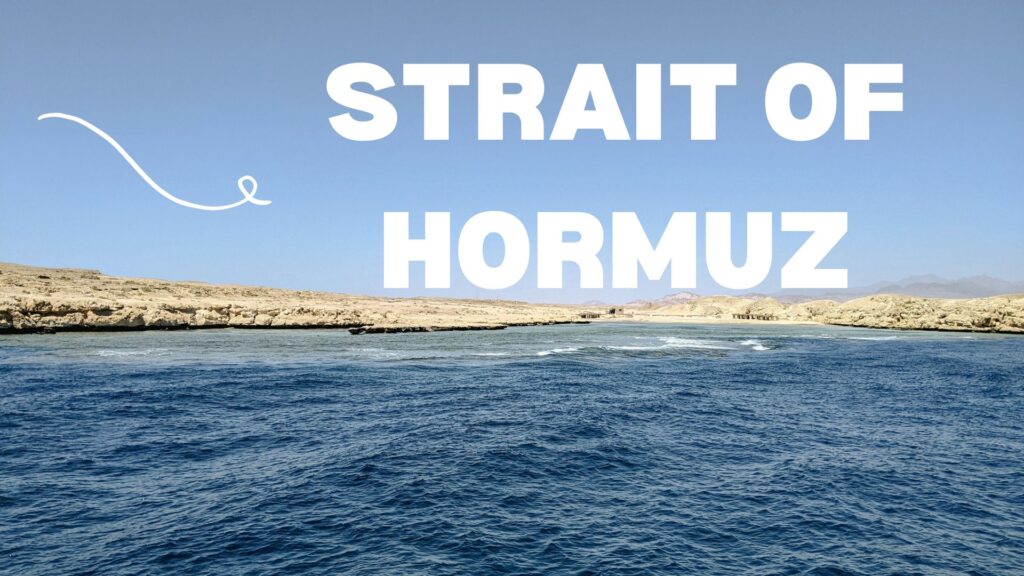
The Strait of Hormuz is one of the most strategically important waterways in the world. This narrow sea passage connects the Persian Gulf with the Gulf of Oman, which then leads to the Arabian Sea and global oceans. Despite being only about 39 km wide at its narrowest point, the strait carries a huge portion of the world’s oil supply, making it crucial for global energy security.
Geographic Importance
The Strait of Hormuz lies between Iran on the north and Oman and the Musandam Peninsula on the south. Its shipping lanes are extremely narrow, only about 3 km wide in each direction, making navigation tightly controlled. Every day, hundreds of oil tankers and cargo ships pass through this channel.
The World’s Oil Lifeline
Nearly 20–25% of the world’s petroleum exports pass through the Strait of Hormuz. Major oil-producing countries such as Saudi Arabia, Iraq, Kuwait, United Arab Emirates, and Qatar ship their oil and natural gas through this route. Any disruption here can cause global oil prices to spike instantly.
Strategic and Military Significance
Because of its economic importance, the strait is heavily monitored by naval forces from several countries, including the United States Navy and regional military forces. Tensions sometimes rise between Iran and Western countries, leading to concerns that shipping could be disrupted.
Why the Strait Matters to the World
If the Strait of Hormuz were blocked, the global energy market would face severe shortages. Countries in Asia, including India, China, Japan, and South Korea, depend heavily on oil transported through this route.