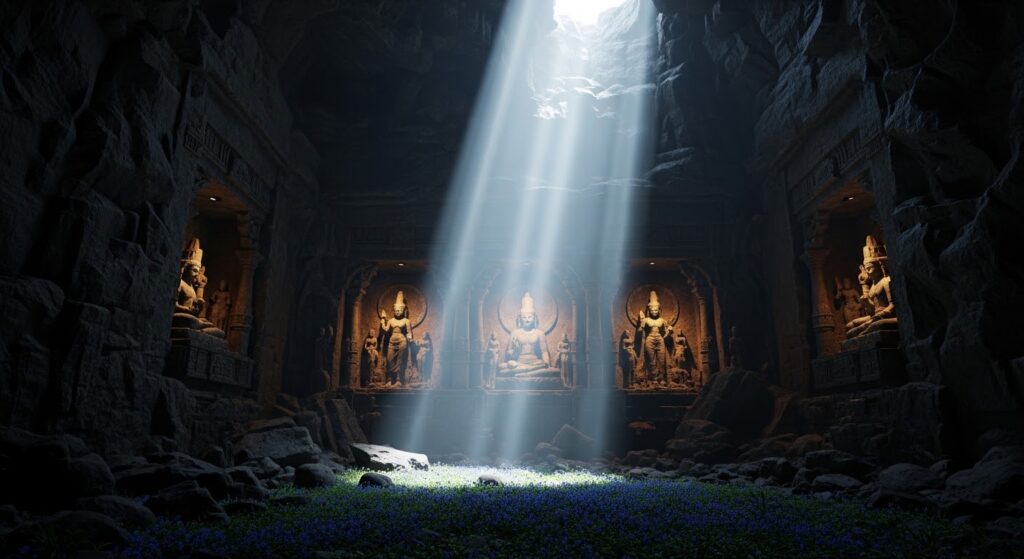
Most visitors come to Bhimashankar to seek blessings at one of India’s twelve revered Jyotirlingas. They admire the ancient temple, offer prayers, and continue toward nearby viewpoints. Yet hidden within the weathered basalt walls of this medieval monument lies an extraordinary collection of 13th-century sculptures that many travelers walk past without ever noticing.
As a finance student, I couldn’t help looking at these carvings differently. Instead of seeing old stones, I saw an asset class that has appreciated continuously for over eight centuries without generating a single financial statement. Every sculpture represents craftsmanship, engineering, culture, and history that has resisted depreciation despite relentless monsoon rains, earthquakes, changing dynasties, and thousands of daily visitors.
This journey through Bhimashankar became less of a pilgrimage and more of an architectural audit.
Viewing Heritage Through a Financial Lens
Financial assets generate returns over time. Heritage assets generate cultural returns for generations.
The sculptures surrounding Bhimashankar Temple have survived nearly 800 years with no modern technology protecting them. Unlike commercial real estate that demands continuous investment, these basalt masterpieces continue appreciating in historical significance despite environmental challenges.
If these sculptures were listed on a balance sheet, their market value would be impossible to calculate.
Their replacement cost?
- Impossible.
- Their scarcity?
- Absolute.
Their historical importance? - Irreplaceable.
This is precisely why heritage deserves to be viewed as long-term national capital.
The Opening Audit: High Risk vs High Reward
Reaching Bhimashankar during the August monsoon feels remarkably similar to investing in a high-risk venture.
The roads from Pune or Mumbai wind through dense forests where clouds descend to road level. Heavy rainfall often reduces visibility, while the final stretches become slippery due to constant moisture.
The physical investment includes:
- Long mountain drive
- Rain-soaked trekking paths
- Slippery basalt surfaces
- Dense forest conditions
- Constant changing weather
Unlike financial investments, however, the return begins the moment the temple emerges through drifting clouds.
The entrance itself feels like discovering an undervalued asset hidden deep inside Maharashtra’s Sahyadri mountains.
The Yadava Dynasty's Architectural Portfolio
Historians generally attribute the original temple structure to the Yadava dynasty during the 13th century, with later additions and restorations by subsequent rulers and patrons.
The temple is celebrated for its Hemadpanti architectural style, named after Hemadri (Hemadpant), a minister traditionally associated with this style, although historians continue to debate the exact origins and chronology of individual structures.
Regardless of attribution, the engineering remains extraordinary.
Large basalt blocks fit together with exceptional precision.
The stone continues resisting:
- Heavy monsoon rainfall
- Humidity
- Moss growth
- Seasonal temperature variations
- Centuries of natural erosion
From an engineering perspective, the structure has demonstrated remarkable resilience over hundreds of years.
That resilience itself is architectural equity.
Hidden Sculptures Most Pilgrims Miss
Most devotees focus their attention on the sanctum.
The real artistic treasury, however, lies outside.
Walk slowly around the temple’s exterior.
Look closely.
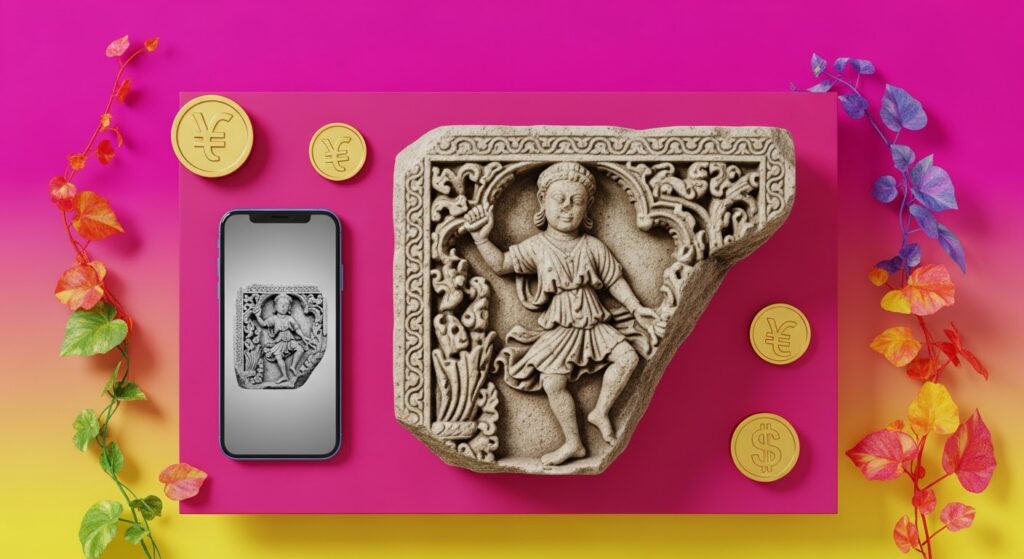
The stone walls reveal hundreds of intricate carvings hidden beneath layers of age.
Among them are:
- Lord Shiva motifs
- Divine guardians
- Floral ornamentation
- Celestial dancers
- Mythological figures
- Sacred geometric patterns
- Decorative pillars
- Animal sculptures
Many carvings are only partially visible because centuries of rainfall have softened fine details.
Yet even in their weathered condition, the artistic precision remains astonishing.
Quantifying Architectural Equity
Imagine evaluating every sculpture as an independent asset.
Each carving demanded:
- Skilled craftsmen
- Years of labor
- Quarrying basalt
- Transportation
- Architectural planning
- Religious symbolism
- Artistic mastery
Unlike modern mass production, every figure was individually hand-carved.
- Each sculpture therefore possesses complete uniqueness.
- Scarcity is one of the strongest drivers of value in economics.
- These sculptures are not merely scarce.
- They are impossible to reproduce authentically.
- That alone makes them culturally invaluable.
- Climate Versus Craftsmanship
- The Sahyadris receive enormous rainfall every monsoon.
- Water continuously flows across temple walls.
- Moisture encourages moss and biological growth.
- Tiny fractures gradually expand over centuries.
- Yet the carvings continue surviving.
Their survival illustrates the durability of basalt as a building material and the exceptional understanding medieval builders had of drainage, structural balance, and stone selection.
Every visible erosion mark tells a story—not of failure, but of endurance.
The Hidden Ledger Beyond the Temple
Many visitors never explore beyond the primary temple complex.
Those who take time to wander respectfully around the surrounding pathways often discover quieter corners where sculptures become easier to observe.
These areas offer:
- Better photography opportunities
- Less crowd interference
- Peaceful architectural appreciation
- Natural forest surroundings
- Mist-covered stone textures
During monsoon mornings, drifting clouds create dramatic lighting that highlights carvings in ways impossible during bright summer afternoons.
Photography enthusiasts should avoid touching sculptures or climbing on heritage structures while searching for unique angles.
The Cost of Discovery
The financial cost of visiting Bhimashankar remains surprisingly modest.
Expenses generally include:
- Expense Approximate Cost
- Shared transport/private bus Budget dependent
- Meals Affordable local options
- Entry to temple Free
- Trekking gear Raincoat and good shoes
- Camera Optional
The true investment isn’t money.
- It’s time.
- Walking slowly.
- Observing patiently.
- Looking beyond obvious attractions.
Those who rush through the temple often leave without realizing what they missed.
Heritage Through an ESG Perspective
Modern finance increasingly evaluates investments using Environmental, Social, and Governance (ESG) principles.
Remarkably, Bhimashankar fits naturally into this framework.
Environmental Value
The temple sits within the Bhimashankar Wildlife Sanctuary, home to rich biodiversity including the endangered Indian Giant Squirrel (Shekru). Visitors should follow sanctuary regulations, stay on designated paths, and minimize environmental impact.
Social Value
The temple continues serving as an active place of worship while supporting local livelihoods through tourism.
Governance
Conservation efforts by archaeological and temple authorities play a vital role in preserving the site’s long-term cultural significance, though ongoing maintenance remains an important challenge.
Viewing heritage through ESG reminds us that preservation is not only about protecting monuments but also about sustaining ecosystems, communities, and cultural continuity.
Practical Tips for Exploring the Sculptures
If your goal is to appreciate the carvings rather than simply complete a pilgrimage, keep these tips in mind:
- Visit early in the morning for softer light and fewer crowds.
- Wear shoes with excellent grip, especially during the monsoon.
- Carry waterproof protection for cameras and mobile phones.
- Move slowly around the temple’s exterior to notice fine details.
- Avoid touching or leaning on sculptures.
- Respect temple customs and photography restrictions where applicable.
- Carry reusable water bottles and avoid littering within the sanctuary.
- Final Appraisal: The True Net Worth of Bhimashankar
A finance student learns to calculate return on investment.
Bhimashankar teaches a different equation.
The monetary cost of reaching the temple is small.
The historical return is immeasurable.
These hidden 13th-century sculptures remind us that not every valuable asset appears on a balance sheet. Some survive quietly in mist-covered forests, appreciating in cultural worth with every passing century.
As travelers, we should treat these monuments not as tourist attractions but as long-term investments in our shared heritage. By visiting responsibly, supporting conservation, and encouraging others to look beyond the obvious, we help ensure that these remarkable works of medieval craftsmanship continue enriching future generations.
The greatest treasures of Bhimashankar are not hidden in vaults—they are carved into basalt, waiting patiently for those willing to slow down and truly see them.