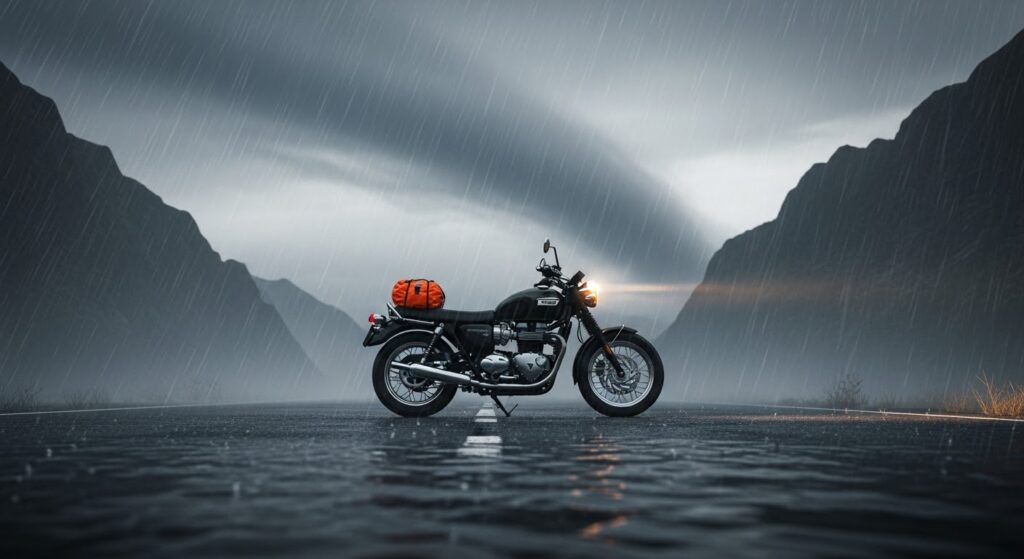
When the monsoon arrives in the Sahyadris, the landscape of Maharashtra undergoes a dramatic transformation. Roads that look ordinary during the dry months suddenly become channels of flowing rainwater, hairpin bends disappear into dense mist, and cliffs begin releasing mud, stones and loose debris onto the road. For a motorcycle rider leaving Mumbai for Bhimashankar, the journey is no longer simply a weekend ride into the mountains. It becomes an exercise in concentration, mechanical preparedness and respect for nature. The objective is not to conquer the Western Ghats through speed, but to negotiate every kilometre with patience and technical precision.
The Mumbai-to-Bhimashankar journey begins in a very different environment. Before the mountains appear, the rider must first deal with Mumbai’s monsoon chaos. Heavy rain can turn sections of the city’s roads into shallow rivers, while oily surfaces, painted lane markings, metal covers and standing water can dramatically reduce tyre grip. The first mistake many riders make is assuming that once they leave the city, the difficult part begins. In reality, the ride demands attention from the very beginning. Sudden braking, aggressive acceleration and fast lane changes become especially dangerous when rainwater conceals potholes and uneven surfaces.
As the motorcycle moves away from Mumbai and toward the Western Ghats, the character of the journey slowly changes. Traffic begins to thin, the landscape becomes greener and the road starts climbing. The air becomes cooler and heavier with moisture. In the distance, enormous walls of cloud sit over the Sahyadri ridges. Rain that was merely an inconvenience in the city becomes an important factor in every riding decision once the climb begins.
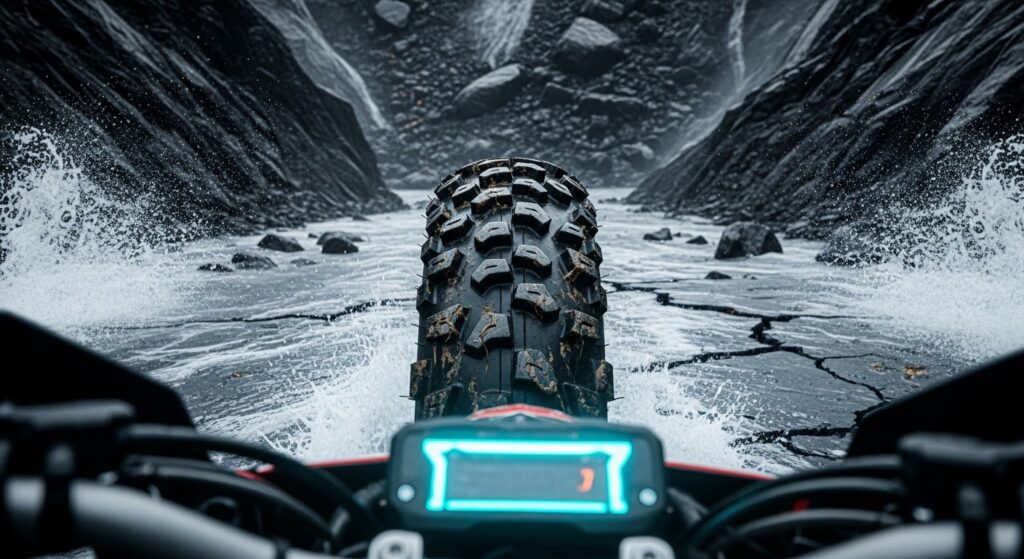
Before entering the ghat section, however, the motorcycle deserves as much attention as the rider. A monsoon mountain ride should never begin with the assumption that the machine will simply manage whatever the weather throws at it. Tyre condition is particularly important. Adequate tread depth is essential for dispersing water, while worn tyres can lose grip dramatically on wet surfaces. Brake pads, brake-fluid condition, chain lubrication, lights, indicators, battery connections and electrical components should also be checked. A loose chain, weak battery or malfunctioning headlight may seem like a minor mechanical issue in Mumbai, but the same problem can become considerably more serious on a remote mountain road during a downpour.
Wet-weather riding gear is equally important. A waterproof riding jacket and trousers, proper gloves and waterproof footwear can make the difference between remaining focused and becoming physically exhausted halfway through the ride. Modern waterproof-breathable materials such as Gore-Tex can help riders remain protected from persistent rain while reducing internal moisture buildup. A helmet visor that rapidly accumulates water can be another major problem. Anti-fog protection and a clean, water-repellent visor are valuable when the road disappears into mist. The goal is simple: keep the rider warm, dry and able to see clearly enough to make safe decisions.
The most noticeable change comes when the road begins climbing deeper into the Sahyadris. Rainwater starts running across the asphalt, sometimes in thin sheets and sometimes in streams powerful enough to obscure the road surface. A rider must learn to read the texture of the road rather than simply looking at its direction. Dark patches may indicate standing water. Greenish surfaces can indicate moss or algae. Mud deposited across a corner can be considerably more slippery than the wet asphalt around it. Potholes can disappear completely beneath water, making apparently shallow puddles potentially dangerous.
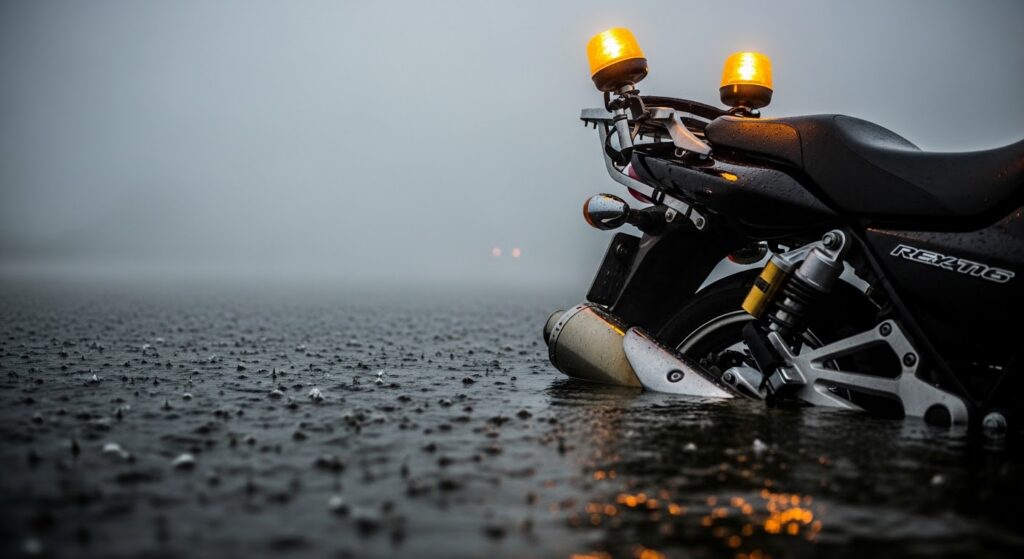
Aquaplaning is another hazard that deserves respect. When a tyre encounters more water than its tread can effectively displace, the contact between rubber and road can be reduced dramatically. The sensation can be sudden and unsettling, particularly at higher speeds. This is one reason why monsoon riding through the ghats rewards smooth inputs rather than aggressive ones. Abrupt acceleration, sudden braking or dramatic steering corrections can destabilize the motorcycle when available grip is already limited.
Then come the hairpin bends. The winding roads toward Bhimashankar demand a completely different rhythm from ordinary highway riding. Each bend requires the rider to assess the gradient, road surface, visibility, traffic and potential hazards before committing to the turn. Wet corners should never be treated as an opportunity to demonstrate lean angles or speed. Moss, mud, gravel and flowing water can appear exactly where a rider expects maximum traction. Maintaining a controlled speed before entering the corner and using smooth steering and throttle inputs is far more important than trying to carry unnecessary speed through the bend.
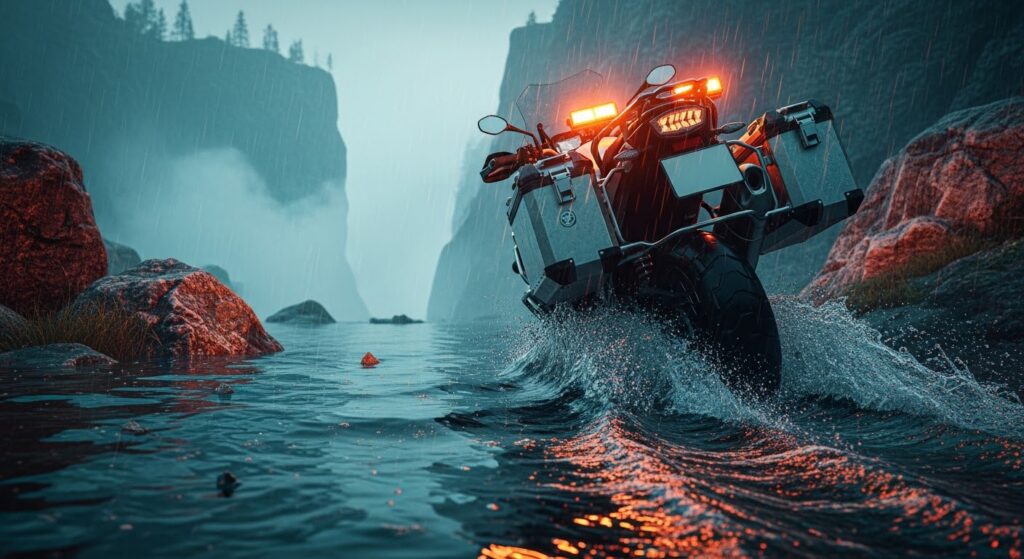
Gear selection becomes particularly important on steep and slippery sections. A lower gear can provide useful engine braking and help maintain better control on climbs and descents. However, engine braking should be used smoothly rather than aggressively. The same principle applies to the motorcycle’s throttle. Smooth power delivery helps maintain traction, especially when the rear tyre is climbing a wet incline. The rider should avoid sudden bursts of acceleration that can cause the rear wheel to spin on muddy or slippery surfaces.
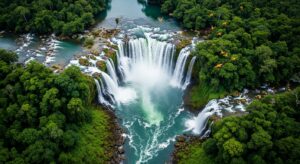
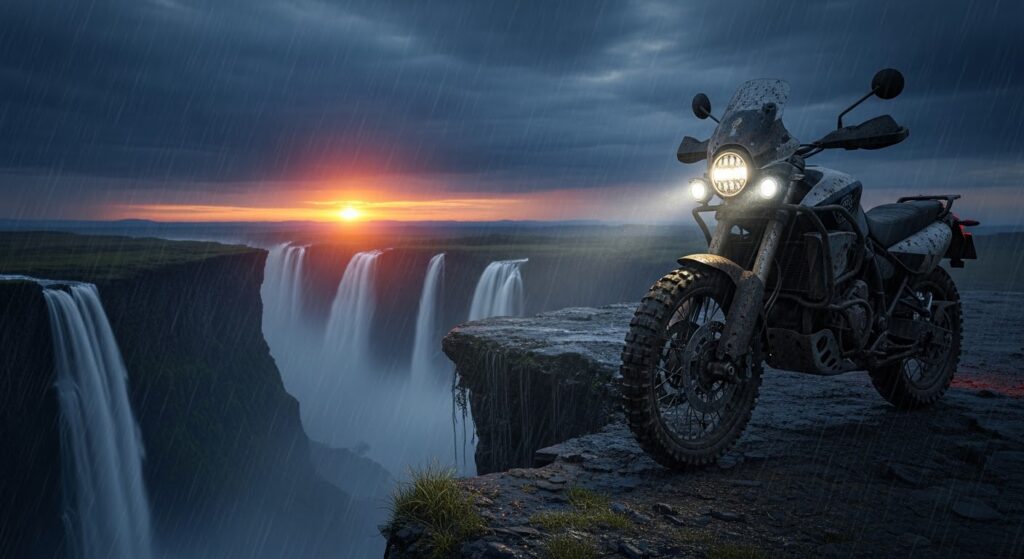
The scenery, meanwhile, becomes spectacular. The monsoon turns the Sahyadris into a vast green landscape of forests, cliffs, waterfalls and clouds. But the beauty of the mountains can also become a distraction. A rider who is busy looking at a waterfall or dramatic valley can miss a patch of mud, a pothole or a vehicle approaching around a blind corner. Photography and sightseeing should therefore happen only after reaching a genuinely safe stopping location. The mountain will still be there when the motorcycle is parked.
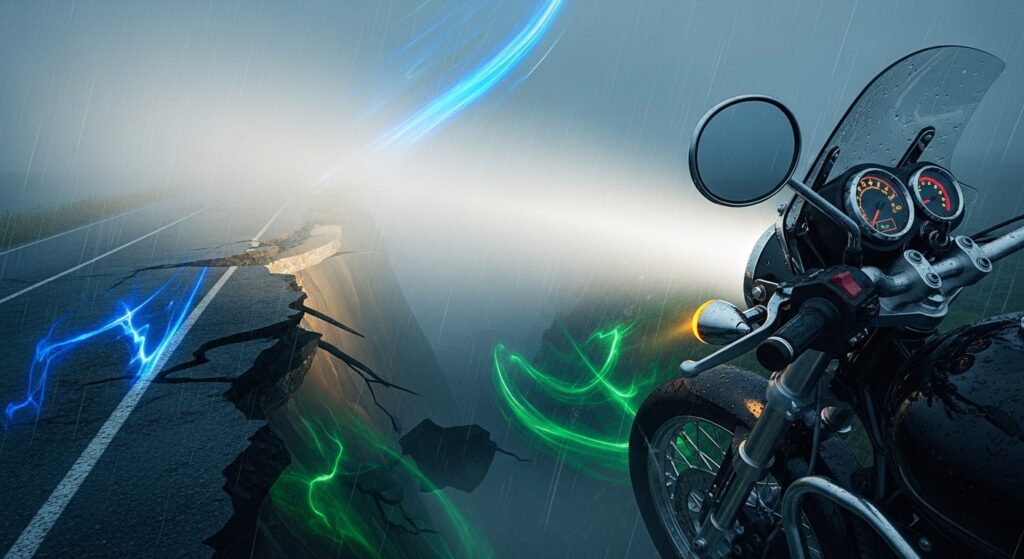
One of the most dramatic hazards on the Bhimashankar route is mist. As elevation increases and rain intensifies, visibility can suddenly deteriorate. The road ahead may disappear into a wall of white, leaving only a few metres of usable visual information. In such conditions, speed must fall immediately. Headlights should remain on, and the rider needs to become particularly alert to vehicles emerging from the opposite direction. Heavy vehicles and local traffic may appear suddenly from the mist, and narrow mountain roads leave little room for correcting an error.
Low visibility also changes how a rider should interpret road position. Instead of relying on speed and last-second reactions, the rider needs to anticipate what may be beyond the visible section. Blind bends deserve additional caution because the road could contain a stalled vehicle, fallen branch, loose stones, water crossing or another motorcycle. If visibility becomes genuinely unsafe, finding a secure place away from the traffic lane and waiting for conditions to improve can be the smartest decision of the entire journey.
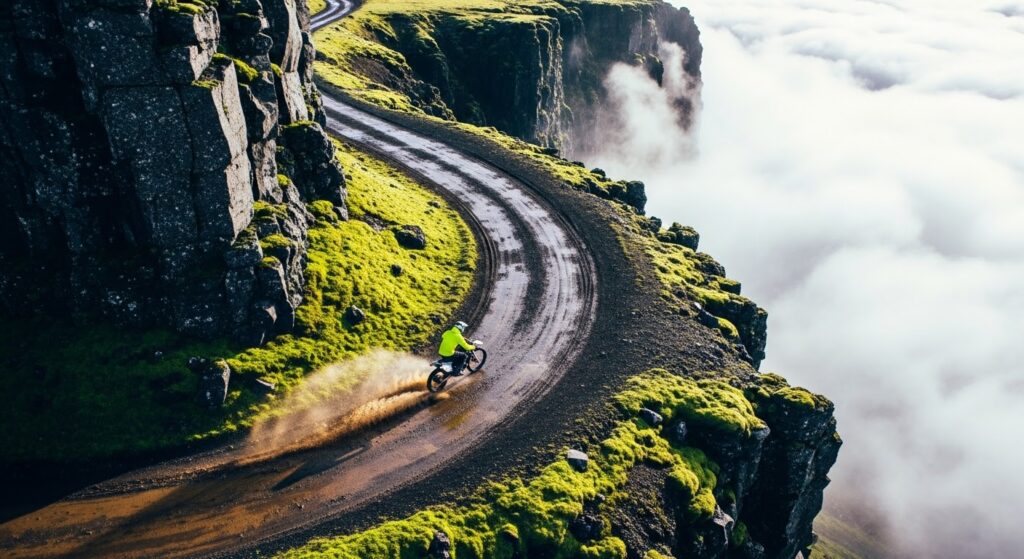
Rockfall is another hazard that cannot be controlled by rider skill alone. Heavy monsoon rainfall saturates mountain slopes, and loose rocks, soil and vegetation can move onto roads with little warning. Freshly fallen stones scattered across the asphalt are an obvious warning sign, but larger risks may exist above the road. Sections beneath unstable cliffs deserve particular caution, especially during intense or prolonged rainfall. Stopping directly beneath a steep rock face for photographs or shelter may expose riders to unnecessary danger.
Water crossings add another layer of uncertainty. During intense monsoon conditions, small seasonal streams can suddenly flow across the road. What appears to be a shallow sheet of water may conceal a deep depression, damaged road edge or loose stones. The safest approach is never to assume that flowing water is harmless simply because another vehicle has crossed it. The depth, speed and condition of the road underneath need to be considered before proceeding. If the crossing looks stronger than the motorcycle and rider can safely manage, turning back or waiting is not failure—it is good mountain judgment.
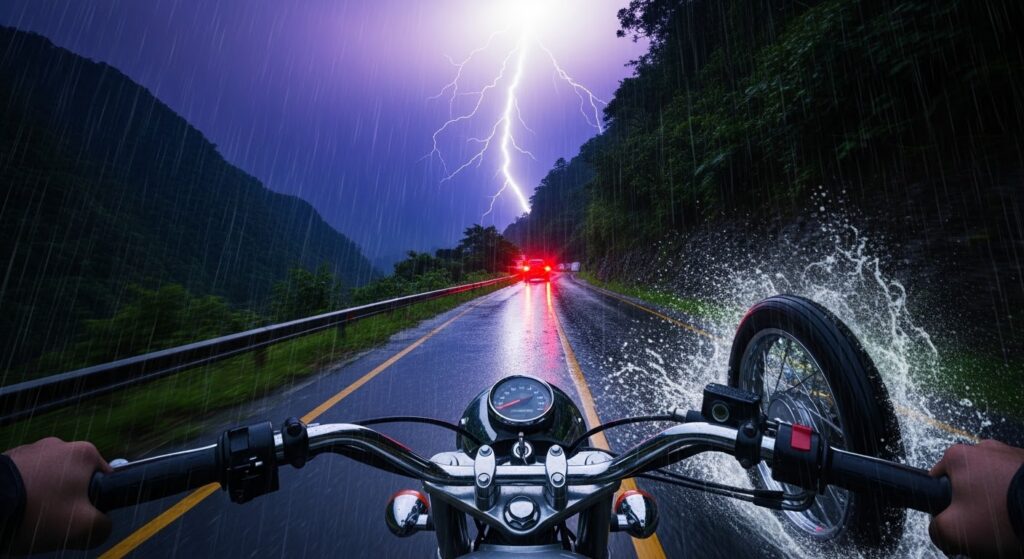
Traffic management becomes particularly important on narrow ghat roads. Local buses, trucks, cars and motorcycles may all be negotiating the same bends, often with limited visibility. Communication through controlled speed, positioning and appropriate lighting is more useful than trying to force one’s way through a tight section. Horns can provide additional warning around blind corners, but they should not replace caution. The fundamental principle is simple: assume that another vehicle may appear around every blind bend.
The final approach toward Bhimashankar can feel like the culmination of the ride. The temperature drops, the forest becomes denser and the atmosphere increasingly resembles a high-altitude monsoon environment. Strong winds, rain and mist can make the final section feel dramatically different from the roads left behind in Mumbai. By this stage, rider fatigue becomes another hidden hazard. Hours of concentration in wet clothing, combined with cold and reduced visibility, can slow reaction times. The final kilometres therefore require the same discipline as the first ones.
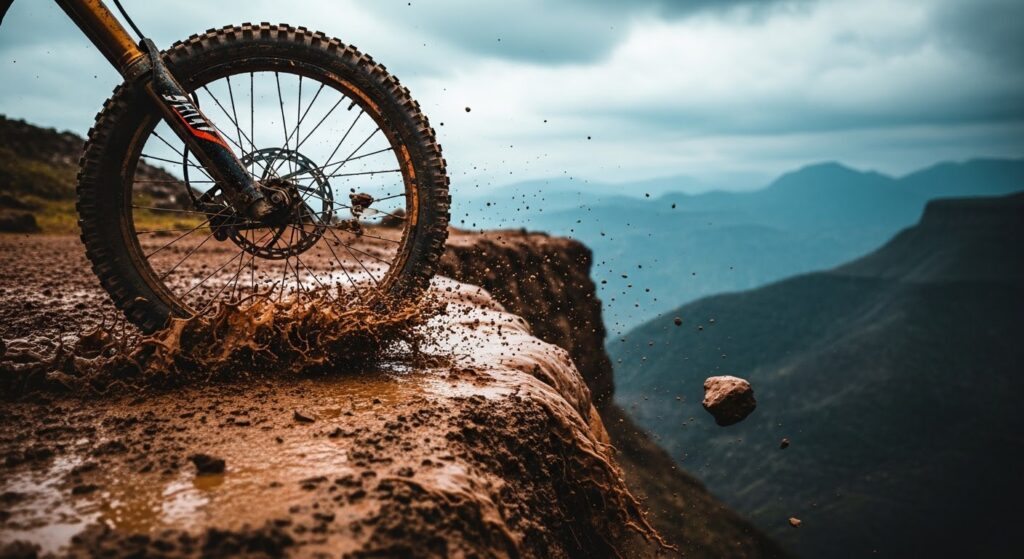
Reaching Bhimashankar during the monsoon can be incredibly rewarding. The temple town and surrounding forest are enveloped in greenery, clouds and the sound of rain. The Western Ghats seem almost alive during this season, with waterfalls appearing on hillsides and streams running through the forest. But the real achievement of the ride is not simply reaching the destination. It is completing the journey without allowing the excitement of the landscape to override good judgment.
Once the motorcycle is parked, the ride is not quite finished. A thorough post-ride inspection is especially useful after prolonged exposure to rain, mud and standing water. The chain should be cleaned and lubricated appropriately, while mud should be removed from vulnerable mechanical and braking areas. Electrical connectors and exposed components should be checked for signs of water intrusion. The motorcycle should be cleaned and dried rather than left covered in wet mud for long periods, helping reduce corrosion and premature wear.
The rider also needs recovery. Wet-weather mountain riding is physically and mentally demanding. Constantly monitoring traction, visibility, traffic, water crossings and road debris requires sustained concentration. Fatigue can quietly reduce judgment, which is why breaks are not merely about comfort. They are part of the safety strategy. A short pause in a secure location can restore concentration before the next section of the journey.
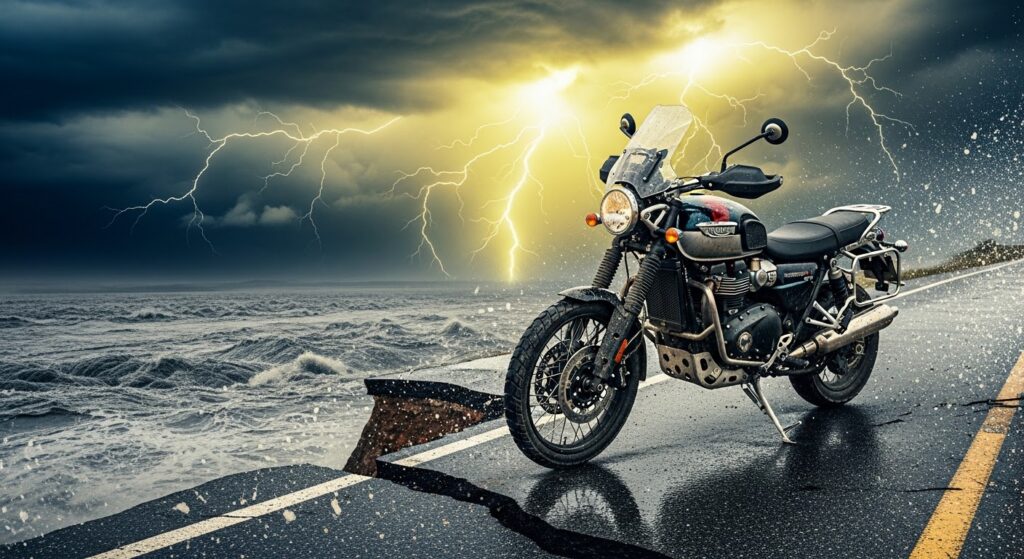
The Mumbai-to-Bhimashankar monsoon ride ultimately teaches an important lesson about motorcycle travel in the Western Ghats. The Sahyadris cannot be approached with an attitude of domination. Rain, mist, rockfall, flowing water and slippery roads operate according to forces that no rider can control. What the rider can control is preparation, speed, equipment, mechanical condition and decision-making.
There is a temptation in adventure riding to measure success by how quickly a destination is reached or how difficult a road can be conquered. In the monsoon Sahyadris, that philosophy can be dangerous. The better measure is much simpler: Did you read the road correctly? Did you slow down when conditions deteriorated? Did you turn back when the risk became unacceptable? Did you arrive with both rider and motorcycle intact?

The Bhimashankar road does not need to be defeated. It needs to be respected. During the monsoon, every hairpin, every stream, every patch of mist and every falling stone is a reminder that the mountains set the rules. The motorcycle may provide the power to climb the road, but only patience and discipline can carry the rider safely through it.
And when the rain finally begins to ease and the clouds open for a moment over the green Sahyadris, the reward is not just the destination ahead. It is the realization that sometimes the greatest adventure is knowing when to slow down
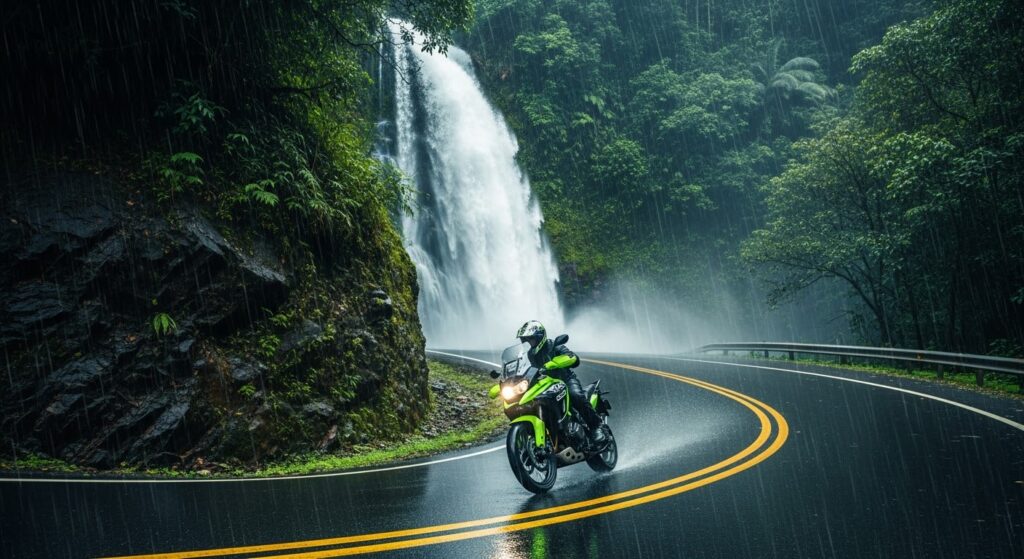
Leaving Pune Before the City Wakes Up

For a monsoon road trip, an early start makes a huge difference.
Leaving around **5 AM** allows you to get out of Pune before the roads become busy and gives you the opportunity to experience the changing landscape as the city gradually disappears behind you.
The journey toward **Rajgurunagar** takes you away from Pune’s urban landscape and into increasingly rural surroundings.
Buildings begin giving way to agricultural fields. Traffic becomes lighter. The Western Ghats slowly become more prominent on the horizon.
And during the monsoon, this section of Maharashtra can be spectacular.
Clouds hang low over the hills while roadside vegetation becomes almost impossibly green. Small streams and temporary waterfalls can appear beside the road after heavy rainfall.
This is one of those journeys where the road itself becomes part of the destination.