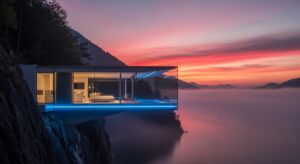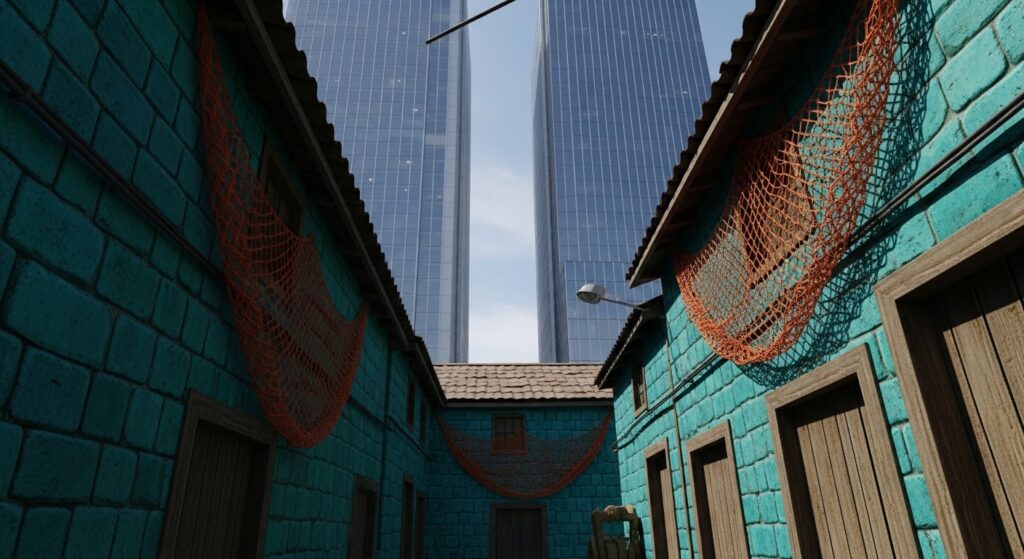
Imagine standing in a narrow Mumbai lane where the smell of the sea and drying fish mixes with the sound of traffic, construction and distant horns. Look upward, and the scene becomes almost surreal: traditional low-rise homes sit beneath the shadow of glass-and-concrete towers worth crores of rupees.
This is the paradox of Mumbai’s **Koliwadas**.
Long before Mumbai became India’s financial capital, before reclamation projects connected its islands and before skyscrapers transformed its skyline, Koli fishing communities were living along these shores. Their settlements were shaped around the sea, fishing, community and shared working spaces.
Today, many of these villages occupy some of the most valuable urban land in the country.
The question is no longer simply whether Koliwadas can survive.
It is whether **Mumbai can modernize without erasing the communities that existed before modern Mumbai itself.**
The Hidden Coastline of Mumbai
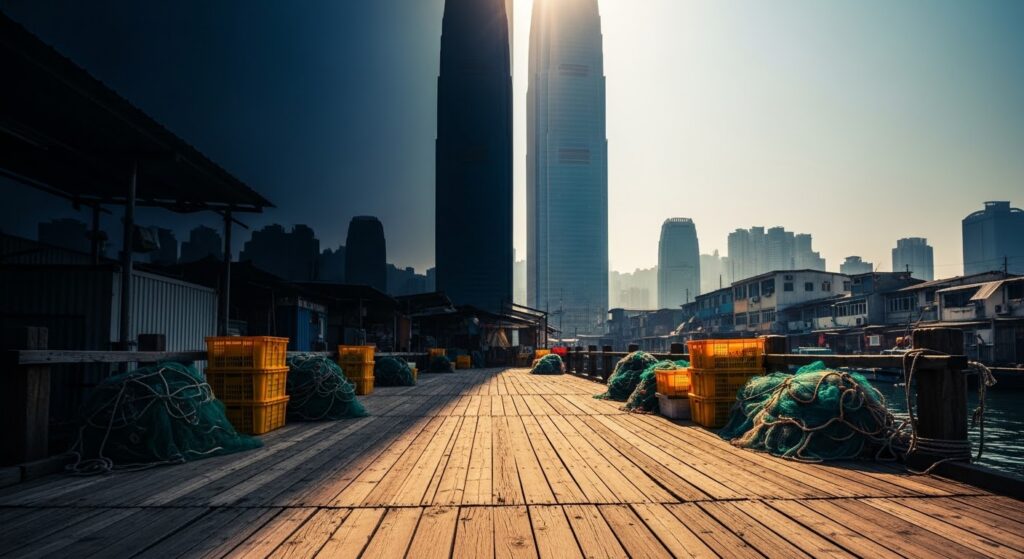
Mumbai’s contemporary skyline can make it easy to forget that the city was once a collection of islands surrounded by fishing settlements.
Koli communities developed their lives around the coastline. Fishing was not merely an occupation; it influenced housing, food, festivals, social relationships and the physical organization of the settlement.
Walk through a traditional Koliwada and the difference from a conventional Mumbai neighbourhood becomes immediately visible.
The lanes are narrow. Houses are packed closely together. Fishing equipment occupies public and semi-public spaces. Boats, nets, baskets and drying areas remain connected to everyday life.
The settlement functions less like an apartment complex and more like a **living village embedded inside a megacity**.
And then, above it, comes the modern city.
Luxury towers rise behind traditional homes. Roads become wider. Coastal infrastructure expands. Land values increase.
The visual contrast is extraordinary.
It is also the beginning of the conflict.
Mumbai's Original Urban Density
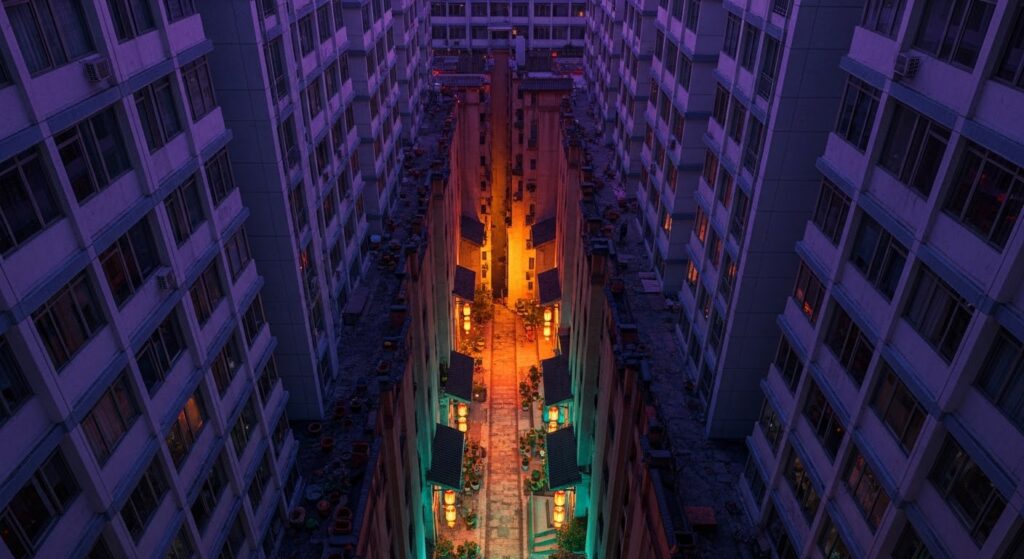
One of the most fascinating aspects of Koliwadas is their ability to accommodate generations of families within extremely limited land footprints.
Mumbai’s land shortage has created an unusual form of organic density.
A family may begin with a modest structure. As children grow up and new generations arrive, additional floors or rooms can be added where structurally and legally possible.
The result resembles a **vertical village**.
Unlike a modern high-rise, however, this vertical growth is not necessarily designed by a single architect or developer. It evolves incrementally around family requirements.
One generation occupies one level.
Another generation expands upward.
The ground level may remain connected to fishing, storage or commercial activity.
The roof becomes another usable space.
The architecture therefore reflects something fundamental about Mumbai: **when land cannot expand horizontally, life expands vertically.**
But there is a major difference between a conventional skyscraper and a Koliwada.
A tower primarily organizes individual households.
A Koliwada organizes a **community**.
Architecture Built Around the Sea
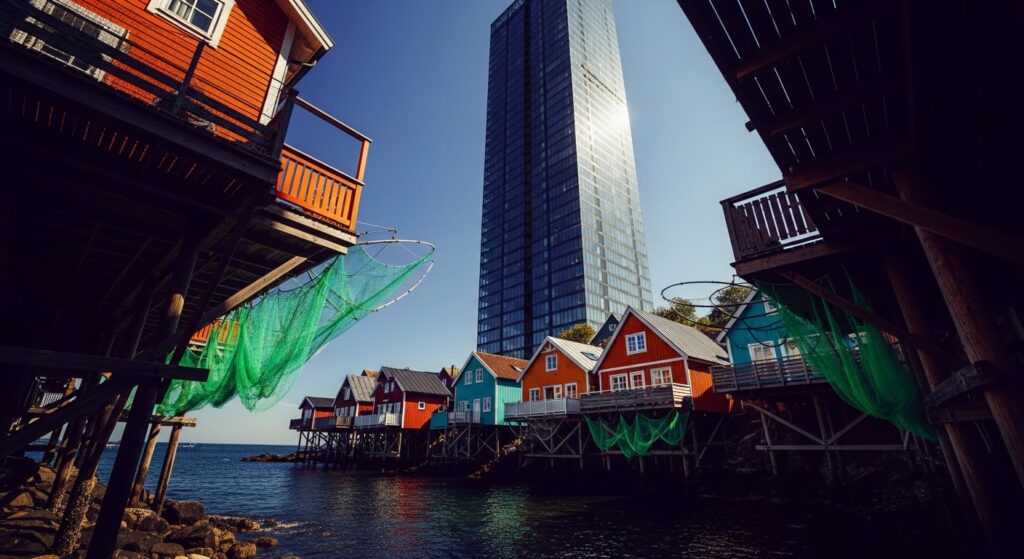
Traditional coastal settlements evolved according to environmental conditions.
Ventilation, drainage, narrow lanes, elevated portions of buildings and proximity to the water all reflect the relationship between architecture and geography.
However, it would be misleading to romanticize every traditional structure as perfectly engineered against modern climate risks.
Mumbai’s coastline is changing.
Extreme rainfall, flooding, tidal events, rising temperatures and deteriorating infrastructure create challenges that older settlements were never designed to handle at today’s scale.
The irony is striking.
The traditional communities that have lived beside the sea for generations are now confronting climate risks intensified by the growth of the modern metropolis.
Their experience may therefore contain valuable lessons—but preserving the past cannot mean refusing every form of modernization.
The challenge is to determine **what should change and what must remain.**
When the Drying Yard Disappears
For outsiders, a Koliwada can look like a collection of old houses.
For residents, it is an economic ecosystem.
Fishing requires space.
Nets need to be repaired and dried. Fish needs to be processed. Boats need access. Equipment needs storage. Families need places to work together.
That makes communal and semi-public spaces just as important as individual houses.
This is where redevelopment becomes complicated.
A building can be replaced.
A house can be reconstructed.
But what happens when the open spaces connecting dozens of households disappear?
A taller building may technically provide more floor area while simultaneously destroying the spatial relationships that allow a fishing community to function.
The transformation can therefore be summarized in a single visual sequence:
**Boats → Nets → Drying yards → Concrete walls → Glass towers.**
The question is whether the final stage represents development—or the disappearance of an entire ecosystem.
The Land Rights Battle
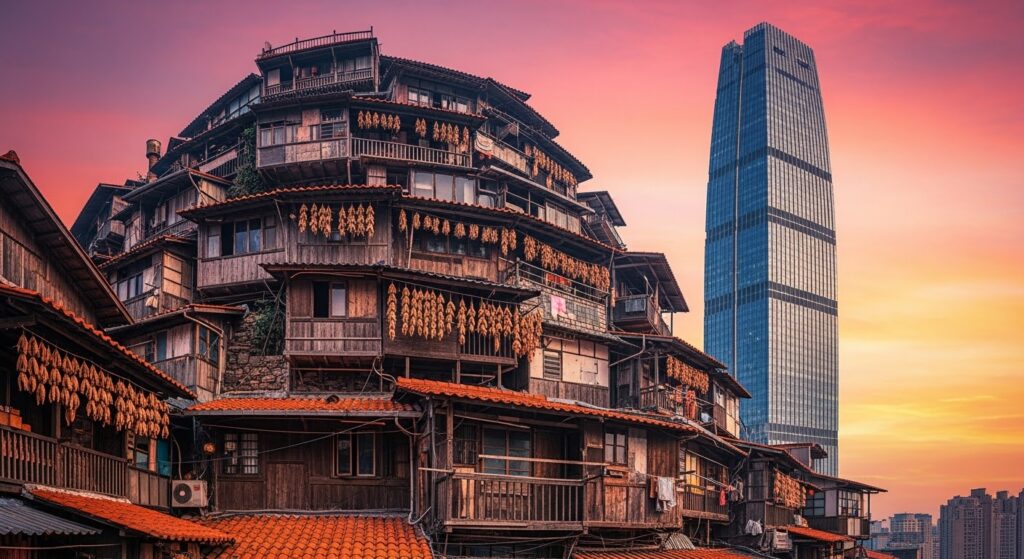
The Koliwada story is also a legal and planning story.
Traditional settlements often have historical land-use characteristics that differ from conventional modern layouts. Questions surrounding gaothan areas, land rights, development regulations, environmental rules, heritage and redevelopment can become highly complex.
This is why describing the issue simply as “developers versus Kolis” misses the larger picture.
Residents want secure homes, better infrastructure and economic opportunities.
Developers see valuable land in a city where developable space is extraordinarily expensive.
Urban planners must accommodate population growth, transport infrastructure, sanitation, flood management and housing demand.
Government agencies must balance competing regulations and public interests.
And younger residents may want something different from both sides.
They may want modern housing without abandoning their community.
That is the real challenge.
Are Koliwadas Slums or Heritage Villages?
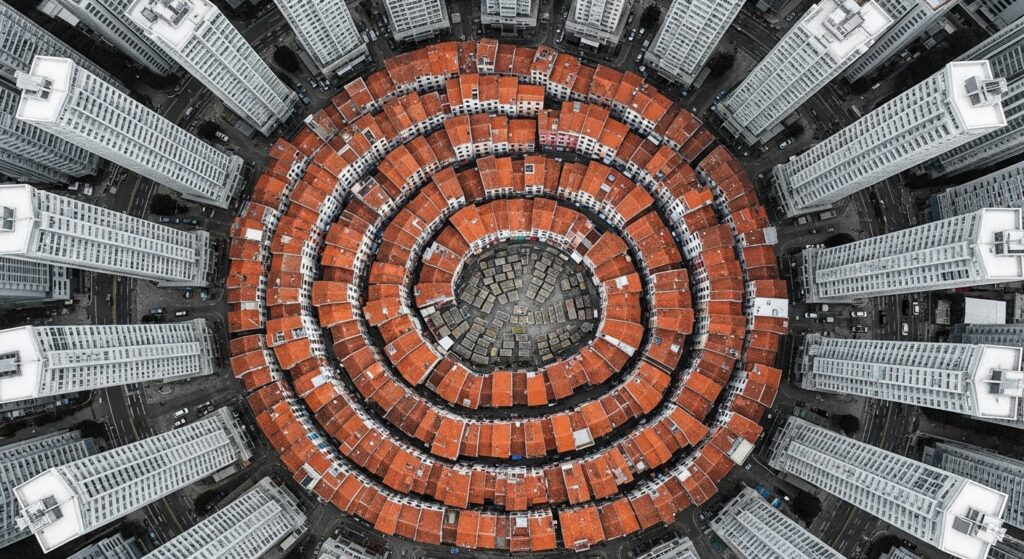
This question reveals one of Mumbai’s deepest urban contradictions.
From a purely physical perspective, some Koliwada structures may appear congested, irregular or poorly serviced.
But describing an entire settlement only through the language of informal housing ignores its history and social organization.
A Koliwada is not simply a housing cluster.
It can contain:
- Fishing-based livelihoods
- Community networks
- Religious spaces
- Traditional food systems
- Intergenerational knowledge
- Informal economic activity
- Shared public spaces
- A distinct architectural identity
- A direct relationship with the coastline
Destroying the buildings without understanding these connections could preserve neither the people nor the culture.
At the same time, heritage cannot become an excuse for forcing families to live in unsafe or inadequate conditions.
**Preservation must include people, not just buildings.**
The Younger Generation Is Changing the Story
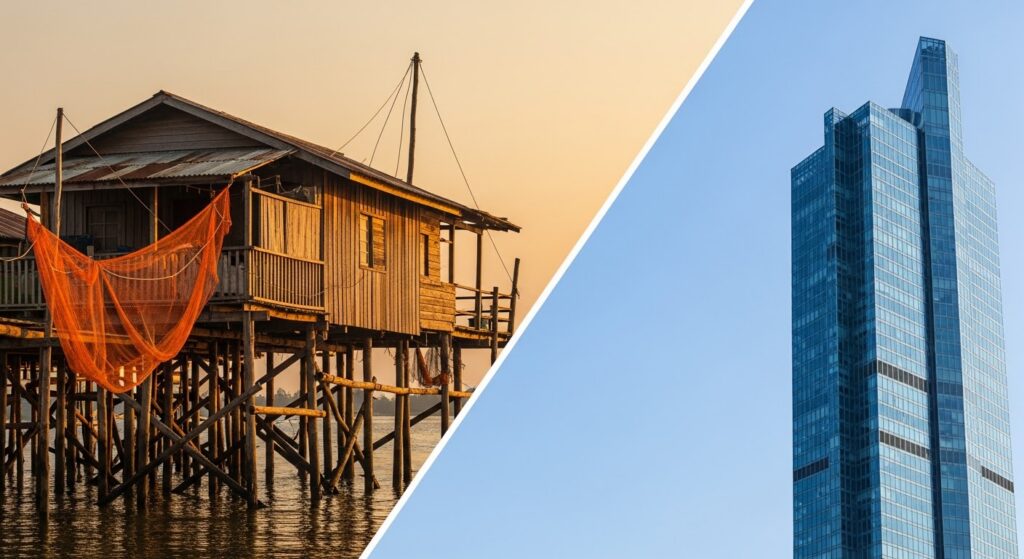
The most interesting development may be happening through smartphones.
Younger members of coastal communities are increasingly capable of documenting their neighbourhoods themselves
- Photographs can record disappearing structures.
- Videos can preserve oral histories.
- Digital maps can document traditional spaces.
Social media can turn a local redevelopment dispute into a citywide conversation.
This changes the balance of visibility.
For decades, Mumbai’s skyline was documented from the perspective of towers, roads, developers and infrastructure.
Now the people living beneath those towers can tell their own story.
The Koliwada is no longer simply a place that outsiders visit with a camera.
It can become a community that **documents itself**.
Can the Koliwada Become a Model for Sustainable Density?
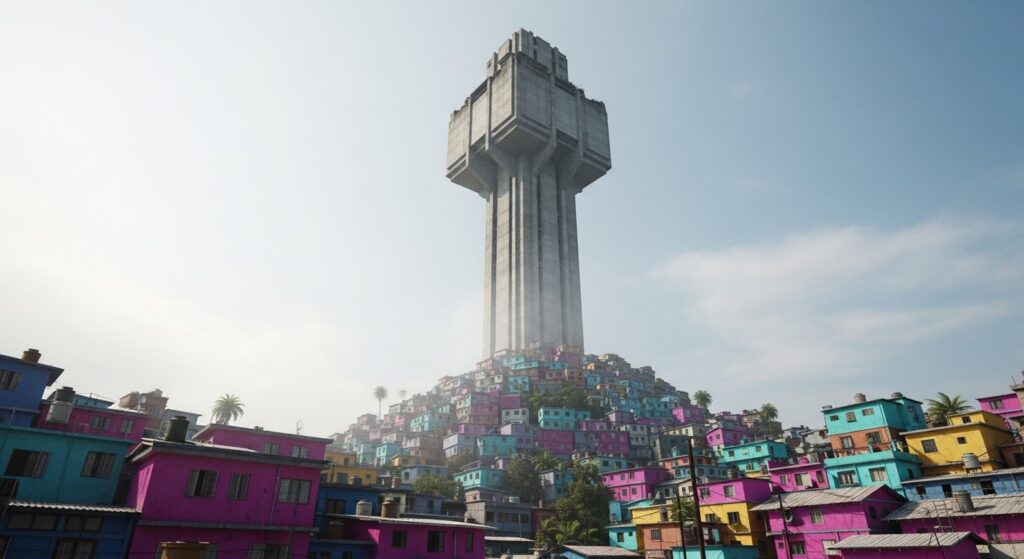
There is an intriguing lesson hidden inside the apparent disorder.
Mumbai desperately needs density.
But density does not necessarily have to mean isolated apartment towers.
The Koliwada model demonstrates another possibility: **high population density combined with strong social connections and shared economic spaces.**
Imagine upgrading traditional settlements without eliminating their identity.
- Safer buildings could replace dangerous structures.
- Drainage could be improved.
- Flood resilience could be strengthened.
- Sanitation and waste management could be modernized.
- Homes could be expanded vertically where appropriate.
- Public spaces could be protected.
- Fishing infrastructure could be preserved.
- Community facilities could be upgraded.
- The objective would not be to freeze the Koliwada in the past.
- It would be to allow it to **evolve without disappearing.**
That could offer Mumbai a valuable alternative to the idea that every valuable urban parcel must ultimately become a conventional high-rise development.
The Climate Question
Climate change makes this debate even more urgent.
Coastal communities face some of the city’s greatest environmental risks.
Flooding can damage homes and equipment.
Extreme rainfall can overwhelm drainage.
Heat can make dense housing increasingly uncomfortable.
Changing marine conditions can affect traditional livelihoods.
The answer cannot simply be relocation.
Moving a fishing community away from the sea may solve one physical problem while destroying the economic foundation of the community.
But remaining in vulnerable structures without upgrading them is equally unrealistic.
Mumbai therefore faces a difficult choice:
**Do we relocate communities, rebuild them, or redesign the settlements around climate resilience?**
The answer may ultimately require different solutions for different Koliwadas.
Mumbai's Future Beneath the Skyscrapers
- Mumbai has always been a city of transformation.
- Islands became one metropolis.
- Waterfronts became reclaimed land.
- Industrial districts became commercial centres.
- Mill lands became residential towers.
And traditional villages found themselves surrounded by one of the world’s most expensive urban real-estate markets.
The Koliwadas represent another chapter in that transformation.
Their future should not be reduced to a choice between **heritage and development**.
The real opportunity is to create a third option:
**development with memory.**
A modern Koliwada could have stronger buildings, better roads, climate-resilient infrastructure and modern amenities while retaining its community spaces, cultural identity and relationship with the sea.
That would not be a failure of modernization.
It could be one of Mumbai’s most sophisticated forms of modernization.
The Village That Refuses to Disappear
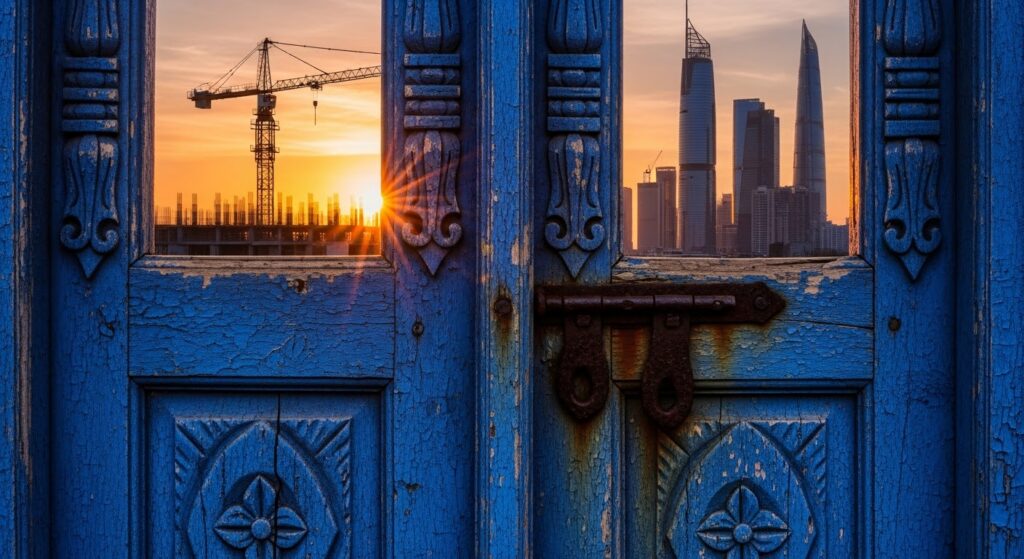
At sunset, the contrast becomes even more dramatic.
Fishing boats return toward the shore while the windows of skyscrapers begin to light up.
Two Mumbais appear in the same frame.
One represents global finance, luxury housing and vertical urban development.
The other represents fishing, community and a coastline that existed long before Mumbai became a megacity.
The future of the Koliwadas will ultimately tell us something much bigger about Mumbai.
A city is not simply its buildings.
It is the accumulated memory of the people who lived there before those buildings existed.
Mumbai has spent centuries reshaping its relationship with the sea.
Now it faces a different challenge:
**Can it build the city of tomorrow without burying the communities that knew this coastline first?**
The answer may determine whether Mumbai’s future is merely taller—or genuinely more inclusive.