India’s Fastest Infrastructure Revolution Has a Slowest Moving Problem
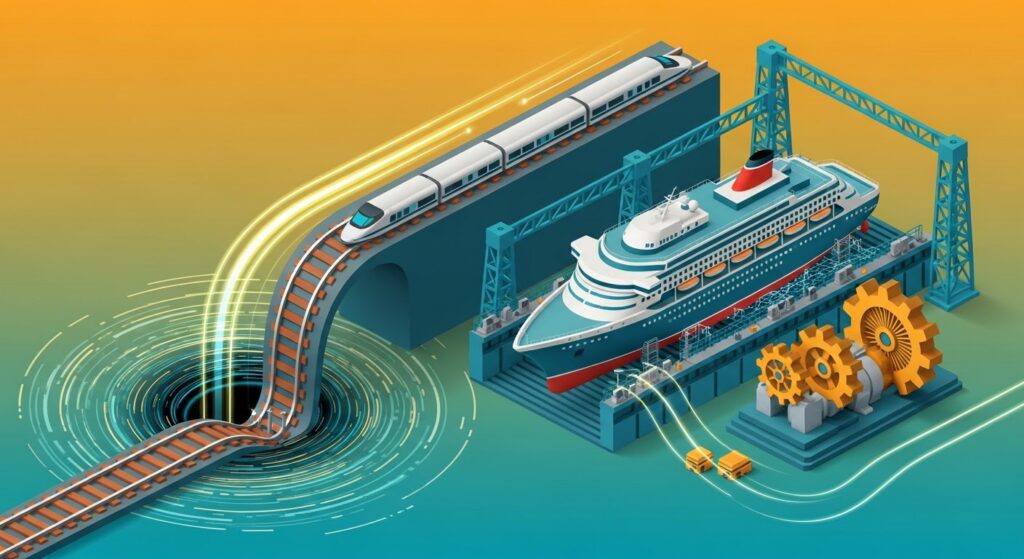
“India is spending billions on bullet trains and luxury liners, but there is a massive problem: we have nobody qualified to run them. While thousands of MBAs, engineers, and finance professionals graduate every year, only a tiny fraction possess the specialized expertise required for high-speed rail networks and modern cruise operations. The hardware is arriving rapidly—but the software, in the form of highly trained human capital, is still loading.”
India stands at the edge of one of the most transformative transportation revolutions in its modern history. Massive investments are reshaping mobility through the Mumbai-Ahmedabad High-Speed Rail Corridor, expanding metro systems, dedicated freight corridors, smart ports, and world-class cruise terminals. Simultaneously, coastal tourism is receiving unprecedented attention, with cruise infrastructure expanding across Mumbai, Kochi, Goa, Chennai, Visakhapatnam, and other strategic ports.
The physical infrastructure tells a remarkable story of ambition.
- Advanced stations are rising.
- State-of-the-art signaling equipment is being installed.
- Ballastless railway tracks are replacing conventional rail engineering.
- Modern cruise terminals capable of handling thousands of passengers are being commissioned.
- Luxury hospitality companies are preparing floating resorts.
- International technology partners are transferring sophisticated equipment.
- Yet beneath this impressive hardware lies an uncomfortable reality.
India’s biggest infrastructure challenge over the next decade may not be financing, engineering procurement, or land acquisition.
It may simply be the shortage of people capable of operating these systems safely and efficiently.
Unlike conventional railways or traditional hotels, high-speed rail and cruise industries operate under exceptionally specialized technical frameworks where small operational mistakes can have enormous financial and safety consequences.
This creates what economists call a structural talent deficit—not merely a temporary shortage of workers, but a mismatch between educational output and industrial demand.
The Ghost in the Growth Machine
Infrastructure development often creates visible symbols of progress.
- Bridges.
- Stations.
- Ports.
- Ships.
- Tracks.
But the true engine behind every successful transportation ecosystem is invisible.
It is people.
A bullet train traveling at approximately 320 km/h—and potentially faster in future generations—demploys engineering principles fundamentally different from those governing conventional rail systems.
Similarly, a luxury cruise ship carrying nearly 5,000 passengers functions as an integrated city, hotel, hospital, logistics center, power plant, entertainment complex, customs checkpoint, and emergency response system simultaneously.
These industries cannot simply recruit ordinary engineers and expect immediate operational readiness.
They require professionals possessing years of niche certification, international regulatory knowledge, technical discipline, and operational judgment.
- That is precisely where India currently faces its greatest bottleneck.
- Hardware Is Ready. Human Capital Is Not.
- Government investments continue accelerating.
- Rail corridors advance.
- Cruise terminals expand.
- Tourism policies encourage coastal development.
- Private operators prepare investment pipelines.
- International partnerships continue growing.
However, operational readiness depends upon thousands of specialized professionals including:
- High-speed railway engineers
- Automatic train control specialists
- Railway systems integration experts
- Rolling stock maintenance engineers
- Maritime operations managers
- Ship safety auditors
- Cruise hospitality directors
- Marine legal experts
- Engine officers
- Deck officers
- Fleet planners
- Emergency response coordinators
Many of these occupations barely exist within India’s conventional educational ecosystem.
Universities continue producing graduates suited for traditional industries while emerging sectors require entirely different competencies.
The result is a widening skills mismatch.
The High-Speed Technical Wall
Traditional civil engineering programs remain excellent foundations for highways, bridges, dams, and standard railway infrastructure.
High-speed rail changes the equation completely.
When trains travel at several hundred kilometers per hour, microscopic imperfections become major engineering risks.
- Track geometry tolerances become dramatically tighter.
- Bridge vibration characteristics require greater precision.
- Thermal expansion calculations become increasingly complex.
- Noise management grows more demanding.
- Passenger comfort depends upon engineering details measured in millimeters rather than centimeters.
- Consequently, ballastless track systems require specialized expertise beyond conventional railway engineering.
Engineers accustomed to traditional rail construction frequently require extensive retraining before contributing effectively to high-speed projects.
Ballastless Track Technology Demands New Skills
Conventional railway systems often rely upon crushed stone ballast beneath rails.
High-speed systems increasingly employ ballastless slab tracks.
These systems provide superior stability, reduced maintenance, improved ride quality, and greater operational reliability.
However, construction tolerances become extraordinarily precise.
- Concrete quality.
- Foundation alignment.
- Track elasticity.
- Drainage systems.
- Expansion joints.
Each component demands specialized understanding rarely emphasized within ordinary civil engineering curricula.
Simply possessing a civil engineering degree no longer guarantees readiness for high-speed railway construction.
Automated Signaling Is an Entirely Different Discipline
Modern bullet trains depend heavily upon digital control systems rather than traditional signal observations.
These include:
- Automatic Train Protection (ATP)
- Automatic Train Operation (ATO)
- European Train Control System concepts
- Continuous communication networks
- Advanced telecommunications
- Cybersecurity integration
- Artificial intelligence diagnostics
This requires multidisciplinary expertise combining:
- Electrical engineering.
- Software engineering.
- Electronics.
- Communications.
- Data science.
- Systems engineering.
- Cybersecurity.
Very few undergraduate engineering programs currently integrate all these competencies into one coherent educational pathway.
- Knowledge Transfer Remains a Strategic Priority
- International collaboration has become essential.
- Japanese expertise contributes significantly to India’s high-speed ambitions.
- European engineering firms provide additional technical guidance.
- Foreign consultants support:
- Design validation.
- Construction supervision.
- Systems integration.
- Safety certification.
- Operational planning.
- Maintenance protocols.
While this collaboration accelerates infrastructure deployment, long-term sustainability requires domestic capability development.
Without systematic knowledge transfer, dependence on overseas expertise may persist for decades.
Creating indigenous specialists therefore becomes an economic necessity rather than merely an educational aspiration.
Engineering Alone Cannot Deliver Operational Excellence
Even perfectly engineered infrastructure requires sophisticated management.
This leads directly to another overlooked challenge.
Corporate leadership
The MBA and CA Competency Gap
India produces thousands of highly capable MBAs and Chartered Accountants every year.
These professionals excel across banking, consulting, manufacturing, finance, taxation, and corporate strategy.
However, high-speed transportation introduces management complexities absent from traditional business education.
General management frameworks often prove insufficient.
Transportation ecosystems require industry-specific operational intelligence.
Why Generic MBAs Face Challenges
Most MBA programs emphasize:
- Marketing.
- Finance.
- Human resources.
- Operations.
- Strategy.
These subjects remain valuable.
- Yet few institutions teach:
- Railway capacity optimization.
- Rolling stock lifecycle economics.
- Integrated maintenance planning.
- Crew scheduling algorithms.
- Marine fuel economics.
- Port logistics.
- Cruise itinerary optimization.
- Passenger safety regulation.
- Seasonal demand forecasting.
- International maritime compliance.
Consequently, organizations frequently recruit experienced international managers to lead operations.
The Financial Complexity Behind Bullet Trains
Bullet train economics differ dramatically from conventional transportation.
Management teams must understand:
- Ridership forecasting.
- Peak demand optimization.
- Energy consumption.
- Maintenance windows.
- Revenue management.
- Station commercial development.
- Asset utilization.
- Long-term lifecycle costs.
- Infrastructure financing.
- Regulatory compliance.
These financial models require highly specialized operational knowledge.
General accounting expertise alone cannot substitute for transportation economics.
Chartered Accountants Need Sector Knowledge
Chartered Accountants remain indispensable.
However, transportation infrastructure introduces unique financial complexities including:
- Long depreciation cycles.
- Public-private partnership accounting.
- Infrastructure financing.
- Asset impairment.
- International procurement.
- Foreign currency exposure.
- Capital-intensive maintenance planning.
- Regulatory reporting.
Professionals who combine accounting expertise with transportation sector specialization will become increasingly valuable.
Maritime Business Is Even More Specialized
Cruise operations represent one of the world’s most complex hospitality businesses.
Unlike land-based hotels, cruise companies simultaneously manage:
- Accommodation.
- Restaurants.
- Entertainment.
- Medical facilities.
- Immigration compliance.
- Fuel procurement.
- Port scheduling.
- International taxation.
- Waste management.
- Environmental regulation.
- Emergency preparedness.
Hospitality education rarely addresses this extraordinary operational integration.
Blue Economy and the Maritime Officer Deficit
India possesses one of the world’s longest coastlines and enormous maritime potential.
The Blue Economy extends beyond shipping.
It includes:
- Cruise tourism.
- Marine logistics.
- Coastal transportation.
- Port services.
- Offshore energy.
- Marine technology.
- Ocean research.
- Luxury tourism.
Yet one persistent challenge remains.
Qualified officers.
Why Officers Choose International Fleets
Experienced deck officers and engine officers frequently accept positions aboard internationally flagged vessels.
Reasons include:
- Higher salaries.
- Broader career progression.
- Global operational exposure.
- Advanced technology.
- Structured training.
- International certification pathways.
- Competitive retirement benefits.
- Professional prestige.
As a result, domestic cruise operators compete for a relatively limited talent pool.
Hospitality at Sea Is Not Hospitality on Land
Many professionals assume luxury cruise operations resemble five-star hotels.
The similarities are superficial.
Cruise hospitality requires expertise in:
- Passenger safety drills.
- Maritime emergency response.
- International sanitation standards.
- Cabin logistics.
- Port turnaround operations.
- Multi-national workforce coordination.
- Medical evacuation planning.
- Weather-related itinerary adjustments.
- Security protocols.
- Continuous guest engagement during multi-day voyages.
Hotels rarely prepare professionals for these unique operational environments.
Safety Certification Is a Major Bottleneck
Cruise operations function under extensive international regulation.
Personnel often require familiarity with globally recognized maritime safety frameworks and vessel-specific operating procedures.
Similarly, high-speed rail personnel operate under rigorous safety management systems where certification standards are highly specialized.
Developing training ecosystems that align with these operational requirements takes time, institutional investment, and industry partnerships.
The Professional Pivot Roadmap
The talent shortage also represents a career opportunity.
Professionals willing to specialize can position themselves within sectors expected to expand over the coming decade.
Instead of remaining generalists, many engineers, managers, finance professionals, and hospitality specialists can pursue targeted learning aligned with emerging transportation industries.
Examples include:
Engineers
Civil engineers can build expertise in:
- High-speed rail infrastructure
- Railway systems engineering
- Digital signaling
- Systems integration
- Predictive maintenance
- Railway electrification
Mechanical engineers can specialize in:
- Rolling stock maintenance
- Condition monitoring
- Reliability engineering
- Fleet lifecycle management
Electrical engineers can focus on:
- Power systems
- Communication networks
- Railway automation
- Control systems
- Management Professionals
MBA graduates may strengthen their profiles through industry-focused learning in:
- Transportation operations
- Infrastructure project management
- Maritime logistics
- Asset management
- Public-private partnerships
- Service operations
- Infrastructure finance
- Supply chain analytics
- Finance Professionals
CAs and finance specialists can pursue expertise in:
- Infrastructure accounting
- Project finance
- Transport economics
- Asset valuation
- International compliance
- Capital expenditure analysis
- Risk management
- Hospitality Professionals
Hotel managers interested in cruise careers should build competencies in:
- Maritime hospitality
- Guest operations
- Safety management
- International service standards
- Revenue optimization
- Cross-cultural leadership
- Port logistics
- Emergency preparedness
As the cruise sector matures, leadership positions that combine operational oversight with hospitality expertise may command significant salary premiums compared with many traditional hospitality roles, although compensation varies by employer, experience, vessel type, and market conditions.
Building India's Domestic Talent Ecosystem
- Addressing these shortages will require coordinated action.
- Universities need updated curricula.
- Industry must collaborate with academia.
- International partners can support structured knowledge transfer.
- Simulation laboratories.
- Specialized certification centers.
- Railway research institutes.
- Maritime academies.
- Apprenticeship programs.
- Executive education.
- Continuous professional development.
- All will play important roles.
- Looking Toward 2030
- By 2030, India’s transportation ecosystem could look dramatically different.
- High-speed rail networks may expand beyond their initial corridors.
- Cruise tourism could become a larger contributor to coastal economies.
Ports may evolve into integrated tourism and logistics hubs.
Smart transportation systems may increasingly rely on automation, digital twins, predictive maintenance, and artificial intelligence.
The professionals who thrive in this environment will not necessarily be those with the broadest qualifications.
Instead, they are likely to be those who combine strong foundational education with deep, sector-specific expertise.
The era of the generalist is giving way to the era of the specialist.
Conclusion: The Next Great Infrastructure Race Is for Talent
- Tracks can be constructed.
- Ships can be purchased.
Stations can be - inaugurated.
- Ports can be expanded.
- Technology can be imported.
- But human expertise cannot be built overnight.
The invisible constraint on India’s transportation revolution is no longer concrete, steel, or capital—it is specialized talent. Unless educational institutions, industry leaders, and policymakers accelerate the development of high-speed rail engineers, systems specialists, maritime officers, cruise operations managers, and transportation finance professionals, the pace of infrastructure expansion may outstrip the availability of the people needed to operate it.
For students and professionals, this challenge also presents an opportunity. Those who move beyond conventional degrees and invest in niche technical skills, operational certifications, and interdisciplinary expertise will be well positioned to contribute to—and benefit from—the next phase of India’s transportation transformation. In the coming decade, the most valuable professionals may not be those with the most common qualifications, but those who bridge the gap between advanced technology and real-world operations.