For years, the remote work revolution promised freedom. We imagined replacing fluorescent office lights with natural sunlight, swapping traffic noise for birdsong, and trading rigid office cubicles for inspiring landscapes. Yet for many professionals in Mumbai, that dream quickly collided with reality. Popular coworking spaces in Borivali, Kandivali, and Malad have become extensions of the city’s chaos. Cafes overflow with freelancers fighting for charging ports, conversations blend into constant background noise, and every Zoom meeting competes against coffee grinders, ringing phones, and crowded tables. The promise of calm productivity slowly transformed into another version of urban congestion. As thousands continue searching for somewhere quieter without traveling hundreds of kilometers from Mumbai, an unexpected destination has quietly entered the conversation—Arnala. Located on the northern coastline beyond Virar, this historic fishing village is no longer viewed merely as a weekend beach destination. It has evolved into a refreshing geographic pivot where professionals can experience something increasingly rare around Mumbai: uninterrupted space. The first glimpse of Arnala immediately reveals the contrast. Instead of staring at rows of office towers, your horizon stretches across the Arabian Sea. Instead of concrete reflecting heat, sea breezes carry the scent of saltwater while coconut palms sway beside quiet roads. It feels less like relocating your office and more like relocating your state of mind.
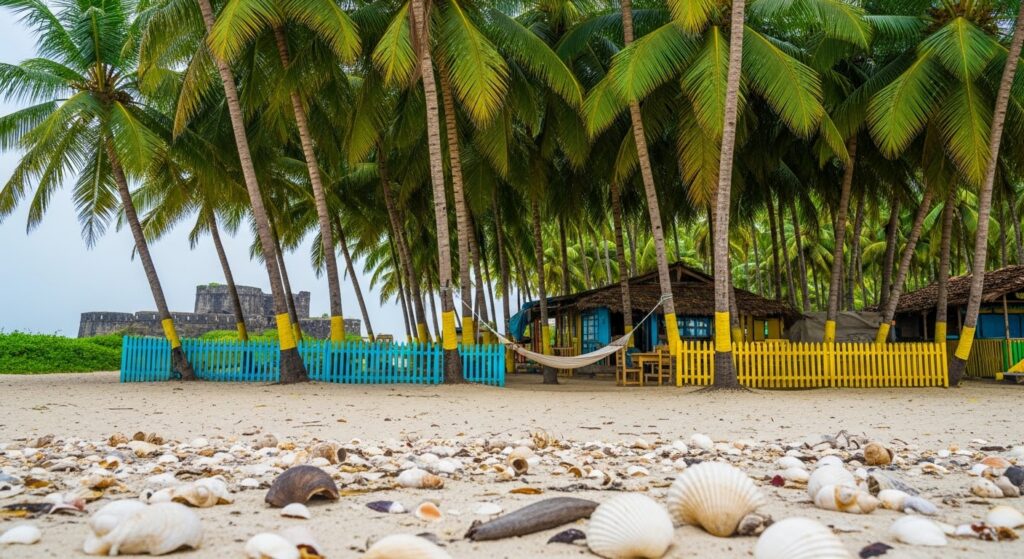
The transformation begins long before reaching the beach. Leaving behind Borivali’s dense intersections, endless honking, and packed commercial streets, the journey north gradually reshapes both the landscape and your mental pace. Recent transportation improvements have made this coastal escape considerably more practical than many professionals assume. Virar continues to function as an important suburban railway hub, while better road connectivity has shortened travel uncertainty during non-peak hours. From Virar station, the final stretch toward Arnala introduces an entirely different visual rhythm. Apartment blocks slowly give way to fishing villages, green fields, old Portuguese-style houses, quiet churches, and stretches of open coastline. The transition itself becomes part of the experience. Each kilometer away from Mumbai’s dense suburbs reduces visual clutter, replacing advertising billboards with mangrove forests and fishing boats anchored along tidal creeks. Even before opening your laptop, the environment begins influencing how your mind processes information. Stress doesn’t disappear instantly, but the constant sensory overload starts fading into the background.
Of course, choosing a coastal workspace requires more preparation than simply carrying a laptop. Humidity, sand, salt air, and occasional monsoon showers demand a different approach to remote work equipment. A lightweight waterproof backpack becomes essential rather than optional. Protective sleeves for laptops, moisture-resistant keyboard covers, microfiber cloths for cleaning screens, and portable power banks all become practical companions. Professionals carrying cameras or drones for creative work should also consider silica gel packs inside equipment bags to reduce moisture exposure. Noise-canceling headphones remain valuable not because of traffic but because natural sounds—including strong winds and waves—can sometimes become surprisingly loud during online meetings. Bringing a compact laptop stand and foldable wireless keyboard also improves ergonomics, especially when working for several hours in outdoor seating areas overlooking the sea. These small adjustments ensure that nature enhances productivity instead of becoming a distraction.
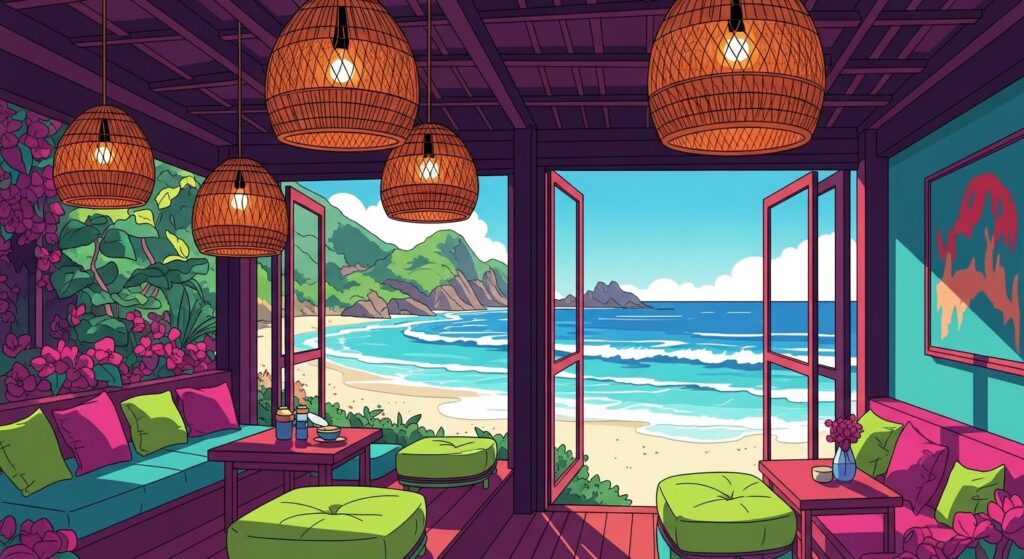
One of Arnala’s greatest strengths lies in its hidden collection of seaside cafes and family-run establishments that remain largely undiscovered by mainstream remote workers. Unlike commercial chains packed with customers rotating every hour, many local cafes provide slower rhythms that naturally encourage longer stays. Wooden decks overlooking the sea, shaded verandas, open-air courtyards, and cozy indoor seating combine aesthetics with functionality. Rather than overwhelming visitors with loud music and aggressive branding, these spaces focus on comfort, local hospitality, and simple food. Fresh seafood, homemade snacks, local tea, strong coffee, and uninterrupted ocean views create an atmosphere that feels remarkably different from urban coffee chains. Some establishments have quietly upgraded their digital infrastructure over recent years by installing fiber broadband, backup internet connections, reliable power systems, and dedicated charging points specifically to attract digital professionals seeking alternatives to crowded city cafes. The result is a surprisingly sophisticated work environment hidden beneath an intentionally relaxed coastal appearance.
Connectivity remains the biggest concern for anyone considering a workday outside Mumbai, and rightly so. Video conferences, cloud storage synchronization, AI applications, collaborative software, and continuous communication demand reliable internet rather than picturesque scenery alone. Fortunately, network coverage around Virar and Arnala has improved significantly, though actual performance still varies depending on the exact location and service provider. Cafes equipped with fiber broadband generally provide far more consistent performance than relying solely on mobile data. Mobile networks continue expanding capacity each year, offering impressive speeds in many locations, but professionals handling mission-critical meetings should always verify connectivity with the venue beforehand and carry a secondary SIM from another provider as backup. Some businesses have even implemented localized mesh Wi-Fi systems across larger outdoor seating areas, ensuring visitors remain connected while working beside gardens or beachfront decks. The combination of improved infrastructure and thoughtful local adaptation demonstrates how even relatively secluded destinations are evolving to support modern digital lifestyles.
Perhaps the most fascinating aspect of Arnala is not technological but human. Conversations with local entrepreneurs reveal an evolving understanding of what today’s professionals actually need. Cafe owners describe a growing number of weekday visitors arriving with backpacks instead of beach towels. Designers, software developers, consultants, content creators, financial analysts, architects, lawyers, photographers, and startup founders increasingly seek places where they can remain productive without sacrificing personal well-being. Responding to this demand, several establishments have added more charging outlets, quieter seating zones, stronger internet connections, shaded workspaces, and flexible menus suitable for customers spending six to eight hours on-site. Instead of rushing people through short visits, these businesses increasingly recognize the value of becoming trusted work destinations. Their hospitality reflects an interesting fusion of traditional coastal culture and modern digital entrepreneurship.
As the workday begins, something unexpected happens. Productivity starts following the rhythm of the sea rather than the rhythm of notifications. Instead of being interrupted every few minutes by passing conversations or traffic horns, your attention settles into longer periods of uninterrupted focus. Waves arrive with remarkable consistency, creating an ambient soundscape that many professionals describe as naturally calming. Unlike artificial white-noise machines or repetitive office air-conditioning, the ocean provides subtle variations that remain engaging without demanding attention. Hours pass differently here. Writing becomes smoother. Strategic planning feels less mentally exhausting. Creative brainstorming gains unexpected momentum. Complex spreadsheets somehow appear less intimidating when the horizon extends beyond endless rows of buildings. The environment cannot magically solve every professional challenge, but it unquestionably changes how those challenges are experienced.
Scientists increasingly describe this phenomenon through the concept of “Blue Space,” referring to environments dominated by water that appear to positively influence psychological well-being. Coastal landscapes often encourage lower perceived stress levels, improved mood, and greater mental restoration compared with densely built urban settings. While individual experiences naturally vary and productivity depends on many personal factors, the visual openness, natural light, and rhythmic sounds associated with coastal environments may help some people sustain concentration more comfortably than enclosed indoor offices. In Arnala, these effects become particularly noticeable because the contrast with Mumbai’s dense suburban landscape is so dramatic. The absence of towering buildings allows sunlight to spread naturally across the horizon, reducing the visual confinement many professionals unconsciously experience throughout the week.
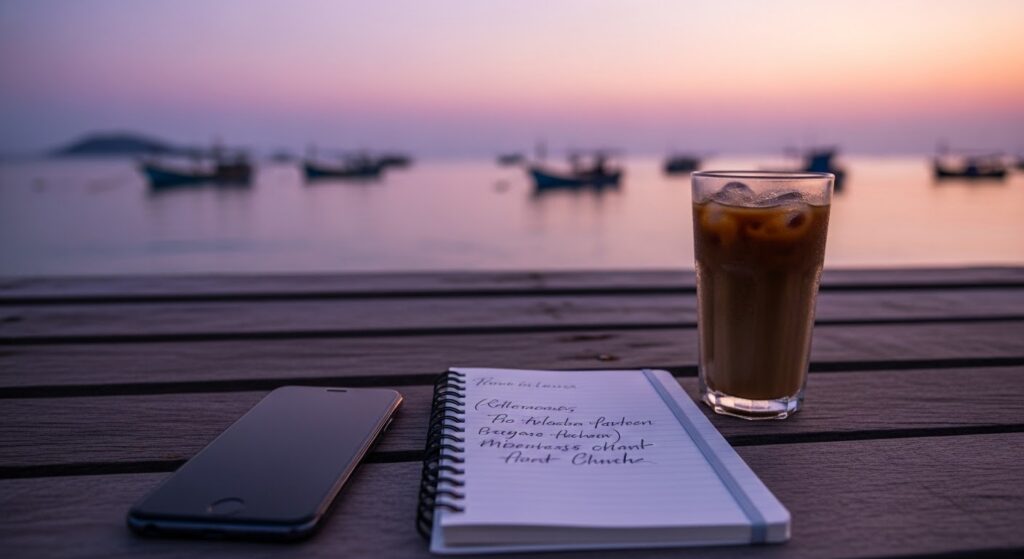
Photographically, the setting offers extraordinary contrasts. A sleek laptop glowing softly against weathered driftwood symbolizes two different worlds meeting at one location. Professional workstations coexist beside fishing nets drying in the sun. Digital calendars synchronize while traditional fishing boats return with the morning catch. Video calls take place against backgrounds filled with endless blue skies rather than artificial office partitions. Golden-hour sunlight reflects across keyboards, notebooks, and coffee cups, creating scenes that feel cinematic without appearing staged. Content creators, filmmakers, and photographers find endless opportunities to document this unique coexistence of technology and nature. Every angle reinforces the same central idea: productivity no longer requires sacrificing beauty.
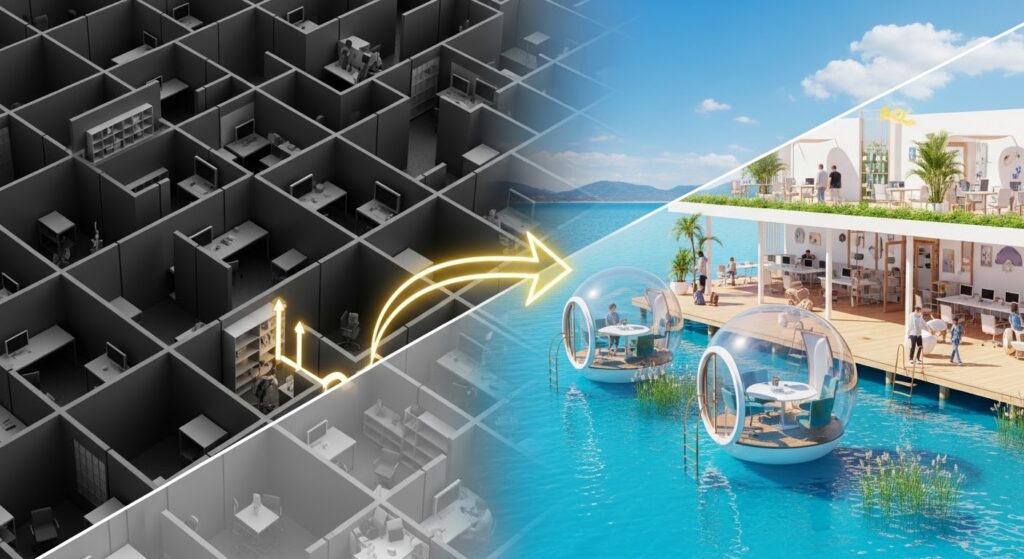
Financially, the comparison also becomes increasingly attractive. A typical workday in central Mumbai or premium coworking districts often includes transportation costs, expensive parking, premium coffee prices, coworking fees, and meals that quickly inflate the daily budget. Arnala presents a different equation. Local cafes generally offer more affordable food and beverages, while the surrounding environment itself becomes the primary amenity rather than expensive interior design. Even if occasional transportation expenses remain similar, the overall experience often delivers considerably greater perceived value. Instead of paying primarily for indoor seating, visitors invest in tranquility, natural surroundings, and genuine mental recovery. That difference cannot always be measured on a spreadsheet, but it becomes remarkably clear after spending an entire day by the sea.
Sustainability remains an important consideration. Working from coastal destinations should never compromise local ecosystems or disrupt community life. Responsible remote workers respect quiet neighborhoods, avoid littering beaches, minimize unnecessary vehicle usage where possible, support locally owned businesses, and remain mindful of environmental conditions. Professionals should also recognize that extreme weather, monsoon tides, and seasonal tourism can influence accessibility and internet reliability. Maintaining realistic expectations, carrying backup connectivity options, and treating Arnala as a complementary workspace rather than a permanent replacement for every professional requirement creates a balanced long-term approach.
The next time Borivali’s crowded cafes leave you searching for silence, remember that less than a few hours away, waves continue breaking against Arnala’s shoreline, laptops continue opening beside sea breezes, and a different vision of productivity quietly waits beyond the city’s noise. Here, the office has no walls, the soundtrack belongs to the Arabian Sea, and the workday ends not with traffic jams but with one of the most spectacular sunsets on Maharashtra’s coastline.
Marine Drive: Where the City Breathes Through the Sea
Mumbai’s Marine Drive is much more than a coastal road. It is the emotional balcony of India’s financial capital. Every evening, thousands of people gather along the promenade—office workers escaping stressful boardrooms, students discussing dreams, photographers chasing dramatic sunsets, runners maintaining fitness routines, elderly couples reliving memories, and tourists experiencing the city’s most iconic skyline.
Standing beside the Arabian Sea, you immediately notice something unusual. Although traffic flows continuously behind you, the crashing waves create a powerful layer of white noise. Instead of amplifying the chaos, the sea somehow absorbs it. The repetitive rhythm of water striking the tetrapods gradually replaces the sounds of honking vehicles and conversations.
Marine Drive represents a fascinating contradiction. It is one of the busiest public spaces in India, yet many visitors come here seeking solitude. Thousands of strangers sit only a few feet apart without speaking to one another, each privately watching the same horizon. It is a rare example of collective solitude, where people find personal peace while sharing the same public space.
As sunset approaches, the city undergoes another transformation. Streetlights illuminate the sweeping curve of Marine Drive, creating the famous Queen’s Necklace—one of the world’s most recognizable urban skylines. The sea reflects shimmering lights while waves continue their timeless rhythm. In that moment, Mumbai feels less like a crowded metropolis and more like a city breathing in harmony with the ocean.