
India’s hospitality industry is undergoing one of its biggest transformations in decades. Travelers are no longer satisfied with standardized luxury hotels located in crowded city centers or conventional holiday destinations. Instead, they are actively searching for experiences that combine nature, privacy, sustainability, local culture, and premium comfort. This shift has created an entirely new investment category—glamping resorts and boutique stays—that is attracting entrepreneurs, hospitality brands, private equity firms, and real estate investors alike. Unlike traditional hotels that require enormous capital investments, lengthy construction timelines, and years to recover initial costs, modern glamping projects rely on lightweight infrastructure, modular construction, and high-value customer experiences that allow significantly faster returns on investment. The economics behind these developments reveal why many hospitality analysts now consider experiential accommodations one of the highest-yielding emerging real estate asset classes in India. However, beneath the attractive images on social media lies a financial model driven by occupancy rates, Average Daily Rate (ADR), operational efficiency, tax planning, land regulations, and long-term asset management. Investors who understand these unit economics can distinguish sustainable hospitality businesses from speculative projects built purely on aesthetic appeal.
The Economics of India's New Travel Revolution
India’s tourism landscape has changed dramatically over the past few years. Domestic tourism has expanded rapidly as rising disposable incomes, flexible work arrangements, improved highways, and social media-driven travel trends encourage shorter but more frequent vacations. Instead of spending weekends inside conventional hotels, travelers increasingly prefer forest cabins, luxury tents overlooking valleys, riverside domrellas, vineyard retreats, mountain A-frame cabins, beachfront cottages, and eco-resorts that offer memorable experiences rather than just accommodation. This demand has fundamentally altered hospitality economics.
Traditional luxury hotels often require investments running into several crores before the first guest checks in. Land acquisition, reinforced concrete structures, environmental approvals, interior fit-outs, elevators, HVAC systems, and utility infrastructure create extremely high capital expenditures. Moreover, the payback period can extend beyond ten years depending on occupancy levels and financing costs. In contrast, glamping developments use modular architecture that significantly reduces upfront investment while allowing premium pricing. Guests are often willing to pay luxury hotel rates—or even higher—for distinctive experiences that connect them with nature without sacrificing comfort.
The result is a powerful financial equation. Lower capital expenditure combined with premium nightly pricing produces an unusually attractive Low-CAPEX to High-ADR ratio. This ratio has become one of the defining characteristics of profitable glamping investments. Rather than relying on hundreds of hotel rooms to generate returns, investors can achieve strong cash flows with relatively small inventories because every unit commands higher revenue per available room while maintaining lower fixed infrastructure costs.
Another important factor is speed. Traditional hospitality projects frequently spend several years navigating planning approvals, structural construction, and operational commissioning. Glamping projects, by comparison, can often become operational in less than four months depending on site conditions and local regulatory requirements. Entering the market faster allows investors to capitalize on seasonal tourism cycles, reducing opportunity costs while generating revenue much earlier.
Understanding the Low-CAPEX Business Model

The financial attractiveness of glamping begins with construction economics. Conventional boutique hotels require permanent concrete buildings, extensive civil work, underground utilities, heavy electrical infrastructure, plumbing networks, reinforced foundations, and large interior finishing costs. These investments permanently lock substantial capital into fixed assets.
Modern glamping structures follow a completely different philosophy. Geodesic domes, insulated luxury tents, modular cabins, A-frame wooden cottages, container conversions, and prefabricated villas require significantly less material, reduced labor, and shorter installation periods. Many structures are manufactured off-site before being transported and assembled on location, reducing construction delays caused by weather or labor shortages.
A premium geodesic dome equipped with insulated walls, luxury interiors, attached bathrooms, climate control, and panoramic glazing may cost only a fraction of an equivalent permanent hotel room while delivering a nearly identical nightly tariff. Similarly, prefabricated A-frame cabins combine architectural appeal with operational simplicity. Investors benefit not only from lower construction costs but also from reduced maintenance expenses because modular components can often be replaced individually rather than requiring expensive structural repairs.
Speed-to-market further strengthens financial performance. Traditional hotels frequently remain under construction for two to four years before generating revenue. During this period, developers continue paying financing costs without corresponding income. Glamping operators can compress project timelines dramatically. Once land preparation, utility connections, and regulatory permissions are completed, modular units can often be installed within weeks. Becoming operational before peak travel seasons allows investors to begin recovering capital almost immediately.
Depreciation treatment can also improve financial planning. Depending on the legal structure of the investment, applicable tax laws, accounting standards, and the nature of the assets, certain movable or modular hospitality components may qualify for different depreciation treatment than permanent buildings. Investors should obtain professional tax advice because the classification of cabins, furnishings, and temporary structures depends on the specific facts and applicable regulations. Appropriate asset classification can influence taxable income, replacement planning, and long-term return calculations.
Premium Pricing Through Experience Rather Than Luxury
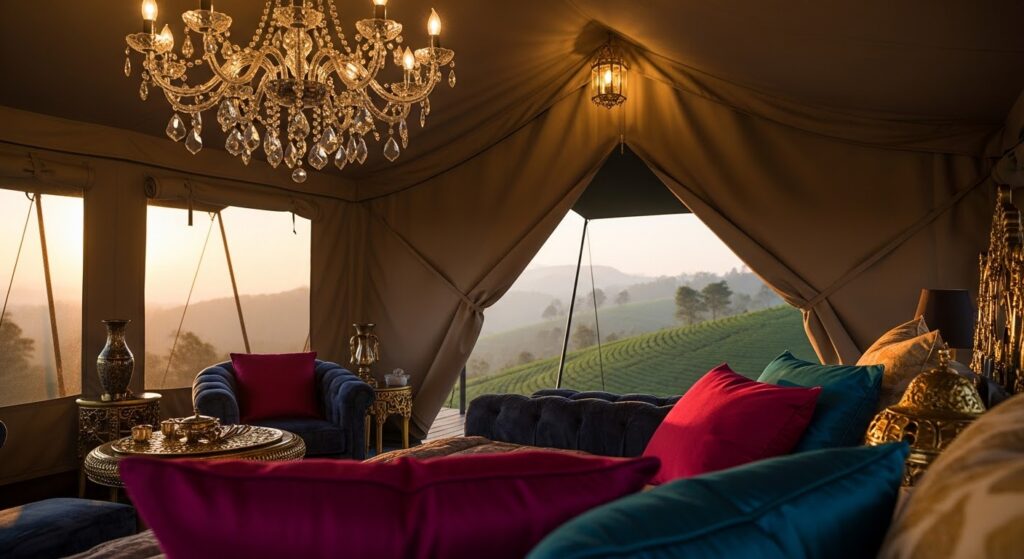
One of the biggest misconceptions surrounding glamping is that customers pay for accommodation alone. In reality, they purchase an experience. Hospitality economics increasingly reward emotional value rather than physical size. A luxury tent overlooking Himalayan valleys may generate higher nightly revenue than a larger urban hotel room simply because the guest values exclusivity, scenery, privacy, and immersion in nature.
Average Daily Rate has therefore become one of the most important performance indicators for boutique hospitality assets. Instead of competing on room quantity, operators compete on uniqueness. Stargazing decks, outdoor jacuzzis, private bonfires, local cuisine, guided nature walks, wellness programs, digital detox experiences, and adventure activities all contribute to premium pricing.
The relatively limited supply of quality experiential accommodations across India’s tourism circuits further strengthens pricing power. Popular destinations including Himachal Pradesh, Uttarakhand, Rajasthan, Goa, Coorg, Wayanad, Meghalaya, Kashmir, and the North-East continue witnessing increasing demand during peak seasons while premium inventory remains constrained. Higher occupancy combined with elevated ADR creates revenue levels that frequently outperform conventional hospitality assets on a per-unit basis.
Navigating Land Use Regulations and Rural Tourism Opportunities
Financial success in glamping depends not only on design and marketing but also on regulatory compliance. Land acquisition and land-use planning represent some of the most critical aspects of hospitality investment in India. Investors must understand zoning regulations, environmental approvals, tourism policies, and local government requirements before committing capital.
Many states actively promote rural tourism and agri-tourism as engines of employment generation and regional development. Incentive programs vary significantly by state and may include subsidies, training assistance, infrastructure support, or other benefits for eligible tourism projects. Because these schemes change over time and eligibility criteria differ across jurisdictions, investors should verify the latest policies directly with the relevant state tourism, rural development, or agriculture departments before making investment decisions. Claims that a project will receive a particular percentage of subsidy should never be assumed without confirmation from the applicable government authority.
Understanding the distinction between permanent construction and temporary or modular structures is equally important. Regulatory treatment depends on state laws, local development control regulations, environmental restrictions, and the specific characteristics of the proposed project. In some areas, temporary structures may be subject to different approval processes than permanent buildings, but this does not eliminate the need for compliance with planning, environmental, safety, or tourism regulations. Investors should seek professional legal advice before relying on any classification.
Land ownership is another area where innovative business models reduce investment risk. Rather than purchasing expensive tourism land outright, many hospitality entrepreneurs negotiate long-term lease agreements with local landowners. Such arrangements can substantially reduce initial capital requirements while allowing operators to establish premium destinations in attractive locations. Lease structures vary widely and may include fixed annual rent, revenue-sharing models, or hybrid arrangements. The legal enforceability, tenure, renewal provisions, and regulatory implications of any lease should be carefully evaluated before execution.
Measuring Real Performance Instead of Social Media Hype
The popularity of glamping on Instagram and YouTube has encouraged many investors to enter the market based primarily on visual appeal rather than financial analysis. Beautiful architecture alone does not guarantee profitable operations. Sustainable hospitality performance depends on measurable operational metrics.
Occupancy rate remains one of the most significant indicators. A resort charging premium prices but maintaining poor occupancy will struggle despite attractive branding. Conversely, consistently strong occupancy at healthy ADR levels can generate robust operating cash flows even from relatively small properties.
Revenue per available room, operating margin, labor productivity, food and beverage contribution, maintenance costs, digital marketing efficiency, customer acquisition cost, online review scores, and repeat visitation all influence long-term profitability. Successful operators continually monitor these metrics to optimize pricing strategies across weekdays, weekends, holidays, and seasonal demand fluctuations.
Actual financial performance frequently differs from optimistic projections presented during project launches. Investors should therefore examine historical occupancy data where available, evaluate local tourism demand, analyze competing properties, and stress-test financial assumptions under different market scenarios. Conservative projections generally provide a more reliable basis for investment decisions than assumptions based solely on peak-season performance.
Calculating Internal Rates of Return
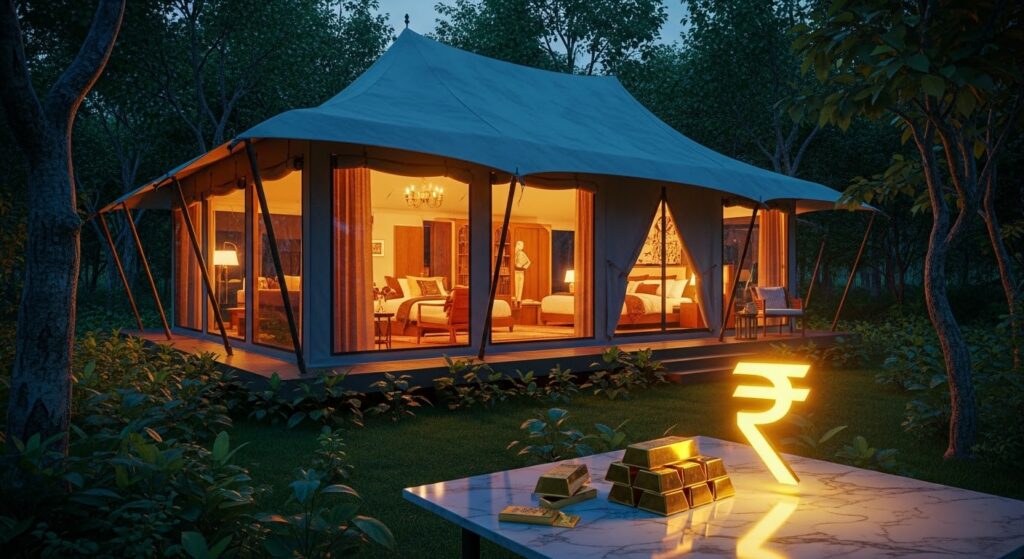
The Internal Rate of Return (IRR) provides one of the most comprehensive methods for evaluating hospitality investments because it considers both timing and magnitude of cash flows. Unlike simple rental yield calculations, IRR incorporates capital expenditure, operating income, financing costs, maintenance expenses, and eventual exit value.
Because glamping projects often involve lower upfront capital requirements and earlier revenue generation than conventional hotels, they may achieve attractive returns when occupancy, pricing, and operating costs remain favorable. However, actual IRRs vary widely depending on location, project scale, financing structure, demand, operating efficiency, regulatory compliance, and management quality. There is no universal return applicable to all projects, and investors should build project-specific financial models rather than relying on generalized market estimates.
Comparing glamping with traditional commercial real estate highlights an important difference. Office buildings and retail properties often rely on fixed lease income that may increase gradually over time. Hospitality assets, by contrast, generate operational income influenced by occupancy and pricing. While this creates greater variability, it also offers opportunities for higher revenue growth through effective branding, marketing, dynamic pricing, and customer experience enhancements.
Exit Strategies That Maximize Investor Value
Long-term investment planning should extend beyond operational profitability. A well-managed boutique hospitality asset can generate multiple exit opportunities depending on market conditions.
Hospitality brands seeking rapid expansion may acquire successful independent resorts with established occupancy records and strong online reputations. Institutional investors increasingly view experiential hospitality as an attractive alternative asset class capable of generating stable long-term cash flows.
Another strategy involves franchising. Once operational systems, branding, supplier networks, and guest experiences become standardized, successful operators can replicate their business model across multiple locations through franchise partnerships rather than direct ownership. This asset-light expansion model increases scalability while reducing capital requirements.
Some investors may also choose to reposition properties over time by adding wellness retreats, adventure tourism, remote work infrastructure, destination weddings, corporate off-sites, or educational tourism programs that diversify revenue beyond room bookings.
Building Sustainable Hospitality Wealth
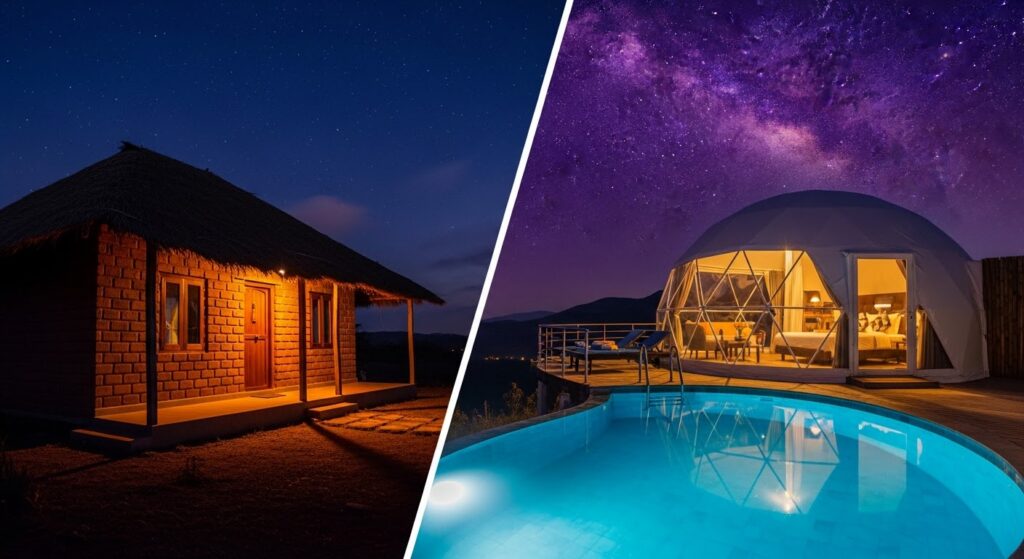
Although experiential travel currently enjoys strong momentum, sustainable success depends on disciplined financial management rather than market excitement. Investors should evaluate every project using comprehensive feasibility studies that examine tourism demand, infrastructure accessibility, regulatory compliance, environmental sustainability, operating costs, financing assumptions, and long-term competitive positioning.
Careful attention should also be paid to guest satisfaction because online reviews increasingly determine occupancy and pricing power. Investing in professional property management, staff training, digital marketing, and operational excellence often delivers higher returns than excessive spending on architectural aesthetics alone.
The most resilient hospitality assets combine efficient capital deployment with exceptional customer experiences. Low-capital modular construction, premium pricing, rapid operational readiness, thoughtful land planning, responsible environmental practices, and disciplined financial analysis together create a business model capable of generating attractive long-term value.
India’s glamping and boutique stay sector represents far more than a passing travel trend. It reflects a structural evolution in consumer preferences, hospitality operations, and real estate investment strategy. While speculative enthusiasm has undoubtedly entered the market, carefully planned projects supported by realistic financial modeling, regulatory compliance, and professional management can offer compelling opportunities. Investors willing to analyze unit economics instead of relying on social media narratives are better positioned to identify projects that generate sustainable cash flows, adapt to changing tourism patterns, and create enduring value long after today’s experiential travel boom matures.