Exploring the Forgotten Portuguese Forts Scattered Along the North Vasai Coastal Belt
There is a side of Vasai that most people never see.
Beyond the traffic, apartment towers, railway lines and rapidly expanding suburbs lies a quieter landscape where mangroves, tidal creeks, fishing settlements and coastal scrub conceal fragments of a much older world.
Hidden among this landscape are the remains of Portuguese defensive outposts—weathered walls, basalt foundations, ruined bastions and forgotten watch positions that once formed part of a much larger coastal defense network.
Today, many of these structures are difficult to find.
Some are surrounded by vegetation. Others have been absorbed into expanding settlements. Some survive only as fragments of masonry.
And during the monsoon, when the landscape turns green and the Arabian Sea becomes dramatically turbulent, these forgotten ruins acquire an almost cinematic atmosphere.
This is not simply a fort-hunting expedition.
It is an exploration of **how a maritime empire attempted to control the coast—and how nature and modern urbanization are slowly reclaiming its defensive landscape.**
Beyond the Fort Walls
Vasai is usually associated with the imposing **Vasai Fort**, one of the most important surviving Portuguese fortifications in the Mumbai region.
But the main fort was never an isolated structure.
Its strategic importance depended on a wider network of coastal positions, observation points and smaller defensive installations.
These lesser-known outposts helped monitor movement along the coastline and waterways.
Their locations were not accidental.
From elevated ground, rocky coastal stretches and strategic approaches, watchmen could observe boats moving through the creeks and Arabian Sea.
Signals could then alert larger defensive positions.
What looks today like an insignificant ruin may therefore have once been part of a sophisticated military communication system.
From Urban Sprawl to Coastal Silence
The journey begins in a very different Vasai.
Modern residential development dominates much of the landscape.
New buildings continue to appear, roads carry increasingly heavy traffic and the suburban population has expanded dramatically.
Yet travel toward the northern coastal belt and the atmosphere can change surprisingly quickly.
Concrete gives way to vegetation.
Traffic noise fades.
Fishing activity, tidal water and monsoon vegetation begin to dominate the landscape.
Then, almost unexpectedly, an old stone wall appears.
It is a striking contrast.
A modern apartment building may stand within the broader landscape while, only a short distance away, centuries-old basalt masonry disappears beneath vines and vegetation.
This juxtaposition is what makes exploring these sites so fascinating.
**Modern Vasai is growing around history that it has barely noticed.**
The Monsoon Reveals Another Vasai
- The monsoon transforms the coastal belt.
- Grass becomes dense.
- Trees and creepers spread across abandoned structures.
- Mud makes access difficult.
- Streams and waterlogged paths appear where dry trails existed only months earlier.
- For a heritage explorer, this creates both opportunity and danger.
The vegetation can make ruins harder to locate, but it also creates the atmosphere that makes these sites extraordinary.
Imagine standing beside a centuries-old basalt wall while monsoon waves crash against the coast.
- The stones are dark with moisture.
- Moss covers the masonry.
- The wind carries the smell of saltwater.
- And behind you, modern Vasai continues its ordinary daily life.
- It is a powerful reminder that history does not always disappear.
- Sometimes it simply becomes invisible.
Why Basalt Was So Important
The architecture of the region was shaped by its geology.
Basalt is a defining material of the Deccan landscape and became an important building material across western India.
For military architecture, its durability made it particularly valuable.
Large blocks could be used for walls, foundations and defensive structures capable of surviving harsh coastal conditions.
But survival does not mean immunity.
Centuries of rain, humidity, salt spray, biological growth and temperature changes gradually attack masonry.
- Mortar weakens.
- Edges become rounded.
- Cracks widen.
- Vegetation penetrates joints.
Eventually, a once-solid defensive structure becomes a fragmented archaeological landscape.
The Architecture of Defense
The smaller Portuguese coastal outposts are particularly interesting because they demonstrate how military architecture operated beyond the walls of a major fort.
A large fort could defend a strategic centre, but it could not see every approach.
Smaller watchtowers and defensive positions extended the visual reach of the larger system.
Their role could include:
- Monitoring boats and coastal movement
- Watching important creeks and landing points
- Providing early warning
- Protecting vulnerable approaches
- Supporting communication between defensive positions
- Controlling access to strategically important areas
Their architecture was therefore dictated by geography.
A small structure placed at the correct location could be more strategically valuable than a larger structure in the wrong place.
The Language of Portuguese Masonry
One of the fascinating aspects of heritage exploration is learning to read buildings like documents.
Even when a structure is heavily damaged, its construction techniques can reveal clues about its history.
- Look closely at surviving masonry.
- Stone blocks may show different levels of finishing.
- Mortar joints reveal construction phases.
- Openings indicate how the structure was used.
Doorways and lintels can preserve decorative details long after roofs and walls have disappeared.
Religious symbols or motifs can also provide clues about the cultural environment in which the structure was built.
But coastal archaeology demands caution.
Salt erosion can alter stone surfaces dramatically.
A mark that looks like deliberate carving may sometimes be natural weathering.
That is why documentation and professional archaeological interpretation are essential.
The Forgotten Watchtowers
The smaller outposts are perhaps more intriguing than the famous forts precisely because they are less understood by casual visitors.
- They rarely possess monumental gateways or enormous walls.
- Instead, their importance lies in their position.
- Imagine being a sentry centuries ago.
- There are no mobile phones.
- No radar.
- No satellite imagery.
- No modern coast guard network.
- Your eyes are the surveillance system.
- Your position on elevated ground provides the advantage.
- A boat appearing on the horizon could trigger a chain of communication.
- One signal could become another.
A warning could travel from an isolated coastal position toward a major fortified settlement.
These small structures were therefore components of an early-warning network.
A Landscape Designed for Surveillance
The Portuguese understood the strategic importance of the northern Konkan coastline.
Vasai and its surrounding waterways provided access to the hinterland while the Arabian Sea offered both commercial opportunity and military vulnerability.
- The geography itself became part of the defense system.
- Creeks could conceal boats.
- Tidal channels could provide access.
- Coastal elevations could become observation points.
- Fortifications could control strategic approaches.
- The landscape was effectively turned into a military map.
Today, however, the same geography creates challenges for explorers.
A location that was strategically visible centuries ago may now be hidden behind vegetation, buildings or altered terrain.
The Real Challenge: Finding the Ruins
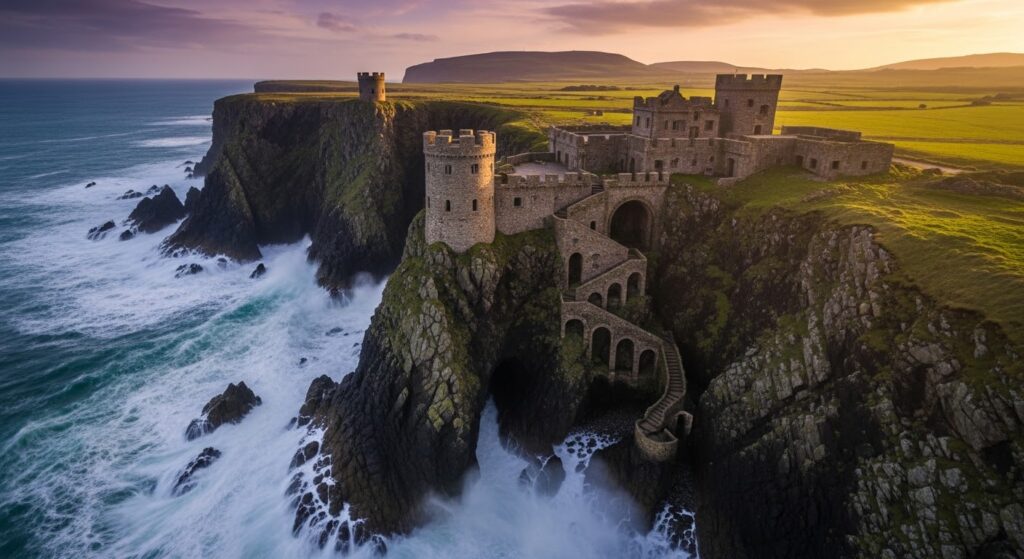
Exploring these forgotten structures is not like visiting a conventional tourist fort.
- There may be no entrance gate.
- No ticket counter.
- No signboard.
- No maintained pathway.
During the monsoon, reaching a ruin can involve muddy tracks, slippery rocks, dense vegetation and tidal areas.
That creates a completely different heritage experience.
- You are not simply visiting history.
- You are searching for it.
- Every broken wall becomes a clue.
- Every stone foundation raises a question.
Every unusual mound in the vegetation could potentially represent a structure that has disappeared beneath centuries of natural growth.
What Urbanization Is Hiding
The biggest threat to these lesser-known heritage sites may not always be dramatic destruction.
Sometimes it is gradual disappearance.
- A road is widened.
- A boundary wall is constructed.
- A vacant plot becomes a housing project.
- Vegetation grows unchecked.
- Local knowledge disappears as older residents move away.
- Eventually, nobody remembers exactly where a ruin stood.
Urban expansion can therefore erase history without anyone deliberately deciding to destroy it.
The structure simply gets surrounded until it becomes irrelevant.
A Race Against Time
Climate change adds another layer to the problem.
Coastal heritage sites are inherently vulnerable.
Rising sea levels, stronger coastal erosion, intense rainfall, storm activity and saltwater exposure can accelerate deterioration.
The monsoon that makes these ruins beautiful can simultaneously contribute to their destruction.
- Water enters cracks.
- Vegetation expands.
- Salt penetrates masonry.
Repeated wetting and drying weakens materials.
Over decades, the cumulative effect can be devastating.
This makes documentation increasingly important.
Photographs, GPS mapping, drone imagery, architectural surveys and oral histories can create a permanent record of sites that may not physically survive.
Why These Ruins Matter

The forgotten Portuguese outposts of the Vasai coast are not merely piles of old stones.
They represent a period when the northern Konkan coastline was deeply connected to global maritime competition.
They tell stories of trade, religion, military strategy, colonial expansion and interaction between different communities.
They also demonstrate how geography influenced history.
The coastline was not simply a boundary.
It was a highway.
And the forts and watchtowers were its checkpoints.
The Forgotten Heritage Beneath Modern Vasai
Perhaps the most fascinating thing about exploring this region is the contrast.
- A train passes through the modern suburban landscape.
- Motorcycles move along busy roads.
- Apartment towers rise into the sky.
- Mobile phones connect people instantly across continents.
And somewhere beyond the concrete, an old basalt wall remains almost exactly where it was centuries ago.
- It has no electricity.
- No internet.
- No advertising.
- No crowds.
Yet it has survived generations of political change, economic transformation and environmental pressure.
For now.
What Happens Next?
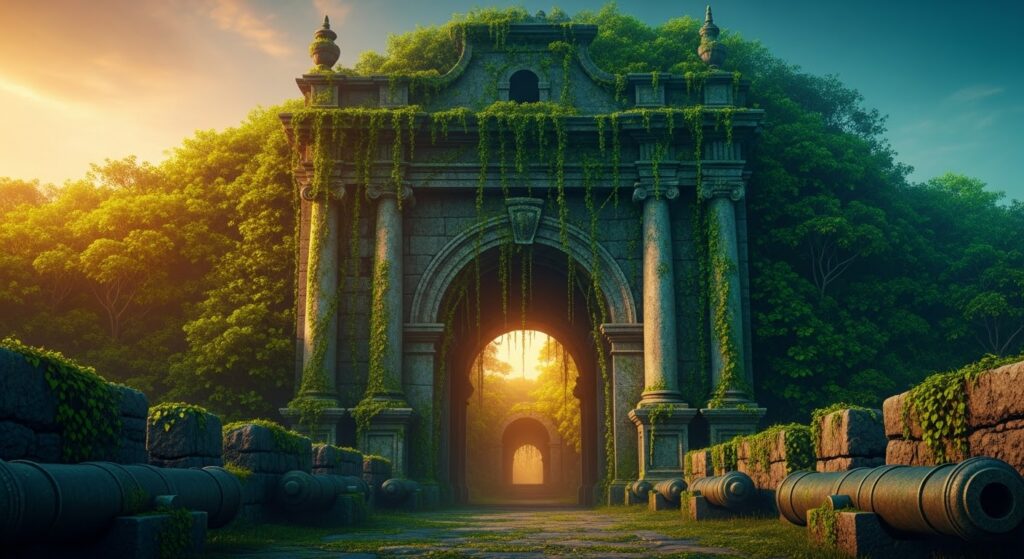
The future of these forgotten coastal ruins will depend largely on whether they are identified, documented and valued.
- Heritage protection cannot focus only on famous monuments.
- A major fort may attract thousands of visitors.
- A tiny watchtower may attract almost nobody.
But the smaller structure may be the missing piece that explains how the entire defensive network functioned.
That is why these places deserve attention before they disappear.
The objective should not necessarily be to turn every ruin into a tourist attraction.
Some sites may be too fragile.
Others may require archaeological research before public access.
But they should at least be recorded.
Because once a structure disappears, its original context is almost impossible to reconstruct.
Walking Through a Vanishing Landscape
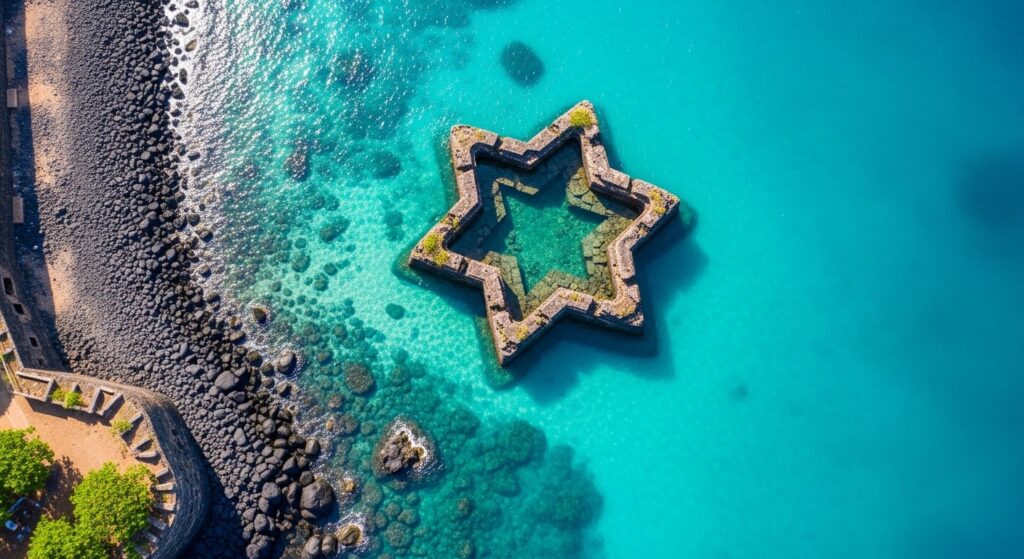
There is the prehistoric geological landscape.
There are centuries-old fishing communities.
There is the Portuguese military presence.
There are later transformations under British and Indian rule.
And now there is the rapidly expanding Mumbai metropolitan region.
All these histories occupy the same landscape.
The challenge is making sure the newest layer does not completely erase the oldest.
As the monsoon waves continue to hit the coast and modern Vasai continues to expand, these forgotten basalt walls remain silent witnesses.
They remind us that Mumbai’s history does not end at its famous landmarks.
Sometimes the most fascinating stories are hidden behind the last building, beyond the paved road and beneath the monsoon vegetation.
And perhaps the real adventure is not simply discovering a forgotten fort.
It is discovering **the forgotten history of the landscape itself.**