There was a time when I believed life could be reduced to a rank.
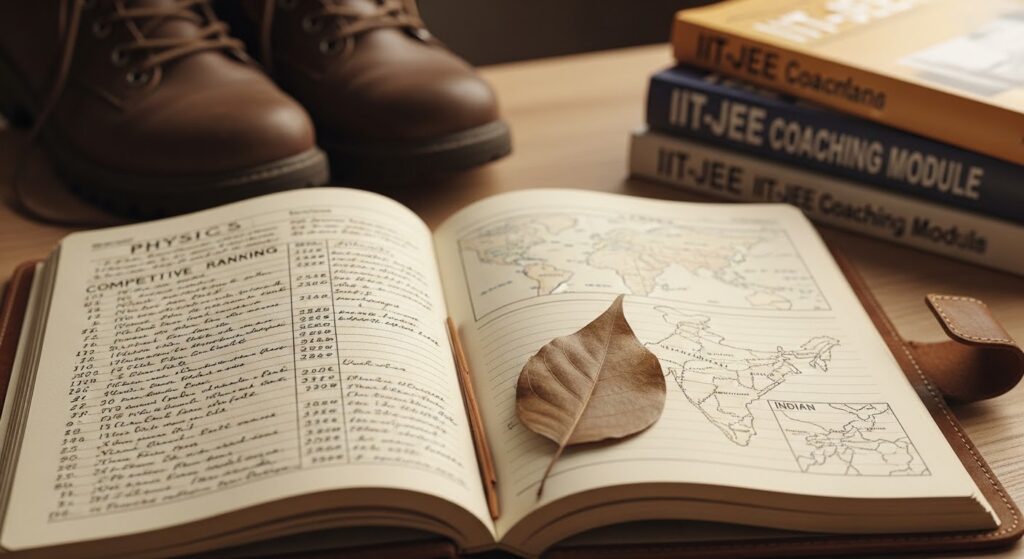
In Kota, thousands of students wake up with the same objective: study harder, solve more questions, improve their score, and move one step closer to a competitive examination. The city becomes a strange ecosystem where classrooms, hostels, libraries, coaching centers, test series, and small rented rooms revolve around a single idea—success.
For many students, this discipline becomes a way of life.
For me, it eventually became something else.
It became the foundation of my travel philosophy.
Years of preparing for competitive examinations taught me how to sit for hours, follow schedules, tolerate repetition, work through frustration, and continue even when the result was uncertain. But eventually I realized that the same discipline that had trained me to chase a destination could also help me explore a country without one.
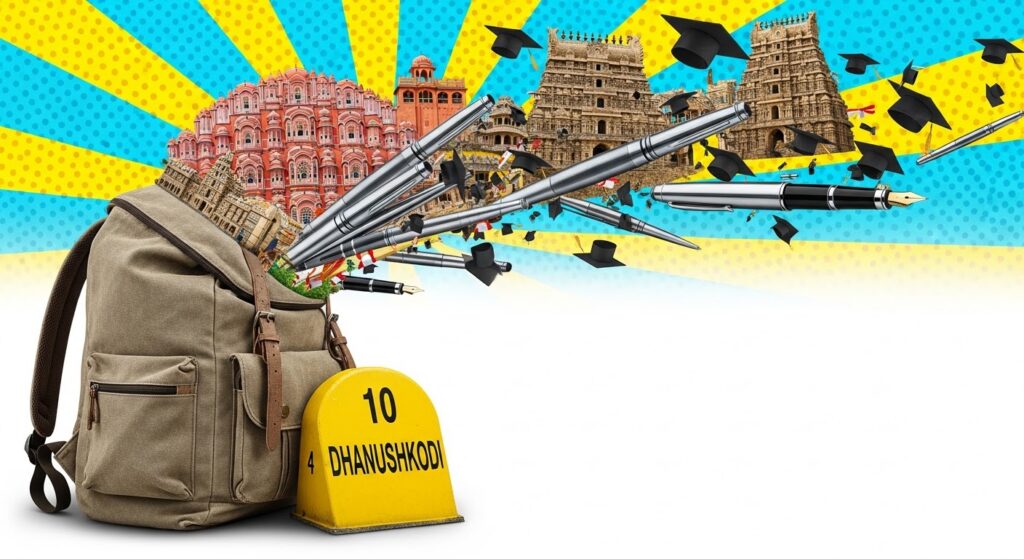
That realization began somewhere between the controlled environment of Kota and the endless horizon of Dhanushkodi.
- The Geometry of Isolation
- Kota is a city of schedules.
- Morning classes. Afternoon assignments. Evening tests. Night revision.
Every hour has a purpose.
For a student preparing for a competitive examination, even free time can feel like wasted time. A small rented room can become an entire universe consisting of textbooks, notes, a desk, a bed, and a wall covered with formulas or motivational quotes.
The outside world gradually becomes distant.
- Festivals pass.
- Seasons change.
- Friends travel.
But the aspirant remains inside the examination cycle.
The most powerful thing about such an environment is also its greatest danger: discipline can make you incredibly focused, but excessive focus can make the world outside your immediate goal invisible.
You begin measuring everything.

- Marks.
- Ranks.
- Mock-test scores.
- Study hours.
Accuracy percentages.
The language of life becomes quantitative.
And somewhere along the way, curiosity can become secondary.
When Discipline Became Freedom
Years later, I discovered something unexpected.
The habits developed during competitive-exam preparation were not useless outside the examination hall.
The ability to wake up early became useful while catching a train.
The patience required to solve difficult problems became useful while navigating unfamiliar places.
The discipline of following a study schedule became useful while planning long journeys.
The ability to continue despite failure became invaluable when a journey didn’t go according to plan.
Even the endurance developed through long hours of studying had a strange connection with trekking.
The difference was that this time there was no question paper waiting at the end.
There was a mountain.
- There was rain.
- There was a road disappearing into mist.
- And there was no predetermined answer.
- From Textbook Questions to Unpredictable Mountains
- Competitive examinations teach you to search for the correct answer.
- Travel teaches you that sometimes there isn’t one.
This contrast became particularly powerful during journeys through the Western Ghats.
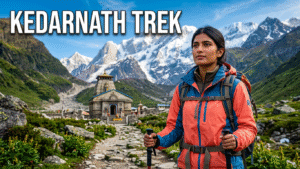
During the 2026 monsoon, the Sahyadris become almost unrecognizable. Roads disappear into clouds, waterfalls suddenly appear beside highways, and familiar trails can look completely different after several hours of rain.
You cannot predict every turn.

You cannot calculate every experience.
You simply have to observe.
That was perhaps the most important lesson travel taught me.
In an examination, uncertainty is something you try to eliminate.
On a journey, uncertainty is often the reason you continue.
The Monsoon Bridge
The monsoon created the perfect bridge between my two worlds.
The dry, dusty atmosphere associated with intense study preparation seemed completely opposite to the rain-soaked Western Ghats.
- Instead of staring at a textbook for six hours, I could walk for six hours.
- Instead of memorizing the names of geographical formations, I could stand in front of them.
- Instead of studying the water cycle, I could watch clouds release rain over an entire mountain range.
- Travel transformed information into experience.
- A geography chapter could tell me about the Western Ghats.
- A monsoon trek could make me understand them.
- That distinction changed the way I looked at learning itself.
The Physics of Motion
Competitive examinations taught me about velocity as a mathematical concept.
- Travel taught me another definition.
- Velocity became movement.
- A train leaving a station before sunrise.
- A bus climbing a mountain road.
- A motorcycle disappearing into a forest.
- A trekker moving through rain toward a distant summit.
- Movement became a physical expression of freedom.
For someone who had spent years sitting in one place preparing for an uncertain future, simply moving became meaningful.
The destination mattered.
But the movement toward it mattered even more.
Why Former Aspirants Often Travel Differently
There is something fascinating about people who spend years preparing for competitive examinations.
- They become extremely comfortable with routine.
- And sometimes, once the pressure disappears, they want the exact opposite.
- They want mountains instead of classrooms.
- Forests instead of libraries.
- Unplanned roads instead of timetables.
- Silence instead of constant evaluation.
Travel becomes a way of proving that identity is larger than a rank.
- You are not merely an aspirant.
- You are not merely an employee.
- You are not merely a professional.
You are also the person who wants to see what exists beyond the next examination, promotion, or financial target.
From the Sahyadris to the Southern Coast
Eventually, the journey moved much farther south.
The green mountains of Maharashtra gave way to landscapes dominated by heat, salt, sand, and sea.
And then came Dhanushkodi.
There is something profoundly symbolic about reaching a place where the road seems to disappear into the horizon.
At Dhanushkodi, land narrows dramatically between the waters of the Indian Ocean and the Palk Strait. The landscape feels almost unreal.
- The horizon appears enormous.
- The wind carries salt.
- The road becomes increasingly isolated.
And the idea of a predetermined destination suddenly feels insignificant.
Dhanushkodi: Where the Road Ends
Dhanushkodi is also a place shaped by destruction.
The devastating 1964 cyclone destroyed much of the town, leaving behind ruins that still stand as reminders of the power of nature.
The remains of buildings, railway infrastructure, and other structures create an atmosphere unlike almost anywhere else in India.
For me, these ruins represented something more personal.
They reminded me that structures built around certainty can disappear.
The perfect career plan can change.
An examination result can change everything.
A carefully constructed future can suddenly take a different direction.
And yet life continues.
Dhanushkodi doesn’t feel like a place celebrating permanence.
It feels like a place teaching acceptance.
The Death of the Perfect Student
Standing at the end of the road, I began thinking about the person I had once tried to become.
The perfect student.
- The person who always knew what came next.
- The person who measured success through scores and achievements.
- The person who believed every problem had a correct answer.
- Travel slowly dismantled that identity.
- It taught me that getting lost is not always failure.
- Taking the longer route is not always inefficient.
- Changing plans is not always weakness.
And sometimes the most valuable experience is the one that wasn’t included in the itinerary.
Travel as Unlearning
We usually describe travel as a process of learning.
- We learn about cultures.
- We learn languages.
- We learn history.
- We learn geography.
But travel can also be a process of unlearning.
You unlearn the belief that everyone must follow the same path.
You unlearn the idea that success has only one definition.
You unlearn the obsession with constant productivity.
You unlearn the fear of uncertainty.
And perhaps most importantly, you unlearn the habit of asking whether an experience has a measurable return.
- Not everything needs to improve your résumé.
- Not every journey needs to generate content.
- Not every destination needs to become a checklist item.
Sometimes you simply need to stand somewhere beautiful and experience being there.
From Scarcity to Curiosity
Competitive examinations often create a scarcity mindset.
There are limited seats.
- Limited ranks.
- Limited opportunities.
Someone else’s success can feel like your failure.
Travel introduced me to a completely different idea: abundance.
India has thousands of roads.
Hundreds of mountain ranges and valleys.
- Countless villages.
- Ancient temples.
- Forgotten forts.
- Coastal landscapes.
- Tribal communities.
- Forests.
- Deserts.
- Islands.
And every journey reveals another possibility.
You don’t have to compete with another traveler to enjoy a destination.
There is no rank for watching a sunset.
There is no percentile for standing beside a waterfall.
There is no cutoff score for discovering a beautiful village.
The New Travel Philosophy
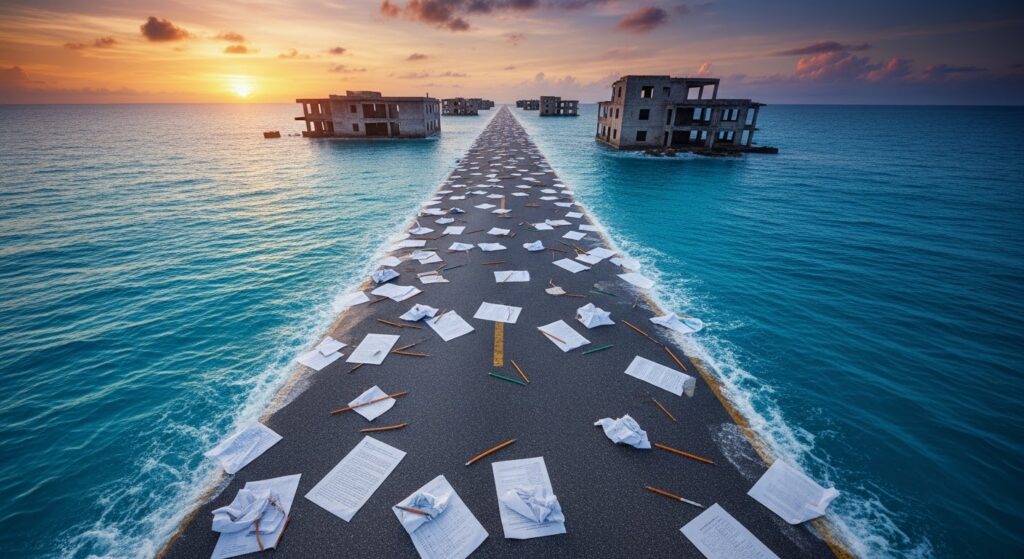
My travel philosophy eventually became simple.
- Don’t travel only to reach places.
- Travel to change your relationship with the world.
- A competitive examination teaches you to optimize.
- Travel teaches you to observe.
- An examination rewards the correct answer.
- Travel rewards curiosity.
- An examination has a defined syllabus.
- India doesn’t.
And perhaps that is what makes exploring it so addictive.
The country is an endless classroom, except there are no desks, no invigilators, and no answer sheets.
The Greatest Examination
Looking back, I don’t regret the discipline that competitive examinations taught me.
- Discipline gave me endurance.
- Failure taught me resilience.
- Long hours taught me patience.
- Competition taught me preparation.
- But travel taught me what to do with all of those qualities.
- It taught me that discipline doesn’t have to become a cage.
- It can become the engine that takes you somewhere new.
From the enclosed rooms of Kota to the endless horizon of Dhanushkodi, the journey was not simply geographical.
It was a movement from certainty toward curiosity.
- From marks toward memories.
- From competition toward exploration.
- And perhaps the greatest examination isn’t conducted inside a classroom at all.
It is the one we face every day when deciding how we want to use the limited time we have.
- Sometimes the answer is another goal.
- Sometimes it is another achievement.
And sometimes, the answer is simply to take the next road, watch the mountains disappear into the monsoon mist, and keep moving toward the horizon.