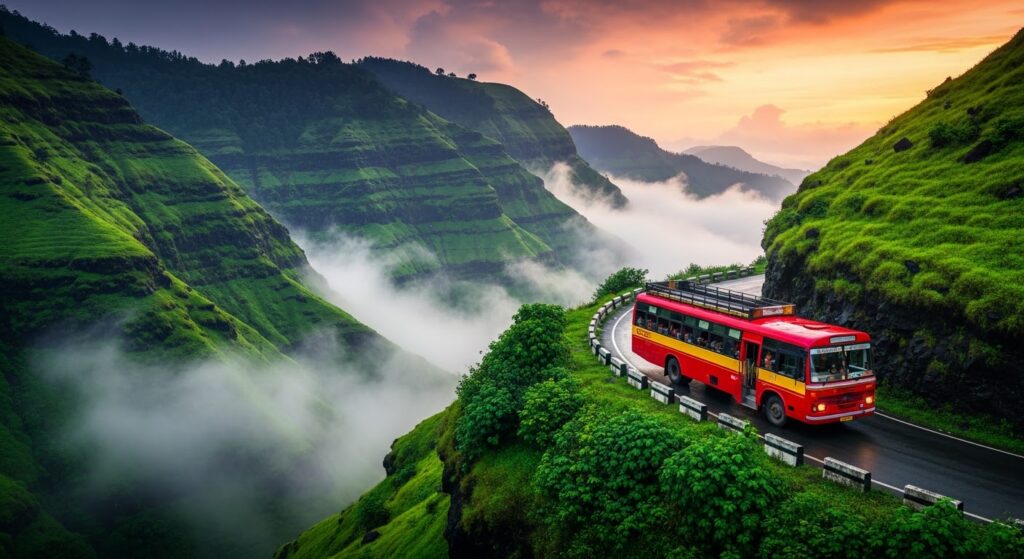
he ancient Bhimashankar Jyotirlinga, hidden deep within the misty Sahyadri hills of Maharashtra, is often considered an expensive destination because many travelers assume that hiring a private taxi is the only convenient option. In reality, reaching this sacred shrine on a strict budget is not only possible but also a far more rewarding experience. Maharashtra State Road Transport Corporation (MSRTC) buses connect the region with nearby towns and cities, allowing pilgrims, trekkers, and backpackers to enjoy one of India’s most scenic monsoon journeys without spending a fortune. As the iconic red state transport bus winds through lush green valleys, dense forests, and cloud-covered mountain roads, the journey itself becomes an unforgettable part of the pilgrimage. Every hairpin bend reveals waterfalls cascading down rocky cliffs, small villages surrounded by paddy fields, and breathtaking views that no express highway can offer.
Viewing Heritage Through a Financial Lens
Financial assets generate returns over time. Heritage assets generate cultural returns for generations.
The sculptures surrounding Bhimashankar Temple have survived nearly 800 years with no modern technology protecting them. Unlike commercial real estate that demands continuous investment, these basalt masterpieces continue appreciating in historical significance despite environmental challenges.
If these sculptures were listed on a balance sheet, their market value would be impossible to calculate.
Their replacement cost?
- Impossible.
- Their scarcity?
- Absolute.
Their historical importance? - Irreplaceable.
This is precisely why heritage deserves to be viewed as long-term national capital.
The Opening Audit: High Risk vs High Reward
For most travelers, Pune serves as the most convenient gateway to Bhimashankar. Regular MSRTC buses operate from Pune Station Bus Stand and Shivajinagar Bus Stand, while additional services may be introduced during weekends and the holy month of Shravan when pilgrim numbers increase. If a direct bus to Bhimashankar is unavailable, travelers can comfortably reach Manchar or Ghodegaon by bus and then board a connecting service to the temple. These junction towns act as important transit points where passengers can purchase refreshments, confirm bus timings, and prepare for the final climb into the Western Ghats. Travelers coming from Mumbai can either take a train or bus to Pune and continue by MSRTC bus or explore alternate routes through Kalyan and the Murbad region, although these may involve additional transfers and require checking current bus availability before departure.
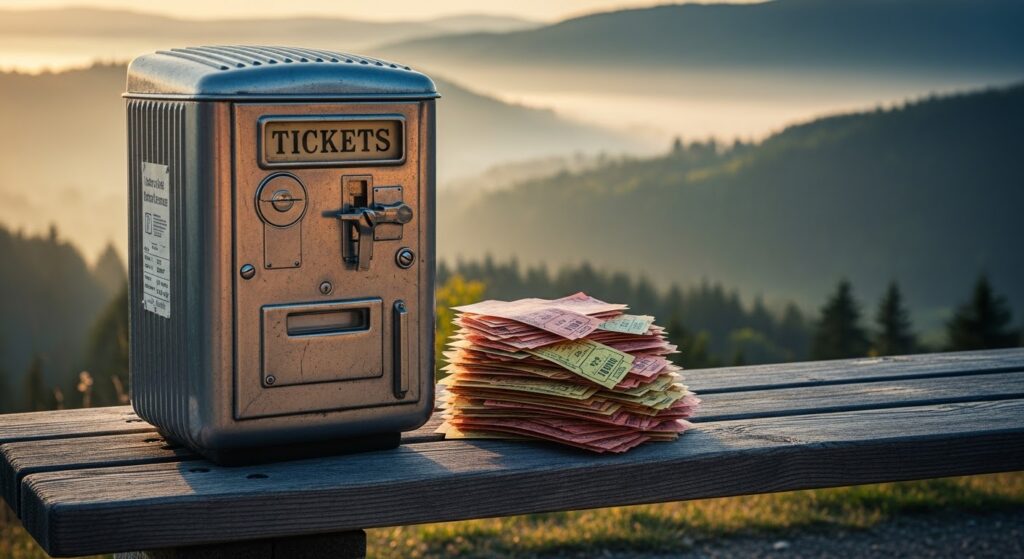
One of the biggest advantages of choosing public transport is affordability. While a private taxi can cost several thousand rupees for a round trip, MSRTC buses offer a much more economical alternative that makes the pilgrimage accessible to students, solo travelers, families, and budget-conscious tourists. Ticket prices depend on the type of service and the distance traveled, so it is always advisable to verify the latest fares and schedules through official MSRTC enquiry counters or their website before planning the journey. During festivals and weekends, buses may fill quickly, making early arrival at the bus station a wise decision.
The journey from Pune to Bhimashankar generally takes around four to five hours, although heavy monsoon rainfall can extend travel times due to fog and slower traffic on the winding hill roads. Travelers from Mumbai should expect a total journey of approximately seven to nine hours if traveling via Pune. Despite the longer duration, the spectacular scenery more than compensates for the extra travel time. As the bus climbs higher into the Sahyadri ranges, urban landscapes gradually disappear, replaced by dense forests, mist-covered valleys, overflowing streams, and countless seasonal waterfalls. Sitting by the window offers uninterrupted views of Maharashtra’s monsoon beauty, making the journey itself one of the highlights of the trip. Those prone to motion sickness should consider carrying suitable medication, as the route includes numerous sharp bends and steep inclines.
If a bus change is required at Manchar or Ghodegaon, travelers should remain attentive to departure announcements because buses heading toward Bhimashankar may operate less frequently than city services. These towns provide convenient facilities such as tea stalls, small restaurants, restrooms, and waiting areas where passengers can relax briefly before continuing their journey. Since weather conditions in the hills can change rapidly during the monsoon, it is advisable not to miss the next available bus, particularly if planning a same-day return.
Upon reaching Bhimashankar, passengers are dropped near the bustling market area from where the temple is only a short walk away. The narrow lane leading to the temple is lined with small shops selling flowers, coconuts, prasad, rainwear, souvenirs, and simple local snacks. The atmosphere gradually shifts from a busy marketplace to one of deep spirituality as the sound of temple bells and devotional chants fills the air. The ancient stone temple, surrounded by mist and forest, creates an unforgettable first impression that perfectly complements the scenic journey through the mountains.
Visitors to Bhimashankar can expect facilities such as shoe storage, drinking water, basic washrooms, prasad counters, and organized queue systems for darshan, although arrangements may vary depending on festivals and crowd levels. Since the temple remains an active place of worship, visitors should dress modestly, follow local customs, and respect photography restrictions wherever applicable. Beyond the temple, nature enthusiasts can explore parts of the Bhimashankar Wildlife Sanctuary, famous for its rich biodiversity and the endangered Indian Giant Squirrel. Experienced trekkers may also venture toward Gupt Bhimashankar or nearby forest trails, but only after checking local conditions and ensuring proper preparation, especially during the rainy season when paths become extremely slippery.
Food around Bhimashankar remains simple, affordable, and satisfying. Small eateries serve popular Maharashtrian dishes such as poha, misal pav, vada pav, bhaji, tea, and traditional thalis at reasonable prices, making it easy to complete the journey without exceeding a modest budget. Carrying a reusable water bottle, light snacks, and rain protection can further reduce expenses while promoting responsible travel.
Before beginning the return journey, travelers should confirm the timing of the last MSRTC bus departing from Bhimashankar, as services become limited later in the evening. Reaching the bus stand at least twenty to thirty minutes before departure is recommended, especially during weekends and religious festivals when buses are crowded. Keeping some cash for small purchases is also useful, as digital payments may not be accepted everywhere in the hill region.
Packing appropriately is essential for a comfortable monsoon journey. A good raincoat or poncho, waterproof backpack cover, sturdy non-slip shoes, extra clothes, towel, power bank, umbrella, reusable water bottle, and basic medicines can make a significant difference when traveling through the rain-soaked Sahyadris. Since weather conditions change quickly, being prepared allows travelers to enjoy the journey safely without unnecessary inconvenience.