
India’s hospitality industry is undergoing one of its most significant transformations in decades. Travelers are increasingly abandoning crowded city hotels and standardized luxury accommodations in favor of immersive wilderness experiences that combine comfort, sustainability, and authentic local culture. This shift has positioned glamping—luxury camping equipped with premium amenities—as one of the fastest-growing segments of the tourism economy. Yet behind the beautiful safari tents, geodesic domes, treehouses, and eco-lodges lies a financial strategy that many investors overlook. The real competitive advantage is often found not in architecture or marketing, but in taxation.
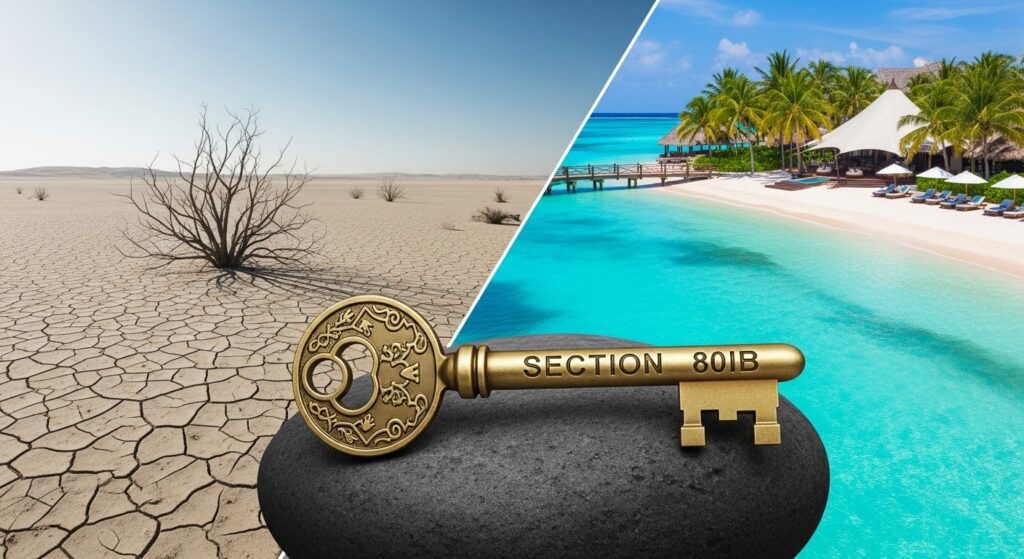
What if the government effectively funded a significant portion of your next luxury hospitality project? Through carefully structured tax incentives available under Section 80IB and other eligible regional development provisions, developers have discovered methods to dramatically improve project profitability while simultaneously accelerating rural economic development. What appears to be an isolated mountain valley or an undeveloped forest edge can become a highly profitable hospitality destination when strategic tax planning is integrated into the project’s financial model from the very beginning.
Most people evaluate glamping investments by comparing construction costs, occupancy rates, and room tariffs. Sophisticated investors, however, begin their analysis with tax legislation, infrastructure incentives, and regional development policies. They recognize that profitability is often determined long before the first guest checks into the resort. Government incentives can substantially improve project economics, reduce the effective cost of capital, and enhance long-term cash flow when projects are structured to comply with applicable legal requirements.
The emergence of luxury glamping represents far more than a hospitality trend. It reflects a broader evolution in regional economic development where tourism, environmental sustainability, local employment generation, and fiscal policy intersect to create long-term investment opportunities. Section 80IB has historically provided tax benefits for qualifying undertakings under specified conditions, and developers should obtain professional legal and tax advice to determine whether a particular hospitality project qualifies under the law as currently in force
The Post-Pandemic Shift Toward Premium Wilderness Experiences
The tourism landscape of 2026 looks dramatically different from what it did before the global pandemic. Modern travelers increasingly value privacy, open landscapes, wellness experiences, and authentic cultural interactions over conventional luxury hotels. Instead of marble lobbies and crowded swimming pools, guests now seek riverside cabins, forest domes, luxury tents overlooking mountain ranges, and eco-resorts integrated into natural environments.
This change in consumer behavior has fundamentally altered hospitality investment strategies. Traditional hotels located in saturated urban markets face rising competition, escalating operational costs, and limited pricing flexibility. Glamping resorts, by contrast, often operate in regions with relatively lower land acquisition costs while commanding premium nightly rates due to their unique experiential offerings.
However, developing tourism infrastructure in remote areas presents considerable financial challenges. Roads may require improvement. Reliable electricity may need renewable energy solutions. Water supply systems, waste management facilities, internet connectivity, and employee accommodation all require significant capital investment before a single guest generates revenue.
Without government incentives, these upfront expenditures can significantly extend the project’s payback period and reduce investor returns. This is where tax incentives designed to encourage regional development become strategically important. Rather than viewing taxation solely as a compliance obligation, experienced developers incorporate fiscal incentives into the project’s overall financial planning to improve long-term viability
Understanding the Financial Logic Behind Section 80IB

Section 80IB has historically formed part of India’s broader framework for encouraging industrial growth, infrastructure development, and investment in designated sectors and regions. The precise scope, eligibility criteria, duration, and availability of deductions have changed over time through successive Finance Acts, and developers should verify the current legal position before relying on any incentive.
The underlying economic philosophy remains straightforward. Governments encourage private investment in areas requiring economic development by providing tax benefits to eligible projects. Investors assume development risk and create employment, while regional economies benefit from infrastructure creation, tourism growth, and increased commercial activity.
For hospitality investors, the financial implications can be substantial where a project legitimately qualifies under applicable law. Tax savings improve retained earnings, increase operating cash flow, strengthen debt servicing capacity, and provide additional capital for expansion, marketing, sustainability initiatives, or community development.
Instead of distributing large portions of early operating profits toward income tax liabilities, qualifying businesses may be able to reinvest those funds into improving guest experiences, expanding accommodation capacity, strengthening digital marketing, enhancing renewable energy infrastructure, or developing complementary tourism activities.
This reinvestment cycle creates a compounding effect. Better facilities attract more guests. Increased occupancy generates higher revenues. Improved profitability enables further expansion, ultimately transforming relatively unknown destinations into established tourism ecosystems.
Why Remote Landscapes Are Becoming Premium Corporate Assets
For decades, remote land was frequently considered economically unproductive unless it supported agriculture, mining, forestry, or industrial development. Hospitality entrepreneurs are now redefining these assumptions.
A valley with panoramic mountain views, a riverside meadow, a forest clearing, or a plateau overlooking natural landscapes may generate considerably greater economic value through experiential tourism than through many traditional land uses.
Luxury travelers increasingly pay premium prices for exclusivity, environmental quality, personalized experiences, and digital detox opportunities. Consequently, the economic value of natural landscapes is being reassessed from a hospitality perspective rather than purely from agricultural or industrial productivity.
Government development policies often complement this transformation by supporting investments that generate employment, promote sustainable tourism, and stimulate regional economic activity. When tax incentives and infrastructure support align with strong market demand, remote landscapes become attractive long-term investment assets.
Designing Projects That Align with Regulatory Objectives

Compliance begins long before construction starts. Investors seeking to benefit from government incentives must integrate legal, engineering, environmental, and financial planning from the earliest project stages.
Modern glamping developments increasingly emphasize sustainable construction techniques. Modular cabins, luxury tents, geodesic domes, prefabricated structures, bamboo architecture, engineered timber, and other environmentally conscious designs often reduce construction timelines while minimizing ecological disturbance.
Portable luxury accommodation offers operational flexibility. Units can be expanded, relocated, or upgraded as demand evolves. From an investment perspective, modular construction may also simplify maintenance, reduce future renovation costs, and improve capital allocation.
Sustainability extends beyond architecture. Solar power installations, rainwater harvesting, wastewater recycling, electric mobility infrastructure, composting systems, and local sourcing policies strengthen environmental credentials while potentially reducing long-term operating expenses.
Although sustainability alone does not determine tax eligibility, projects that align with broader government objectives of environmental conservation and regional development are often better positioned to participate in various policy-driven support mechanisms where availa
Strategic Site Selection Creates Long-Term Financial Advantages
Location analysis extends far beyond scenic beauty.
Professional developers evaluate transportation accessibility, future infrastructure plans, demographic trends, tourism potential, environmental regulations, disaster resilience, and government development priorities before acquiring land.
Some regions receive greater policy support because they require economic diversification or infrastructure expansion. Such locations may offer multiple incentives beyond tax deductions, including subsidies, financing assistance, skill development programs, or infrastructure improvements.
Selecting an appropriate location therefore becomes both a tourism decision and a fiscal strategy.
Rather than competing in overcrowded destinations with expensive land and intense pricing pressure, investors increasingly explore emerging tourism corridors where first-mover advantages remain available.
Early investment frequently enables developers to secure larger land parcels at lower acquisition costs while establishing strong brand recognition before competition intensifies.
Documentation and Compliance Are Strategic Asset.
Tax incentives reward compliance rather than assumptions.
Every stage of project development should be supported by accurate documentation. Land acquisition records, construction invoices, contractor agreements, environmental approvals, employee records, local procurement documentation, financial statements, statutory registrations, and operational records collectively demonstrate compliance with applicable legal requirements.
Developers should maintain comprehensive accounting systems capable of segregating eligible business activities, tracking qualifying expenditures, and supporting claims with verifiable evidence.
Professional tax advisors, chartered accountants, company secretaries, and legal counsel play essential roles throughout the project lifecycle. Their involvement reduces regulatory risk while improving the quality of financial reporting and compliance management.
Strong governance not only protects tax positions but also enhances investor confidence, improves lender relationships, and facilitates future fundraising or expansion.
Tax Savings Become Regional Development Capital
Perhaps the most significant benefit of incentive-driven hospitality investment extends beyond individual businesses.
Tax savings frequently become reinvestment capital for regional development.
Additional cash flow enables resort operators to improve internal roads, install renewable energy systems, expand water treatment facilities, enhance internet connectivity, develop recreational infrastructure, and improve emergency preparedness.
These improvements rarely benefit only paying guests.

Nearby communities often gain improved transportation, employment opportunities, digital connectivity, and stronger local business ecosystems.
Government incentives therefore function as catalysts rather than subsidies. They encourage private capital to finance infrastructure that simultaneously benefits commercial enterprises and surrounding populations.
Creating Rural Entrepreneurship Ecosystems
- A successful glamping resort rarely operates in isolation.
- Luxury tourism generates demand across numerous local industries.
- Farmers supply organic vegetables, fruits, dairy products, herbs, and specialty foods.
- Local artisans produce handicrafts, textiles, furniture, decorative items, and souvenirs.
- Adventure guides organize trekking, birdwatching, cycling, kayaking, wildlife photography, and cultural experiences.
- Transport operators provide airport transfers, local excursions, and logistics support.
Traditional performers, musicians, chefs, storytellers, and craftsmen become integral components of the guest experience.
As visitor numbers increase, additional businesses emerge naturally.
Cafes, wellness centers, equipment rental companies, photography services, local tour operators, florists, event planners, and maintenance contractors collectively expand the regional economy.
The economic multiplier effect extends well beyond resort boundaries, creating diversified employment and encouraging young entrepreneurs to remain within their communities instead of migrating to metropolitan areas.
Tourism Growth Through Strategic Investment
Across many emerging tourism destinations, carefully planned hospitality developments have demonstrated their ability to transform regional economies.
As accommodation quality improves, visitor confidence increases.
Improved occupancy encourages airlines, transportation providers, and travel companies to expand services.
Local governments often respond with better roads, improved signage, enhanced sanitation systems, tourism promotion campaigns, and stronger public infrastructure.
Private investment and public investment reinforce one another.
Although outcomes vary widely by location and project execution, successful tourism clusters illustrate how strategic hospitality investments can significantly increase visitor arrivals, strengthen local employment, and diversify rural economies over time.
Financial Modeling Beyond Initial Tax Benefits
Sophisticated investors recognize that tax incentives should enhance sound projects rather than rescue weak ones.
Financial projections must remain sustainable after incentive periods conclude.
Revenue assumptions should reflect realistic occupancy, achievable average room rates, seasonal demand fluctuations, maintenance costs, employee expenses, financing obligations, marketing budgets, insurance requirements, and future capital expenditure needs.
When projects remain profitable without extraordinary tax support, incentives simply accelerate wealth creation rather than becoming the foundation of financial viability.
Banks and institutional investors increasingly evaluate hospitality proposals using comprehensive financial metrics including internal rate of return, debt service coverage ratio, net present value, payback period, operating margins, and long-term cash generation.
Tax planning enhances these metrics but should always complement fundamentally sound business economics.
Preparing for Future Legislative Changes
Tax legislation evolves continuously.
Finance Acts, judicial interpretations, policy reforms, environmental regulations, and tourism development strategies may alter the availability or scope of incentives over time.
Developers should therefore monitor legislative developments closely and periodically review their compliance frameworks.
Professional advisory support remains essential throughout the operational life of the project rather than only during construction.
Investment strategies should remain sufficiently flexible to adapt to changing tax environments, capital gains rules, sustainability standards, and reporting requirements.
Forward-looking developers also evaluate potential exit strategies.
Well-documented compliance records, audited financial statements, stable occupancy performance, diversified revenue streams, and strong governance significantly enhance enterprise valuation during acquisitions, private equity investment, refinancing, or public fundraising.
Building Hospitality Assets That Create Lasting Value
Projects that combine compelling guest experiences with disciplined financial planning are positioned to generate enduring economic value for investors and local communities alike.
Developers who understand the interaction between taxation, infrastructure, sustainability, and hospitality gain a strategic advantage over competitors focused solely on design or marketing. Every tax saving legally available can become additional investment capital. Every infrastructure improvement can increase destination attractiveness. Every local partnership can strengthen operational resilience.
Before relying on any tax incentive, however, investors should obtain advice from qualified chartered accountants, tax professionals, and legal advisors to confirm current eligibility under the Income-tax Act, applicable Finance Acts, notifications, and judicial interpretations. Tax laws, including the provisions and applicability of Section 80IB, have evolved over time, and eligibility depends on the specific facts of each project.
In the years ahead, India’s most valuable hospitality assets may not be located in crowded metropolitan skylines but in carefully developed rural destinations where thoughtful planning, sustainable development, and sound financial structuring transform underutilized landscapes into thriving tourism ecosystems. The true opportunity lies not merely in building luxury tents, but in creating financially resilient destinations that generate long-term value while contributing meaningfully to regional development.