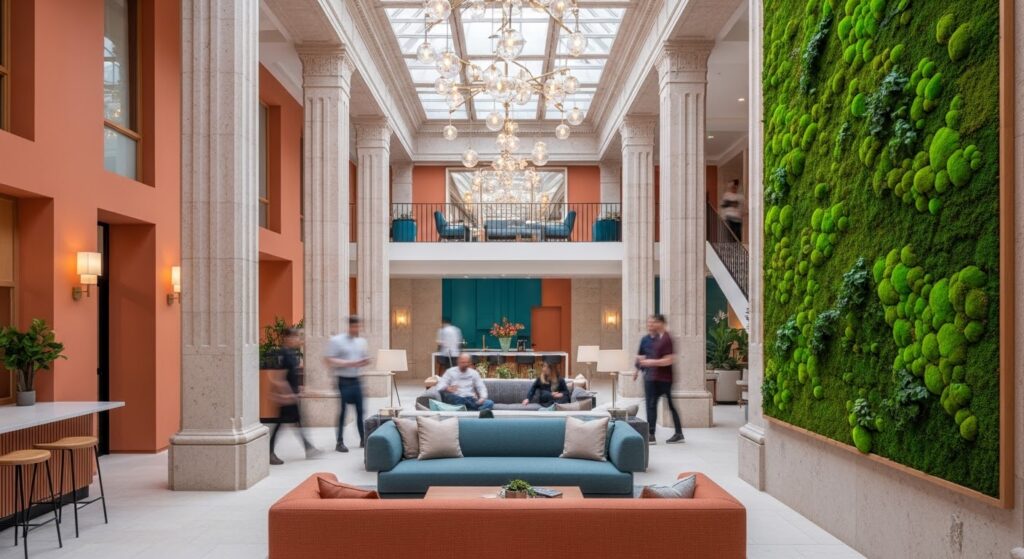
For decades, India’s urban housing market revolved around a familiar formula. Young professionals rented small apartments, signed 11-month agreements, paid hefty security deposits, negotiated with landlords over repairs, and repeated the entire process every time they changed jobs. Ownership remained the ultimate aspiration, while renting was often viewed as a temporary compromise. But by 2026, that traditional model is rapidly giving way to something fundamentally different. Across Bengaluru, Mumbai, Hyderabad, Pune, Gurugram, Chennai, and emerging technology hubs, a new category of managed housing is redefining the economics of urban living. Institutional investors, hospitality companies, real estate developers, and technology platforms are collectively transforming ordinary residential buildings into professionally managed communities that function more like hotels than conventional apartments. The rise of organized co-living is no longer a niche trend aimed at students. It represents one of the biggest structural shifts in Indian real estate, where housing is increasingly delivered as a service rather than merely leased as physical space. This transition is altering investment strategies, creating new asset classes, changing tenant expectations, and blurring the traditional boundaries between residential real estate and hospitality.
The most significant catalyst behind this transformation is the post-pandemic evolution of work itself. Remote work and hybrid employment models have permanently altered how India’s younger workforce views housing. Earlier generations often selected accommodation based primarily on proximity to the workplace because commuting consumed several hours every day. Today, professionals spend fewer days in physical offices while simultaneously seeking neighborhoods that offer better lifestyles, entertainment, networking opportunities, fitness facilities, and community experiences. Flexibility has become more valuable than permanence. Instead of committing to long-term rentals with large upfront deposits, many professionals now prefer living arrangements that allow them to relocate quickly as career opportunities evolve. In an economy increasingly driven by startups, consulting, freelancing, and digital entrepreneurship, mobility has become an economic advantage rather than an inconvenience.
This cultural shift has gradually weakened the relevance of the traditional 11-month rental agreement. Young professionals frequently change employers, cities, and even industries within relatively short periods. Locking themselves into conventional rental contracts no longer aligns with modern career trajectories. The friction associated with finding brokers, negotiating rents, arranging furniture, setting up internet connections, paying deposits equivalent to six or even ten months’ rent, and managing utility bills creates significant transaction costs every time someone relocates. Managed co-living operators have recognized this inefficiency and built business models around eliminating these pain points. Tenants can now move into fully furnished accommodations with housekeeping, internet connectivity, maintenance, utilities, and community services bundled into a single monthly payment. What was previously a fragmented rental experience has become an integrated subscription-based housing service.
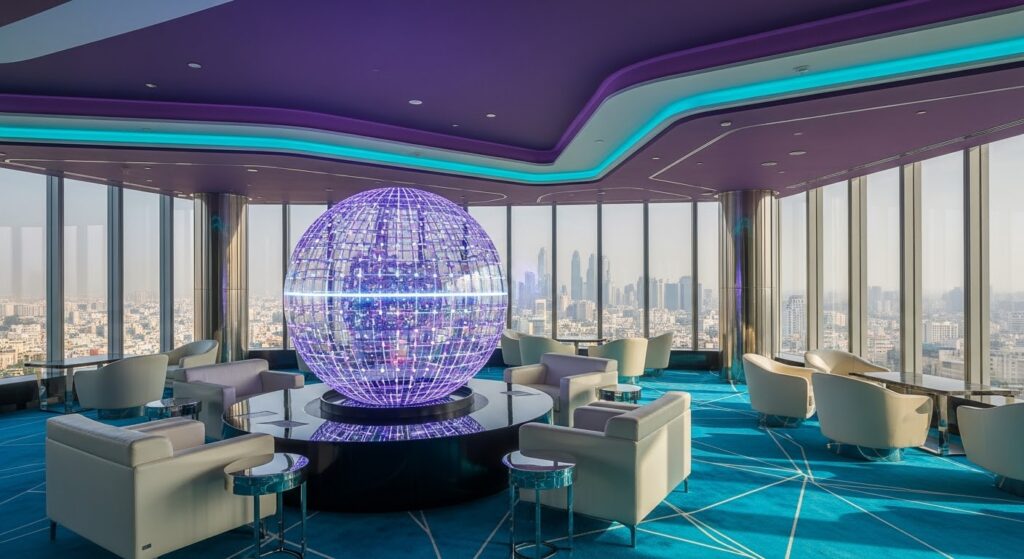
Nowhere is this transition more visible than in Bengaluru and Mumbai, where rental inflation and security deposit requirements have become major financial burdens. In several premium neighborhoods, prospective tenants continue to face substantial upfront deposits in addition to brokerage fees, furnishing costs, and recurring maintenance charges. For young employees beginning their careers or relocating from other cities, these initial costs can represent several months of disposable income. Managed co-living significantly reduces these entry barriers by minimizing deposits, simplifying documentation, and standardizing pricing structures. Rather than tying up capital in refundable deposits, residents retain liquidity that can instead be directed toward investments, emergency savings, education, or entrepreneurship. This financial flexibility is particularly attractive to Gen Z workers who increasingly prioritize cash flow management over long-term asset accumulation.
Another remarkable trend is the changing psychology of consumption. Previous generations often measured financial success through property ownership and accumulated physical assets. Today’s urban professionals are displaying different priorities. They increasingly allocate disposable income toward travel, wellness, education, premium experiences, networking opportunities, and digital lifestyles instead of investing heavily in household goods. Co-living perfectly aligns with this behavioral evolution because residents are effectively purchasing access rather than ownership. Instead of buying furniture, appliances, kitchen equipment, internet infrastructure, and maintenance services separately, everything is bundled into one professionally managed offering. This subscription economy mirrors broader consumer trends already evident in entertainment, transportation, software, and even financial services.
For landlords, the implications are equally profound. Traditionally, residential property owners depended upon individual tenants while bearing vacancy risks, maintenance uncertainties, delayed rent payments, and operational inefficiencies. Institutional co-living operators have introduced an alternative model in which landlords lease entire buildings or multiple units to professional management companies under long-term agreements. Instead of managing dozens of individual tenant relationships, owners receive relatively predictable rental income while transferring operational responsibilities to specialized operators. Although guaranteed returns vary depending on market conditions and contractual arrangements, many property owners value the reduced management burden and potentially lower vacancy risk compared with self-managed rentals.
This institutionalization is gradually transforming residential real estate into an operational business rather than a passive investment. Success is no longer determined solely by property appreciation but also by occupancy rates, customer satisfaction, service quality, technology integration, operational efficiency, and recurring cash flows. In many respects, the sector increasingly resembles hospitality management. Buildings are evaluated not simply as collections of apartments but as revenue-generating platforms requiring professional branding, customer acquisition, maintenance systems, digital payment infrastructure, and standardized operating procedures.

One of the fastest-growing segments within this broader ecosystem is Purpose-Built Student Accommodation, commonly referred to as PBSA. India’s expanding higher education sector continues to attract millions of students to metropolitan universities, engineering colleges, management institutes, medical schools, and international campuses. Traditional hostels often struggle to meet modern expectations regarding privacy, security, internet connectivity, hygiene, and recreational facilities. Purpose-built student housing addresses these deficiencies through professionally designed residences incorporating study spaces, fitness centers, dining facilities, high-speed internet, biometric security, and structured community programming. For investors, PBSA represents a relatively specialized asset class characterized by recurring demand driven by academic admission cycles rather than conventional residential leasing dynamics.
The economics supporting PBSA are compelling because occupancy tends to remain relatively stable throughout academic terms while operators benefit from centralized facility management and standardized service delivery. Internationally, institutional investors have long recognized student housing as a mature investment category, and India appears to be following a similar trajectory. As universities expand and international student mobility increases, professionally managed accommodation is expected to capture a growing share of this market.
Beyond student housing, another major source of opportunity lies in adaptive reuse. Across numerous Indian cities, developers are identifying underperforming commercial properties whose original business models no longer generate optimal returns. Older office buildings, vacant commercial complexes, partially occupied business centers, and obsolete retail structures are increasingly being reconfigured into high-density managed residential communities. Instead of allowing these assets to remain underutilized, operators invest in redesigning layouts, upgrading utilities, enhancing fire safety, introducing digital access systems, and creating shared amenities that substantially increase occupancy and revenue potential. Adaptive reuse not only revitalizes aging buildings but also addresses urban housing shortages without requiring extensive new land acquisition.
Technology sits at the center of the managed living revolution. Artificial intelligence is gradually enhancing operational efficiency through predictive maintenance, digital access management, automated customer support, occupancy optimization, dynamic pricing, energy monitoring, and preventive maintenance scheduling. Mobile applications enable residents to pay rent, request maintenance, reserve shared amenities, communicate with community managers, participate in events, and verify visitors through integrated digital platforms. Data analytics further allows operators to understand resident preferences, improve service quality, reduce operational costs, and optimize staffing requirements. These technological capabilities create competitive advantages that individual landlords often struggle to replicate.
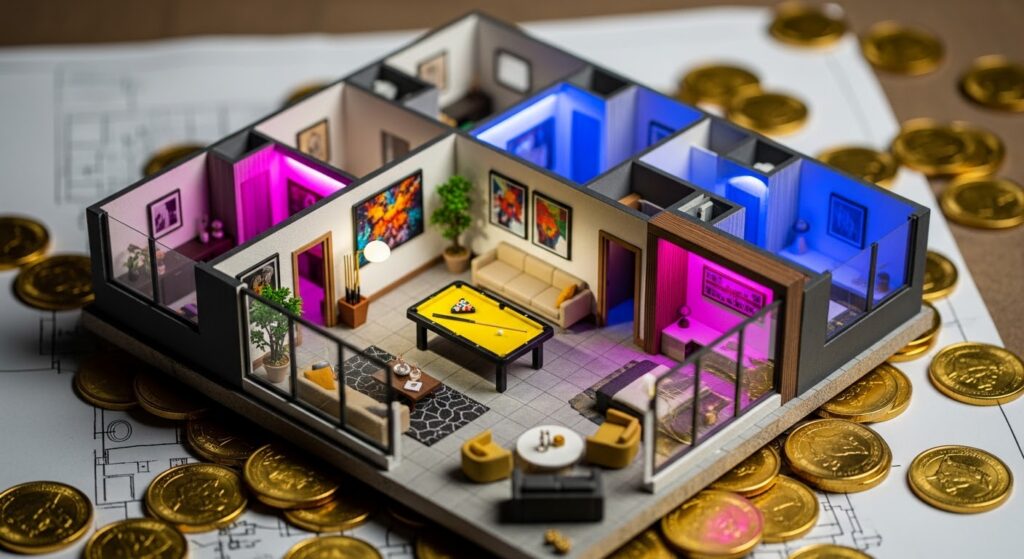
The convergence between hospitality and residential real estate is becoming increasingly evident. Several hotel companies have begun expanding beyond traditional short-stay accommodation into extended-stay and managed living concepts targeting digital nomads, remote professionals, consultants, expatriates, and project-based employees. These long-stay formats leverage existing hospitality expertise in housekeeping, guest services, food operations, maintenance, security, and brand management while addressing growing demand for flexible urban housing. The distinction between hotel guests and long-term residents continues to narrow as service expectations become increasingly similar.
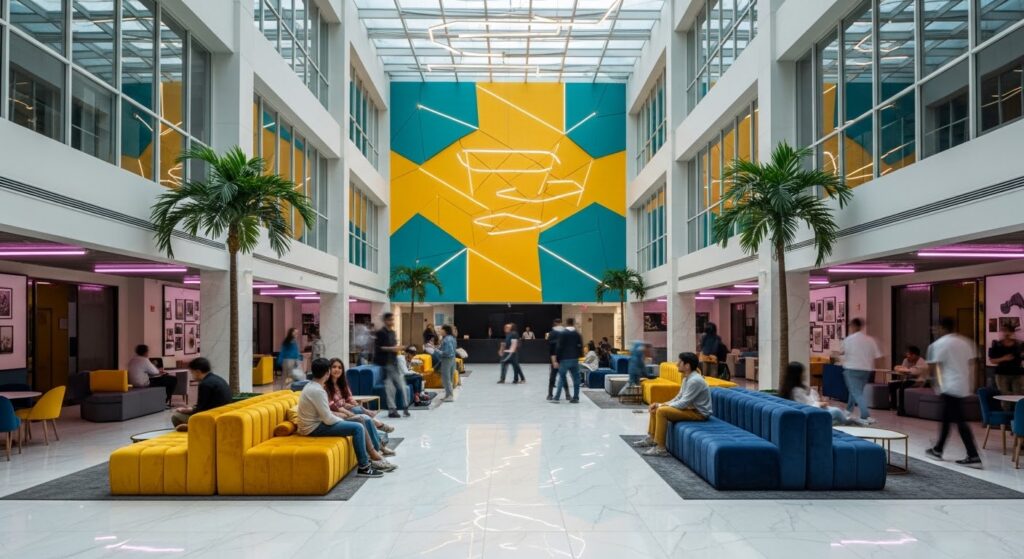
Modern co-living facilities differentiate themselves through carefully curated amenities that extend far beyond accommodation. Rooftop lounges, technology-enabled fitness centers, wellness rooms, gaming areas, podcast studios, coworking zones, cafes, libraries, entertainment spaces, laundry services, package management, and community kitchens create integrated living environments where residents can work, socialize, exercise, and relax within a single ecosystem. Such facilities justify premium pricing by delivering convenience, productivity, and social engagement rather than simply providing physical shelter.
Community management has emerged as perhaps the most distinctive feature of successful operators. Loneliness and social isolation remain persistent challenges for professionals relocating to unfamiliar cities. Organized networking events, startup meetups, yoga sessions, cultural festivals, career workshops, sports competitions, language clubs, and volunteering activities foster interpersonal connections that traditional apartment complexes rarely facilitate. These social experiences generate measurable business value because residents often perceive community engagement as part of the overall housing proposition, improving satisfaction and reducing churn.
Institutional capital has taken notice of these structural advantages. Private equity firms, real estate investment platforms, venture capital investors, sovereign wealth funds, and family offices increasingly view managed living as a scalable alternative to conventional residential investment. Rather than relying solely on appreciation, investors are attracted by recurring operating income, standardized processes, technology-enabled efficiencies, and expanding urban demand. While returns naturally vary depending on location, occupancy, operating costs, and management quality, professionally operated managed living assets have become an increasingly important component of diversified real estate portfolios.
Taxation and regulatory frameworks are simultaneously evolving alongside the industry. Operators must navigate GST implications on bundled services, municipal regulations, building approvals, fire safety standards, labor compliance, income tax considerations, and contractual arrangements with landlords. Future regulatory reforms may seek to standardize tenant rights, security deposit norms, maintenance obligations, dispute resolution mechanisms, and operational licensing. Clearer regulation could increase consumer confidence while providing institutional investors with greater legal certainty.
Expansion beyond India’s largest metropolitan areas represents the next major growth frontier. Cities such as Indore, Jaipur, Kochi, Bhubaneswar, Ahmedabad, Chandigarh, Coimbatore, Nagpur, Surat, and Lucknow are rapidly attracting information technology firms, global capability centers, educational institutions, healthcare investments, manufacturing facilities, and startup ecosystems. As these cities generate larger populations of mobile professionals and students, organized managed housing operators are expected to replicate successful metropolitan models while adapting pricing and amenities to regional demand characteristics.
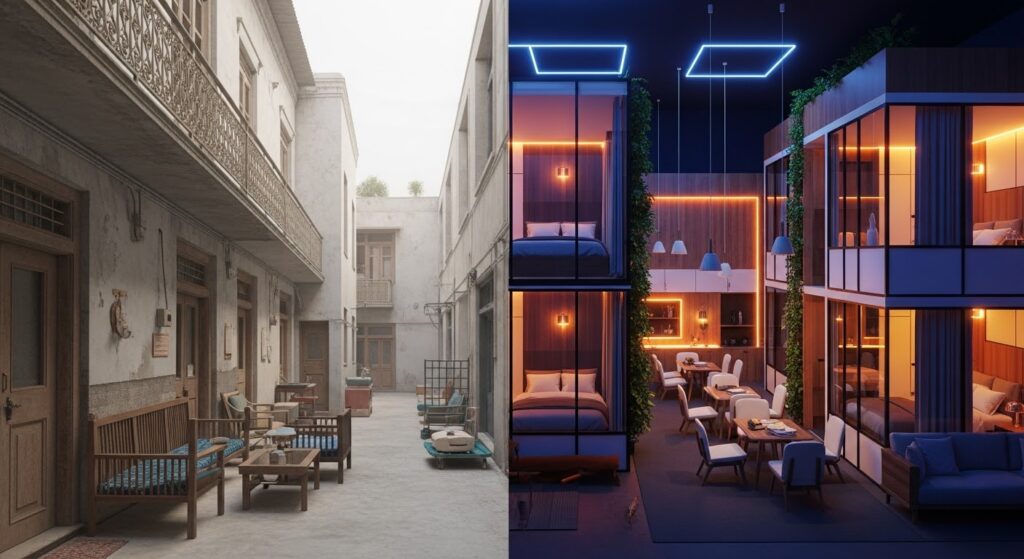
Nevertheless, significant challenges remain. Maintaining service quality at scale requires continuous investment in staff training, technology, maintenance, cybersecurity, and customer experience. Occupancy fluctuations during economic slowdowns can pressure profitability. Rising real estate prices may compress margins unless operators maintain operational efficiency. Competition is intensifying as more domestic and international players enter the market, potentially triggering pricing pressures in premium locations. Furthermore, balancing affordability with premium amenities will remain critical as operators attempt to expand beyond high-income customer segments.
From a macroeconomic perspective, managed living contributes to improved urban productivity by reducing friction in labor mobility. Professionals can relocate more easily for employment opportunities, employers gain access to broader talent pools, and cities become more attractive destinations for investment. Efficient housing ecosystems support broader economic development by enabling faster workforce deployment, reducing relocation costs, and encouraging entrepreneurship among mobile professionals.
The broader significance of India’s co-living revolution extends beyond housing itself. It reflects a deeper transition in consumer behavior, capital allocation, and business strategy. Real estate is increasingly becoming an operating business powered by technology, hospitality, and recurring services rather than a passive collection of physical assets. Investors are evaluating buildings based on operational performance instead of merely location. Residents increasingly value convenience, flexibility, experiences, and community over ownership and permanence. Developers are redesigning assets for operational efficiency rather than simply maximizing saleable area.

Over the next decade, the distinction between hotels, serviced apartments, rental housing, student accommodation, and co-living may become progressively less meaningful. All these segments are converging toward a unified concept of managed living in which professional operators deliver accommodation, hospitality, technology, and community through integrated service platforms. Buildings will increasingly function as ecosystems rather than standalone structures, with digital infrastructure becoming as important as physical architecture.
The era of the traditional landlord is not disappearing entirely, but it is unquestionably evolving. Institutional operators, technology platforms, hospitality brands, and professional asset managers are redefining the economics of urban housing. For investors, developers, policymakers, and consumers alike, the central question is no longer whether co-living will become mainstream. The more important question is how rapidly the sector can scale while maintaining quality, affordability, regulatory compliance, and sustainable profitability. The answer to that question will help shape the future of Indian real estate, hospitality, and urban development for years to come.
Marine Drive: Where the City Breathes Through the Sea
Mumbai’s Marine Drive is much more than a coastal road. It is the emotional balcony of India’s financial capital. Every evening, thousands of people gather along the promenade—office workers escaping stressful boardrooms, students discussing dreams, photographers chasing dramatic sunsets, runners maintaining fitness routines, elderly couples reliving memories, and tourists experiencing the city’s most iconic skyline.
Standing beside the Arabian Sea, you immediately notice something unusual. Although traffic flows continuously behind you, the crashing waves create a powerful layer of white noise. Instead of amplifying the chaos, the sea somehow absorbs it. The repetitive rhythm of water striking the tetrapods gradually replaces the sounds of honking vehicles and conversations.
Marine Drive represents a fascinating contradiction. It is one of the busiest public spaces in India, yet many visitors come here seeking solitude. Thousands of strangers sit only a few feet apart without speaking to one another, each privately watching the same horizon. It is a rare example of collective solitude, where people find personal peace while sharing the same public space.
As sunset approaches, the city undergoes another transformation. Streetlights illuminate the sweeping curve of Marine Drive, creating the famous Queen’s Necklace—one of the world’s most recognizable urban skylines. The sea reflects shimmering lights while waves continue their timeless rhythm. In that moment, Mumbai feels less like a crowded metropolis and more like a city breathing in harmony with the ocean.