The Rise of Experiential Real Estate
For decades, investors searching for stable returns concentrated on hotels, apartments, office buildings, and commercial retail spaces. Traditional hospitality followed a familiar formula: acquire expensive land, construct permanent buildings, employ large operational teams, and wait years before achieving meaningful returns.
In 2026, however, a different asset class is attracting institutional investors, hospitality groups, family offices, and high-net-worth individuals across the world.
Luxury glamping.
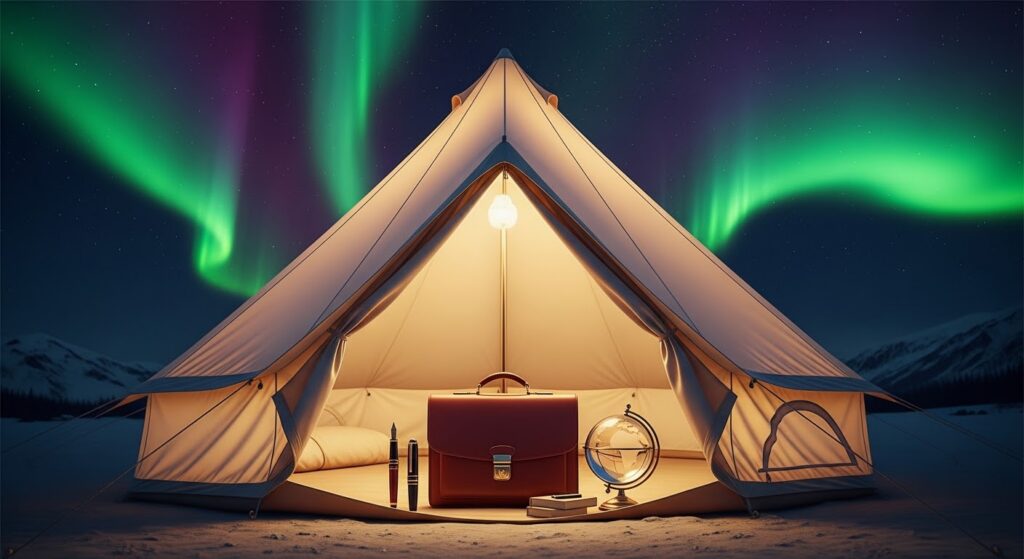
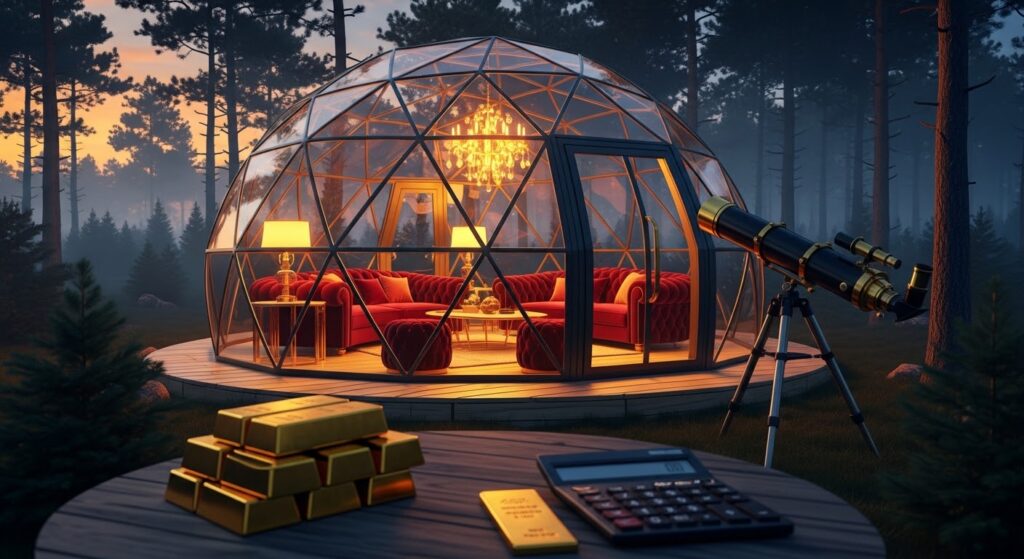
What began as an upgraded camping experience has evolved into one of the fastest-growing segments of experiential real estate. Premium safari tents, geodesic domes, glass cabins, eco-lodges, luxury treehouses, floating villas, and designer cabins are no longer viewed simply as tourism products. Increasingly, they are being evaluated as income-generating real estate assets with distinctive operating characteristics.
The industry’s transformation reflects a broader shift in consumer behavior. Travelers increasingly value memorable experiences, privacy, sustainability, and immersion in nature alongside comfort and premium amenities. This demand has encouraged investors to explore hospitality formats that may require lower initial capital than conventional luxury hotels while offering flexible expansion strategies.
The result is the emergence of luxury glamping as an important investment theme within outdoor hospitality.
Why Traditional Hospitality Is Losing Its Monopoly
Hotel development has become progressively more expensive.
Developers face:
- Rising land prices
- Higher construction costs
- Increasing labour expenses
- Longer approval timelines
- Growing financing costs
- Expensive maintenance requirements
Constructing a premium hotel often requires substantial upfront investment and several years before opening. During this period, developers continue servicing debt while generating little or no operating revenue.
Luxury glamping follows a different development philosophy.
Instead of constructing multi-storey concrete buildings, developers often install modular accommodation units that can be deployed more quickly. Depending on the jurisdiction and project design, this can shorten development timelines and allow phased expansion based on market demand.
Rather than committing capital to hundreds of rooms immediately, operators frequently begin with a limited number of premium units and scale over time.
This staged investment model can reduce initial financial exposure while preserving flexibility.
The Experience Economy Is Rewriting Tourism
Modern travellers increasingly seek stories rather than square footage.
Luxury hotels once competed by offering larger rooms, grander lobbies, and more amenities.
Today’s premium traveller often seeks:
- Private forest escapes
- Mountain domes
- Luxury desert camps
- Vineyard cabins
- Floating eco-lodges
- Lakeside glass villas
- Wildlife experiences
- Dark-sky astronomy retreats
These destinations command premium pricing because guests are paying for exclusivity, location, and memorable experiences—not simply accommodation.
As a result, investors have begun valuing experiential hospitality differently from traditional lodging assets.
Luxury Glamping Is Becoming an Investment Category
Institutional investors are increasingly examining outdoor hospitality through familiar financial metrics:
- Capital expenditure (CapEx)
- Operating expenditure (OpEx)
- Average Daily Rate (ADR)
- Occupancy
- Revenue per available unit
- Return on invested capital
- Internal Rate of Return (IRR)
- Payback period
This shift represents a significant evolution.
Instead of asking, “Is camping becoming luxurious?” investors are asking, “How does this asset compare with other hospitality investments?”
That analytical perspective has helped bring luxury glamping into mainstream investment discussions.
Understanding the Unit Economics
Every investment begins with one essential question:
How much capital is required to generate sustainable cash flow?
A luxury glamping unit typically combines premium accommodation with relatively compact construction.
Depending on location, design, infrastructure, utilities, and local regulations, development costs can vary substantially. A project may include:
- Luxury accommodation units
- Bathrooms
- Furnishings
- Electrical systems
- Water infrastructure
- Renewable energy components
- Landscaping
- Reception facilities
- Food and beverage services
- Recreational amenities
The economics depend not only on development cost but also on occupancy levels, pricing power, operating efficiency, and guest demand.
Successful operators focus on maximizing revenue while maintaining disciplined operating expenses.
Premium Pricing Through Scarcity
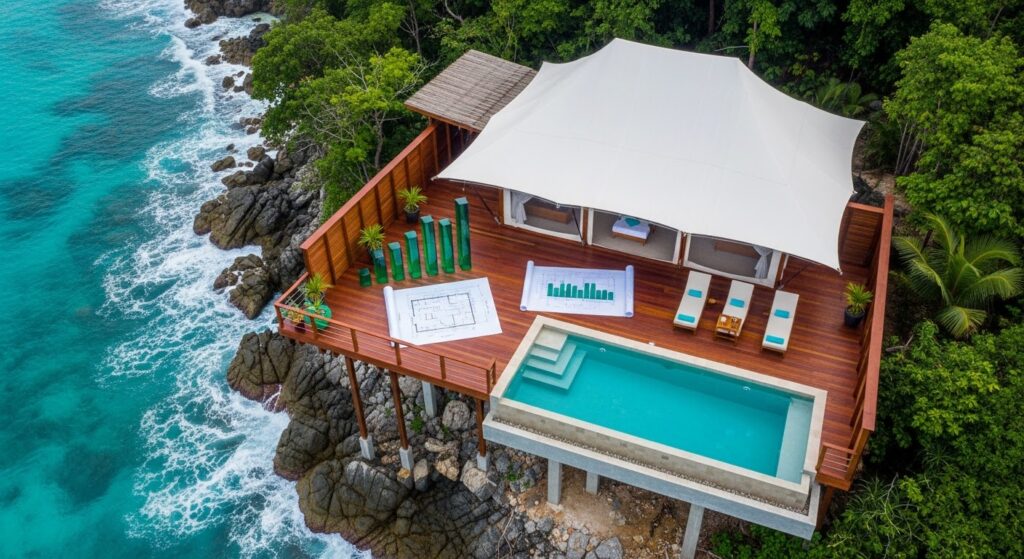
Unlike urban hotels with hundreds of rooms, many luxury glamping properties intentionally remain small.
A resort with only 15 to 25 units creates scarcity.
Scarcity can support premium pricing during peak travel periods, provided the property offers a distinctive guest experience and strong service standards.
Guests are often paying for:
- Privacy
- Exclusive landscapes
- Wellness experiences
- Nature immersion
- Architectural uniqueness
- Personalized service
This emphasis on experience rather than scale differentiates luxury glamping from conventional accommodation.
Investors Are Following Consumer Preferences
Consumer demand is influencing capital allocation.
Younger travellers often prioritise experiences over material purchases. Families seek nature-based vacations. Remote workers increasingly combine work with leisure. Wellness tourism continues expanding globally.
These trends have broadened the customer base for premium outdoor hospitality.
Investors tend to follow long-term shifts in consumer spending, especially when supported by favourable demographics and growing travel demand.
The Flexibility Advantage
One feature that attracts developers is flexibility.
Traditional hotels generally require large, permanent structures.
Many glamping projects, by contrast, can expand incrementally.
Operators may begin with:
- 10 accommodation units
- Evaluate demand
- Improve operational efficiency
- Add more units as occupancy stabilises
This phased development strategy can improve capital planning and reduce the risks associated with oversupply.
Sustainability Is Becoming a Competitive Advantage
Environmental considerations increasingly influence both travellers and investors.
Luxury glamping developments frequently incorporate:
- Solar energy
- Rainwater harvesting
- Low-impact construction
- Waste management systems
- Native landscaping
- Eco-friendly materials
While sustainability initiatives involve investment, they can also enhance brand positioning, attract environmentally conscious travellers, and support long-term operational resilience.
Digital Marketing Has Changed Everything
Twenty years ago, remote destinations relied heavily on travel agents.
Today, luxury glamping properties reach global audiences through:
- YouTube
- Airbnb
- Booking platforms
- Google Maps
- Travel influencers
- Content creators
Visual storytelling plays an especially important role because many travellers discover destinations through photographs and short-form videos.
A distinctive property can generate significant online attention if supported by consistent marketing and positive guest experiences.
From Lifestyle Business to Institutional Interest
Luxury glamping is no longer viewed solely as a niche lifestyle venture.
Hospitality companies, private equity firms, and real estate investors are increasingly exploring outdoor hospitality as part of broader diversification strategies.
Their interest reflects several factors:
- Growing experiential travel demand
- Flexible development approaches
- Potential operational efficiencies
- Portfolio diversification
- Expanding premium tourism markets
As with any investment, returns depend on location, execution, financing, competition, regulation, and market conditions. There is no universal formula for success, but the sector has clearly attracted more serious financial analysis than it did only a few years ago.
2026: The Year the Market Matured
The defining feature of 2026 is not that glamping suddenly became luxurious—it had already begun that transition.
What changed is the way investors evaluate it.
Luxury glamping is increasingly analysed using the same financial frameworks applied to hotels, resorts, and other income-producing real estate assets. Discussions now centre on occupancy, revenue optimisation, operating margins, capital efficiency, financing structures, and long-term asset value.
That evolution—from recreational concept to professionally managed investment category—is what distinguishes today’s market.
In the next section, we will examine the financial architecture behind luxury glamping, including development costs, revenue drivers, operating metrics, financing considerations, depreciation concepts, and how investors assess potential returns while managing risk. This deeper analysis reveals why outdoor hospitality has become one of the most closely watched segments within experiential real estate.