Can a woman explore Mumbai’s legendary midnight food streets alone and still feel confident, comfortable and in control? Absolutely—but the secret is not simply courage; it is preparation, visibility, smart transport choices and knowing when to move on. Mumbai after dark has a completely different personality. The office crowds disappear, the roads become quieter in some neighbourhoods while food streets become intensely alive, and the aroma of kebabs, grilled meats, freshly fried snacks, sweets and seafood seems to pull you deeper into the city. For a solo woman traveller, however, a successful late-night food adventure begins long before the first bite. The aim is not to prove that every street is safe at every hour, but to understand the environment, choose active locations, use reliable transport and maintain enough situational awareness to enjoy the experience without unnecessary risk.
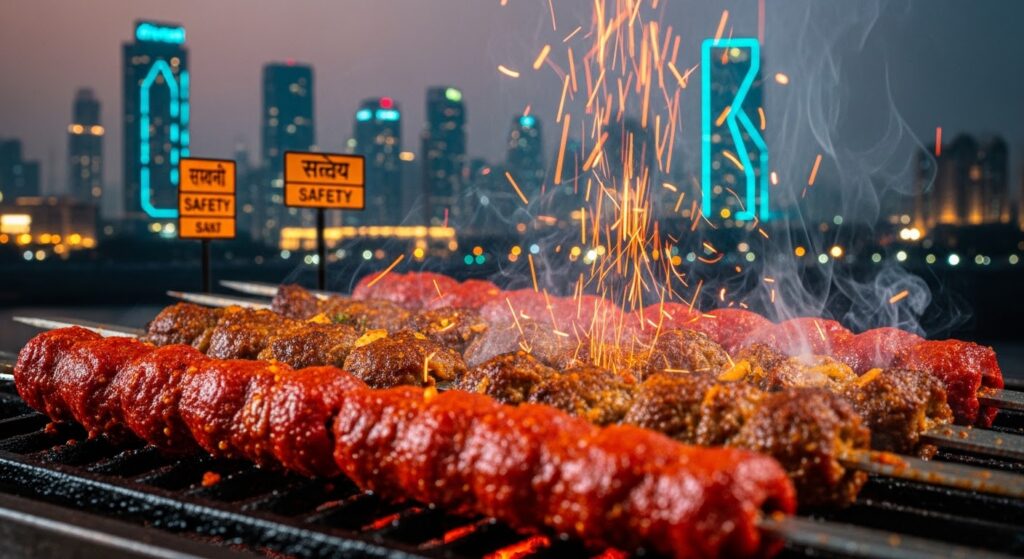
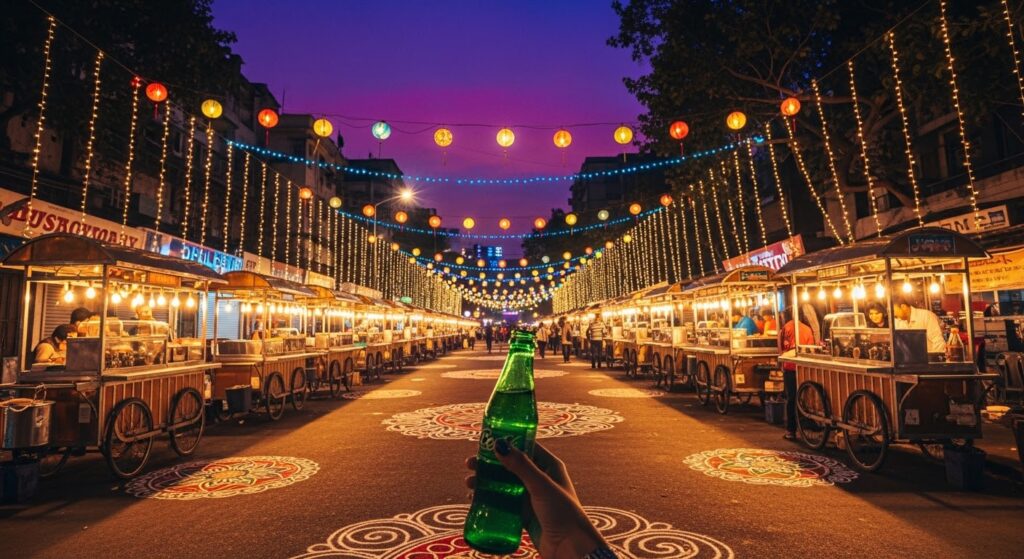
One of the most fascinating things about Mumbai is the contrast between its daytime and midnight identities. During the day, the city is dominated by trains, offices, traffic, markets and millions of commuters. Late at night, particular neighbourhoods develop their own rhythm. Food vendors continue serving hungry workers, travellers, residents and night-shift employees, while families and groups gather around stalls that have become local institutions. Areas around Mohammad Ali Road are particularly famous for their night-time food culture, especially during festive periods, while Mahim and other parts of central Mumbai offer their own distinctive combination of street food, bakeries, seafood and neighbourhood eateries. But remember that operating hours, crowds, road conditions and local restrictions can change. A responsible solo traveller should verify the current situation on the same day rather than assuming that a place described online as “24/7” will actually operate throughout the night.
The first rule of solo midnight exploration is simple: visibility is your friend. When choosing a food stall, don’t automatically select the cheapest or most hidden vendor. Look for places with steady customer turnover, adequate lighting, visible staff and enough surrounding activity. A busy stall does not guarantee safety, but an active environment gives you more options if you need assistance. This is particularly useful when you are travelling alone. Instead of wandering several hundred metres down an unfamiliar lane searching for a supposedly famous stall, identify a few food destinations beforehand and move directly between them. Your objective is to experience Mumbai’s food culture, not to turn the night into an unplanned exploration of deserted lanes
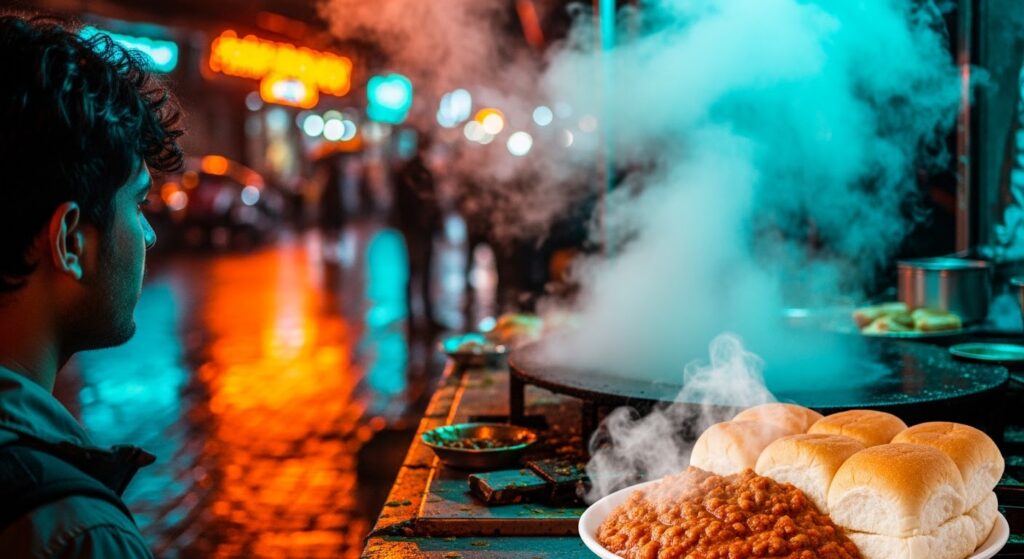
Mohammad Ali Road can become an extraordinary culinary experience after dark, particularly around the busy food areas near Minara Masjid. The atmosphere is energetic, colourful and intensely local. You may encounter sizzling kebabs, rolls, biryani, grilled specialities, malpua, phirni and many other preparations depending on the season and the particular market area. For a solo woman, however, the best strategy is to become a confident observer rather than an adventurous wanderer. Choose stalls where people are already eating, preferably those with visible seating or a clear ordering counter. Watch how the stall operates before placing your order. Notice whether families, women and solo customers are comfortably using the space. Keep your phone and valuables secure, use digital payments where accepted, and avoid becoming so absorbed in filming that you stop noticing what is happening around you.
Your choice of transport can be even more important than your choice of food. A late-night food tour should ideally be designed around door-to-door movement, rather than relying on long walks between disconnected locations. Book a reputable cab or taxi through a trusted platform, verify the vehicle and driver details before entering, and share your live trip information with someone you trust. Do not rely on an unfamiliar “shortcut” suggested by a stranger simply because it saves ten minutes. Mumbai is a large city, and conditions can change dramatically from one street to the next. If you are travelling between Mohammad Ali Road, Mahim or another food district, plan the next ride before leaving the current location. This removes the pressure of standing alone on an unfamiliar road late at night while searching for transport.
Technology can become your invisible safety companion. Before leaving, ensure your phone is adequately charged and carry a power bank. Keep mobile data active and make sure your emergency contacts are easily accessible. Share your planned route with a family member or friend and tell them approximately when you expect to finish. If you are filming a vlog, consider carrying a second device or keeping important contact information somewhere other than your primary phone. Digital payments are convenient, but carrying a small amount of emergency cash can be useful if a particular stall does not accept your preferred payment method. Most importantly, do not broadcast your exact live location publicly while you are still at the location. You can share the experience with your audience after leaving.
For a solo food explorer, the concept of an anchor location is extremely useful. Instead of thinking about the night as dozens of random food stops, identify two or three dependable points around which your journey is organised. An anchor could be a well-known restaurant, a busy food market, a major road junction or another recognisable public location from which you can easily obtain transport. You eat, film and explore around that anchor, and when you decide to leave, you return to the known point rather than continuing indefinitely into unfamiliar streets. This small change in planning can make a huge difference to confidence
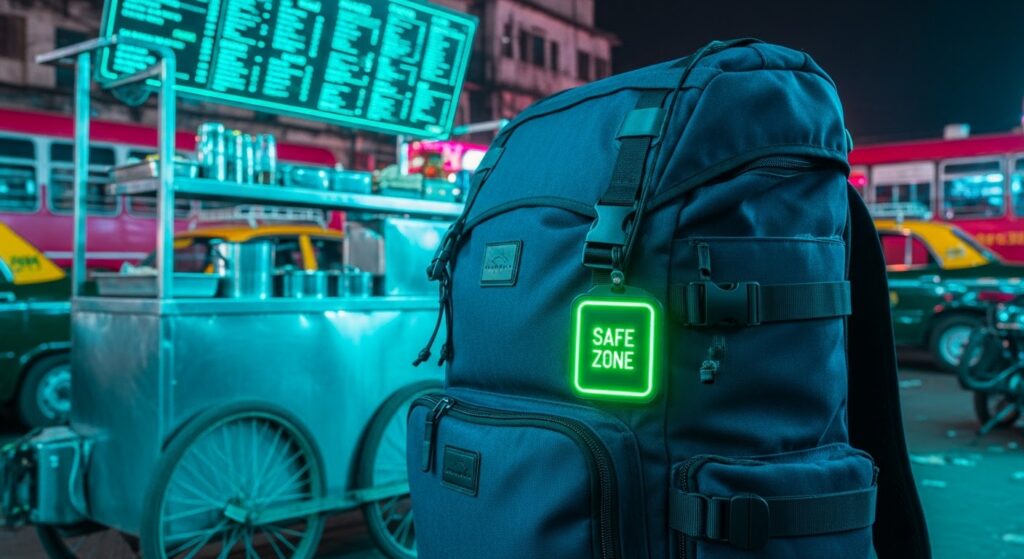
Mahim provides a fascinating second chapter to a Mumbai midnight food journey. The neighbourhood has a long association with Mumbai’s multicultural food culture, and its streets offer everything from snacks and bakery items to seafood and hearty local meals. Rather than presenting Mahim as a guaranteed pedestrian-only late-night zone or assuming that every food lane remains active throughout the night, check the current local conditions before travelling. Road restrictions, pedestrian arrangements, stall timings and police arrangements can vary. For a woman travelling alone, the safest choice is to remain around active commercial stretches and avoid isolated shortcuts simply because they appear faster on a map.
Food safety is another part of personal safety that is often overlooked. A crowded stall with high turnover can sometimes be preferable to a deserted stall where food has been sitting for hours. Observe whether ingredients are being cooked freshly, whether raw and cooked foods are handled separately and whether the preparation area appears reasonably clean. Be particularly cautious with seafood, dairy-based desserts and other perishable foods during hot or humid weather. If something smells or looks questionable, you do not need to finish it just because it is considered a famous local speciality. A great food vlog is not worth spending the next day recovering from food poisoning.
There is also an important social skill involved in solo night travel: knowing when not to engage. Mumbai is generally a socially active city, and curious people may ask where you are from, what you are filming or why you are travelling alone. A polite response is perfectly fine if you feel comfortable. But you are never obligated to reveal your hotel, accommodation, exact route, personal details or whether you are travelling alone for the entire night. If a conversation becomes uncomfortable, end it confidently and move towards a busier area, shop, restaurant or security point. Trusting your intuition is not overreacting. If something feels wrong, leaving is a sensible decision.
Your clothing and equipment can also make the experience easier. Comfortable footwear is essential because food districts often involve standing, short walks and uneven surfaces. Carry only what you need. A small crossbody bag worn securely in front is generally more practical than a large backpack in a crowded market. If you are carrying a camera, microphone, tripod or other expensive equipment for your vlog, avoid displaying everything unnecessarily while moving through crowded streets. Film the atmosphere, food preparation and architecture, but keep personal belongings under control. When recording strangers, be respectful and ask permission where appropriate, particularly if you intend to feature someone prominently in a commercial or public-facing video.
The ideal solo midnight itinerary should also have a planned exit time. There is a difference between staying late in a lively food district and continuing to travel through increasingly quiet neighbourhoods at three or four in the morning. You don’t have to visit every famous stall in one night. Pick a few highlights and leave while the environment still feels comfortable. A good itinerary might begin with dinner in a busy central area, continue with one or two signature street-food stops, spend some time filming the atmosphere, and then conclude with a pre-booked ride back to your accommodation. The goal is quality, not quantity.
And then comes the most important rule of all: your itinerary should be flexible enough to change. If a street is unexpectedly deserted, leave. If the crowd becomes uncomfortable, move. If your transport cancellation leaves you waiting alone in an isolated location, enter a staffed establishment while arranging another ride. If weather suddenly deteriorates, abandon the food plan. If your instincts tell you that the night should end, listen to them. Solo travel is not about defeating every challenge; it is about making good decisions quickly.
For women who create travel content, there is an additional layer to this experience. The camera can make you more visible than an ordinary traveller. Establish a filming routine that keeps your attention divided intelligently: film the food, put the camera away, move, check your surroundings, then film again. Avoid walking continuously while looking at a screen. If you use a tripod, position it where it does not obstruct pedestrians or create unnecessary attention. Your audience may want authentic midnight Mumbai footage, but authenticity does not require taking avoidable risks.
The ultimate Solo Foodie Framework is therefore surprisingly simple: choose active locations, verify timings, plan transport, share your journey, keep your phone charged, protect your valuables, observe before entering unfamiliar spaces, eat at busy vendors, stay hydrated, trust your instincts and maintain a clear exit plan. You can enjoy the aroma of smoky kebabs, the sweetness of malpua, the energy around a crowded food lane and the unique character of Mumbai after midnight without treating the city like an adventure playground.
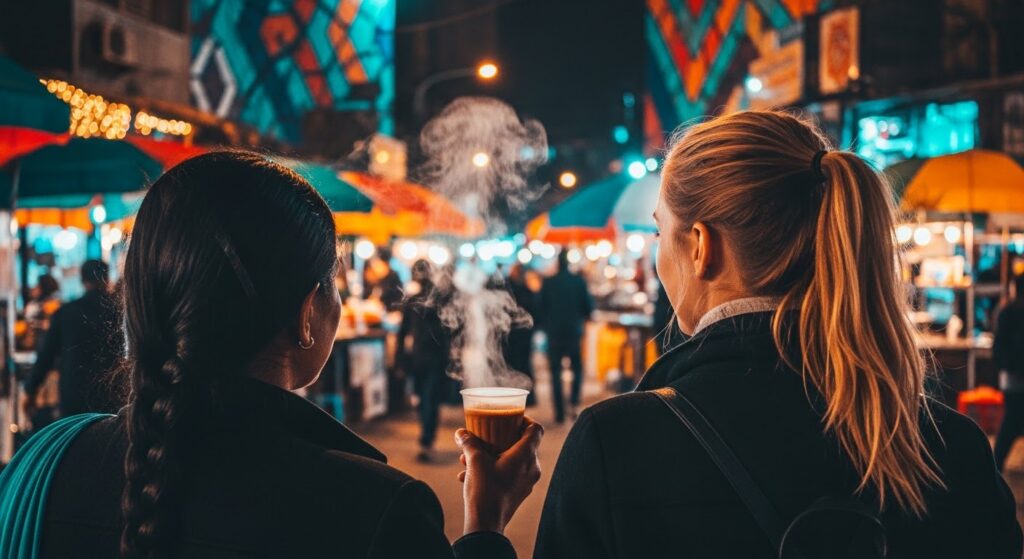
Mumbai’s late-night food culture is best experienced with curiosity rather than fear—and with preparation rather than recklessness. The city rewards travellers who slow down enough to observe it. For a solo woman, confidence does not mean ignoring risk; it means understanding your surroundings well enough to make informed choices. So when the streets glow under shop lights, pans hiss over hot flames and the first wave of midnight food lovers begins arriving, remember this: you don’t have to choose between experiencing Mumbai and travelling responsibly. With the right planning, you can do both—and create a memorable food story along the way.
Before you go: late-night operating hours, traffic restrictions, police arrangements, public transport availability and local conditions can change. Verify current information on the day of your visit and use official or reputable transport and emergency channels whenever possible. Safety should always take priority over completing a planned vlog route.
Walking Through a Vanishing Landscape
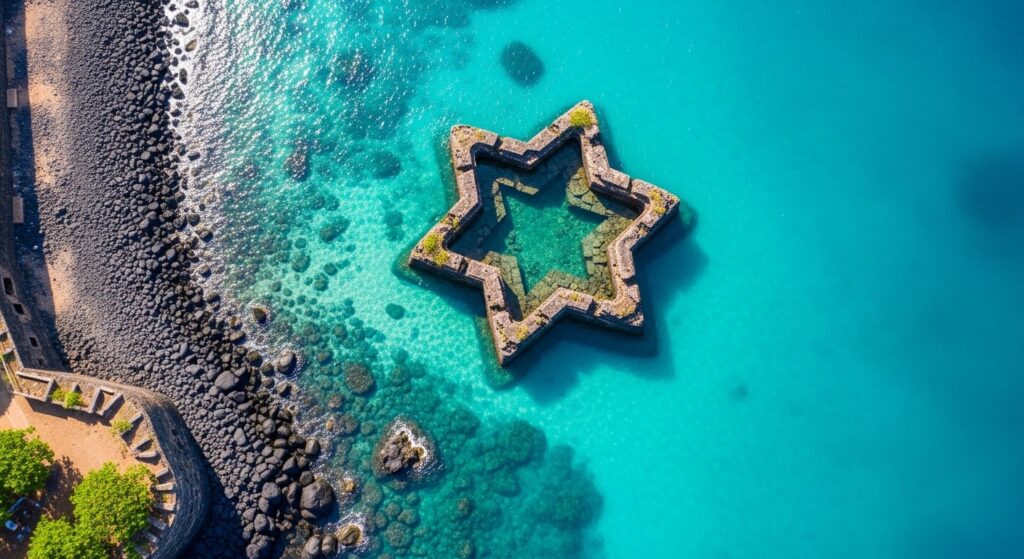
There is the prehistoric geological landscape.
There are centuries-old fishing communities.
There is the Portuguese military presence.
There are later transformations under British and Indian rule.
And now there is the rapidly expanding Mumbai metropolitan region.
All these histories occupy the same landscape.
The challenge is making sure the newest layer does not completely erase the oldest.
As the monsoon waves continue to hit the coast and modern Vasai continues to expand, these forgotten basalt walls remain silent witnesses.
They remind us that Mumbai’s history does not end at its famous landmarks.
Sometimes the most fascinating stories are hidden behind the last building, beyond the paved road and beneath the monsoon vegetation.
And perhaps the real adventure is not simply discovering a forgotten fort.
It is discovering **the forgotten history of the landscape itself.**