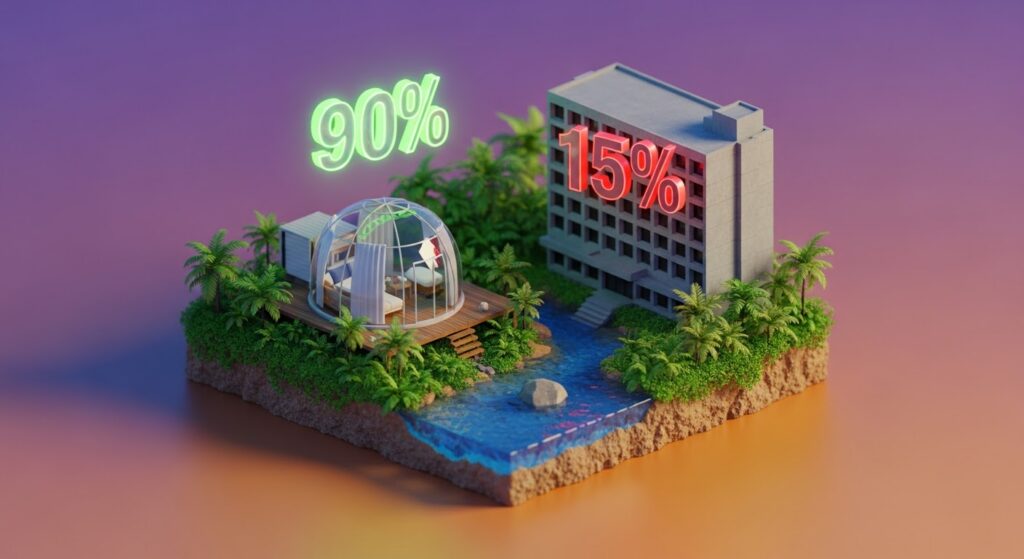
he true strength of any hospitality investment is revealed not on the day construction is completed but during the years that follow. Buildings eventually age, guest expectations evolve, technology changes, and market competition intensifies. A project that appeared attractive during development may struggle if its operating model cannot consistently generate healthy cash flows. This is where glamping has quietly begun to outperform many traditional five-star hotels across India. While luxury hotels continue to impress with grand architecture and extensive facilities, many are burdened by operational complexity that significantly reduces profitability. Glamping resorts, by contrast, have embraced a lean business model that prioritizes efficiency without compromising the guest experience. The result is an operating structure capable of delivering attractive margins while maintaining flexibility in an increasingly competitive hospitality market.
At the heart of this transformation lies a concept that every investor studies carefully—unit economics. Instead of evaluating an entire property as one massive financial asset, successful glamping operators examine the profitability of each individual accommodation unit. Every luxury tent, dome, treehouse, or modular cabin becomes an independent revenue-generating asset with clearly defined costs and measurable returns. This approach allows investors to understand exactly how much capital each unit requires, how much revenue it generates annually, and how quickly that investment can be recovered.
Traditional five-star hotels operate very differently. A guest room is only one component of an enormous infrastructure network. Every room contributes toward maintaining banquet halls, conference centers, multiple restaurants, swimming pools, spas, business lounges, elevators, central air-conditioning plants, underground utilities, staff accommodation, kitchens, parking facilities, and extensive landscaped areas. While these amenities certainly enhance brand prestige, they also create substantial fixed costs that remain largely unchanged regardless of occupancy levels. Whether a hotel is operating at forty percent occupancy or ninety percent occupancy, many of these expenses continue throughout the year.
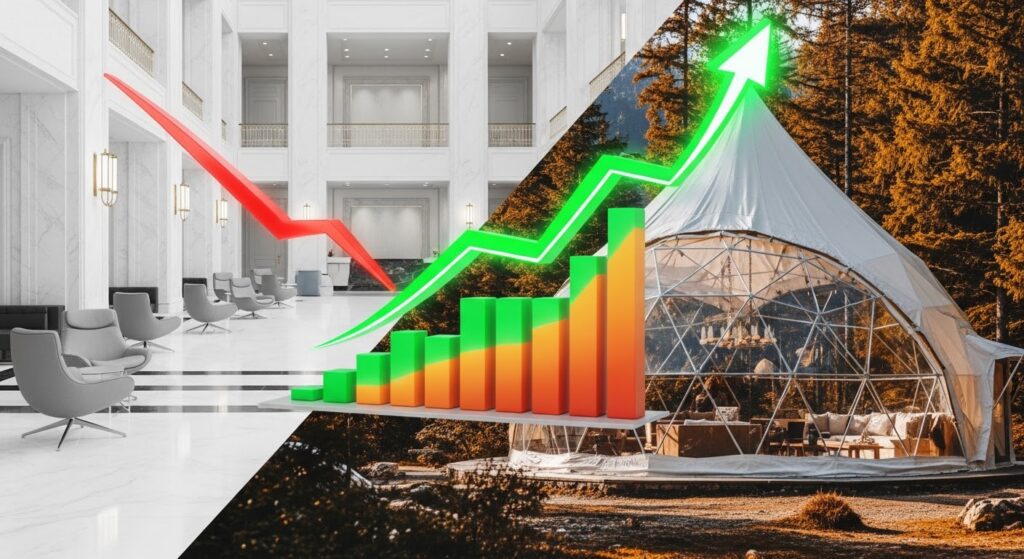
Glamping resorts intentionally avoid this financial burden. Their design philosophy emphasizes simplicity, efficiency, and guest immersion rather than excessive infrastructure. Guests arrive seeking natural surroundings, privacy, personalized experiences, and sustainable luxury instead of oversized lobbies or elaborate conference facilities. Consequently, operators can allocate a much larger proportion of their investment directly toward guest accommodation while minimizing spending on infrastructure that contributes relatively little to guest satisfaction.
One of the most frequently discussed financial indicators in hospitality is EBITDA—Earnings Before Interest, Taxes, Depreciation, and Amortization. Investors rely on EBITDA because it measures the operational profitability of a business before financing decisions and accounting treatments influence reported earnings. Although EBITDA margins vary considerably depending on location, scale, brand positioning, and management quality, lean hospitality concepts such as well-managed glamping resorts may achieve stronger operating margins than many traditional luxury hotels due to their lower fixed-cost structures.
A conventional five-star property often carries extensive payroll obligations that significantly reduce operating profitability. Multiple restaurants require chefs, kitchen assistants, servers, stewards, supervisors, and managers. Front offices operate twenty-four hours a day with receptionists, concierges, guest relation executives, reservation teams, and bell staff. Engineering departments maintain mechanical systems, electrical infrastructure, plumbing networks, elevators, and HVAC plants. Housekeeping teams clean hundreds of rooms along with public spaces, meeting halls, banquet facilities, and recreational areas. Security personnel monitor large campuses while gardeners maintain expansive landscapes.
Payroll therefore becomes one of the largest recurring expenses within luxury hospitality. Salaries continue regardless of occupancy, placing pressure on cash flow during off-peak seasons.
Modern glamping resorts adopt a dramatically different staffing philosophy. Technology replaces many routine administrative functions while smaller property sizes naturally reduce labor requirements. Digital booking platforms integrate directly with property management software, automating reservations, payments, confirmations, and guest communications. Mobile applications enable contactless check-in and check-out, while smart locks eliminate traditional key management. Routine inquiries are handled through digital concierge systems, allowing employees to focus on personalized guest experiences rather than repetitive administrative tasks.
Housekeeping operations are equally efficient. Individual luxury tents generally contain fewer fixtures, smaller floor areas, and simpler layouts than conventional hotel suites. Cleaning procedures become faster without compromising quality. Because accommodation units are physically separated, maintenance can occur independently without disrupting neighboring guests. This modular design minimizes operational downtime while improving workforce productivity.
Technology continues reshaping every aspect of hospitality management. Artificial intelligence now forecasts occupancy trends, adjusts pricing dynamically, predicts maintenance requirements, and optimizes inventory purchasing. Energy management systems automatically regulate lighting, heating, and cooling based on occupancy. Smart irrigation systems conserve water while maintaining landscaped areas. Predictive maintenance software identifies equipment likely to fail before expensive breakdowns occur. These innovations reduce operating expenses while enhancing guest satisfaction.
The integration of technology is particularly valuable because it reduces one of hospitality’s greatest long-term risks: labor inflation. As wages continue rising across India’s service economy, businesses relying heavily on manual processes face steadily increasing operating costs. Automation allows glamping operators to maintain service quality while limiting payroll growth, creating stronger operating leverage over time.
Utility expenses represent another area where glamping enjoys a significant advantage. Five-star hotels consume extraordinary quantities of electricity, water, and fuel. Large centralized air-conditioning systems cool extensive public areas around the clock. Decorative lighting illuminates expansive lobbies, banquet halls, gardens, corridors, and parking facilities. Multiple kitchens, laundry operations, spas, and recreational amenities all contribute to substantial monthly utility bills.
Sustainable glamping follows a decentralized infrastructure model that naturally reduces consumption. Individual accommodation units are designed to operate efficiently with advanced insulation, LED lighting, energy-efficient climate control systems, and occupancy-based automation. Solar energy installations increasingly supplement electricity demand, while rainwater harvesting and greywater recycling reduce freshwater consumption. Instead of maintaining enormous centralized systems, operators manage smaller independent utility networks that scale according to occupancy.
These efficiencies have become increasingly important as energy prices fluctuate and environmental sustainability becomes a competitive advantage rather than merely a marketing slogan. Lower utility consumption improves profitability while simultaneously strengthening environmental credentials, allowing operators to attract eco-conscious travelers willing to pay premium rates for responsible tourism experiences.
Pricing power is another defining characteristic of successful glamping businesses. Conventional wisdom once suggested that luxury pricing depended upon physical infrastructure. The larger the hotel, the greater the number of facilities, and the stronger the brand, the higher the room rates that could be charged. The experience economy has challenged this assumption.
Today’s affluent traveler increasingly values uniqueness over uniformity. A luxury tent positioned beside a pristine lake, overlooking tea plantations, surrounded by forests, or located within a wildlife sanctuary often delivers an experience impossible to replicate inside an urban skyscraper. Guests are paying for emotional value rather than physical size. Sunrise views, private bonfires, open-air bathtubs, stargazing decks, guided nature walks, local cuisine, wellness retreats, and personalized adventure activities collectively create memorable experiences that justify premium pricing.
Consequently, many premium glamping destinations command average daily rates comparable to established five-star hotels despite offering far fewer traditional amenities. Their competitive advantage lies not in matching urban luxury but in providing something fundamentally different. Experience has become the new luxury, and travelers increasingly demonstrate their willingness to pay accordingly.
An equally important factor is inventory management. Traditional hotels often operate hundreds of rooms. While larger inventories increase total revenue potential, they also create significant pressure to maintain occupancy throughout the year. Empty rooms generate no income while fixed costs continue accumulating.
Glamping intentionally embraces scarcity. Many luxury properties operate only ten to fifteen accommodation units, preserving exclusivity while simplifying operations. Limited inventory naturally creates higher demand during peak seasons, allowing operators to maintain pricing discipline rather than competing aggressively through discounts. Guests perceive limited availability as a premium characteristic, reinforcing brand positioning and encouraging earlier bookings.
This scarcity effect creates a virtuous cycle. Higher occupancy strengthens online rankings and guest reviews. Positive reviews improve brand visibility, generating additional demand. Increased demand supports premium pricing, while premium pricing improves profitability. The resort becomes financially stronger without requiring dramatic expansion.
Revenue diversification further strengthens the operating model. Traditional hotels often depend heavily on room revenue supplemented by restaurants, conferences, and events. Glamping resorts increasingly generate income from wellness programs, yoga retreats, destination weddings, photography workshops, culinary experiences, eco-tourism activities, adventure sports, corporate off-sites, and educational retreats. These additional revenue streams increase guest spending while improving asset utilization throughout the year.
Food and beverage operations illustrate another important difference. Five-star hotels frequently maintain multiple restaurants, extensive buffets, banquet kitchens, room service departments, and large culinary teams. These facilities require considerable staffing and inventory management while contributing to food wastage if occupancy declines.
Glamping properties often adopt a more curated approach. Farm-to-table dining, seasonal menus, locally sourced ingredients, chef-led outdoor experiences, and intimate dining settings reduce operational complexity while enhancing authenticity. Smaller kitchens require fewer employees, lower inventory levels, and more efficient procurement systems, contributing to healthier operating margins.
Marketing has also become remarkably efficient for experiential hospitality. Traditional luxury hotels invest heavily in advertising, travel agents, corporate sales teams, and global distribution networks. Glamping destinations benefit from highly visual experiences that naturally encourage guests to share photographs and videos across social media platforms. User-generated content functions as powerful organic marketing, reducing customer acquisition costs while strengthening brand awareness.
Influencer collaborations, travel bloggers, destination photographers, and digital storytellers amplify this effect. A visually stunning luxury tent overlooking a dramatic landscape often generates millions of online impressions without the advertising budgets traditionally associated with luxury hospitality. In an increasingly digital travel marketplace, this organic visibility becomes a valuable competitive advantage.
Operational flexibility provides another layer of resilience. Conventional hotels face considerable challenges when market conditions change. Large fixed assets cannot easily adapt to shifting demand patterns, and expansion or renovation projects often require years of planning.
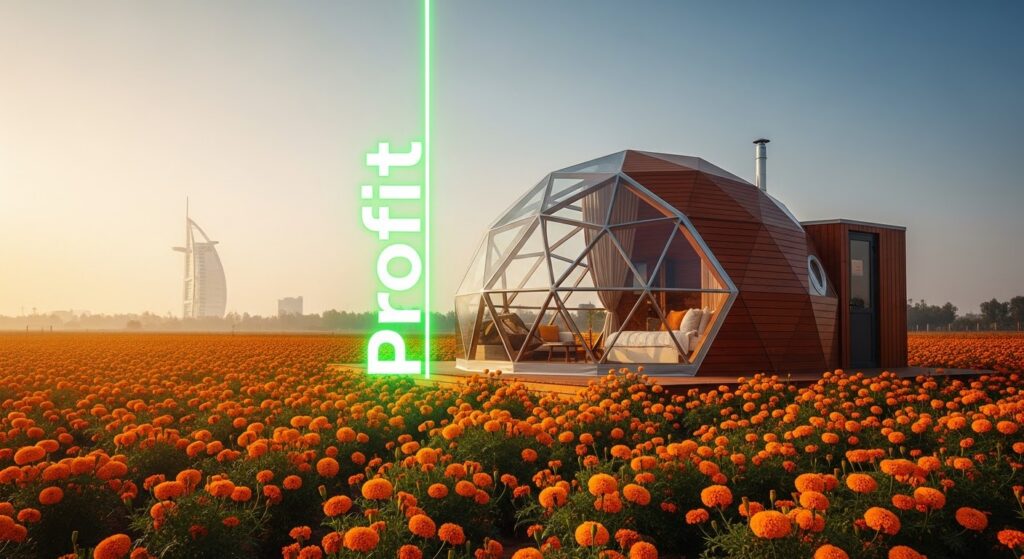
Modular glamping allows operators to respond far more quickly. Additional accommodation units can be introduced as demand grows, while renovation occurs progressively without disrupting the entire property. Investments remain closely aligned with actual market performance rather than speculative forecasts. This flexibility reduces financial risk while preserving opportunities for future expansion.
Perhaps the greatest advantage of glamping is that every aspect of its operating model supports capital efficiency. Lower staffing requirements reduce payroll costs. Smaller infrastructure minimizes maintenance expenses. Renewable technologies decrease utility bills. Limited inventory strengthens pricing. Modular construction simplifies expansion. Experience-driven demand enhances revenue potential. Together, these characteristics create an operating model capable of generating attractive profitability while remaining adaptable to changing market conditions.
However, strong operating margins alone do not determine investment success. Investors ultimately evaluate projects through long-term financial metrics such as return on invested capital, payback period, Internal Rate of Return (IRR), portfolio scalability, and asset appreciation. These measures determine whether glamping represents merely a profitable niche or a fundamentally superior hospitality investment.
The final part of this series will examine how institutional investors are beginning to shift capital toward experiential hospitality, how India’s improving rural infrastructure is accelerating this transition, and why many analysts believe the next decade of hospitality investment will increasingly favor modular, sustainable, and experience-driven destinations over traditional urban luxury hotels.