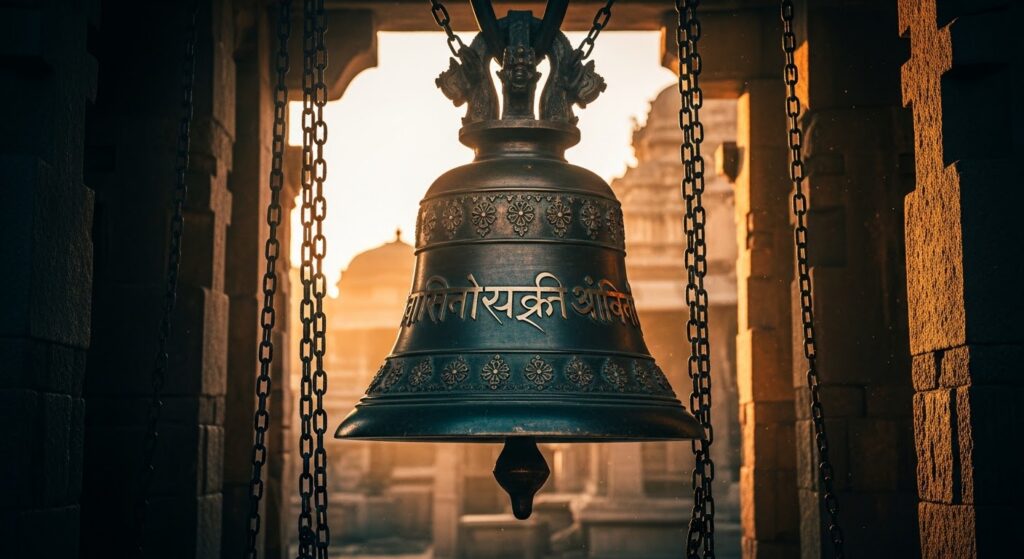
A Silent Witness to the Maratha Victory
High in the mist-covered Sahyadri Mountains, where dense forests meet ancient temples and monsoon clouds drift across rugged cliffs, hangs a bronze bell that has remained silent through the rise and fall of empires. To most visitors, it is simply another temple bell, weathered by centuries of rain and mountain winds. But a closer look reveals something extraordinary. Its surface bears European craftsmanship, Latin inscriptions, and Christian symbols that seem strangely out of place in a remote Hindu shrine. How did an 18th-century Portuguese church bell find its way to the heart of Maharashtra’s mountains? The answer lies in one of the most remarkable chapters of Maratha history, where naval power, military strategy, and cultural resilience came together to reshape the western coast of India.
Climbing Through the Sahyadris in Search of History
The journey to discover these historic bells is as fascinating as their story. During the monsoon, the Sahyadri ranges transform into a world of emerald forests, roaring waterfalls, and thick blankets of mist that conceal centuries-old temples and forts. Trekking through slippery basalt paths, every turn offers breathtaking landscapes while also reminding travelers that these mountains have witnessed countless battles, pilgrimages, and royal expeditions. Reaching a hilltop shrine after hours of climbing creates an unforgettable moment, especially when the first glimpse of an enormous bronze bell appears against the backdrop of ancient stone architecture. Its weathered surface tells a story not just of time, but of conquest, faith, and survival.
The Portuguese Empire and the Battle for the Konkan Coast

During the 16th and 17th centuries, the Portuguese established a powerful maritime empire along India’s western coastline. Their strongholds at Vasai (Bassein), Chaul, Goa, and other coastal settlements became centers of trade, religion, and military influence. Magnificent churches and cathedrals were constructed, each fitted with large bronze bells imported from Europe or cast locally by skilled artisans. These bells were more than instruments of worship; they symbolized Portuguese authority across the Arabian Sea and announced religious ceremonies, emergencies, and community gatherings.
However, by the early 18th century, the Maratha Empire had emerged as the dominant regional power under the Peshwas. Determined to reclaim territories occupied by European powers, the Marathas launched several military campaigns to weaken Portuguese influence along the Konkan coast.
The Siege of Bassein: A Turning Point in History
One of the defining moments came in 1739, when Chimaji Appa, the younger brother of Peshwa Bajirao I, led the Maratha campaign against the heavily fortified Portuguese stronghold of Bassein (present-day Vasai). After months of fierce fighting, the Portuguese finally surrendered, marking one of the greatest military victories in Maratha history. The fall of Bassein effectively ended Portuguese dominance over much of northern Konkan and demonstrated the growing strength of the Maratha Empire.
Following this victory, Chimaji Appa is traditionally credited with donating captured church bells from Portuguese churches to Hindu temples across Maharashtra. This practice became known as Ghantavali, symbolizing not merely military triumph but also the restoration of religious institutions that had suffered during earlier conflicts. While the exact origin of every surviving bell is not always documented, many temples in Maharashtra preserve bells believed to have been presented after the Maratha victory over the Portuguese.
From Coastal Cathedrals to Mountain Temples

Transporting these massive bronze bells was an extraordinary logistical achievement. Many weighed several hundred kilograms, while some exceeded a ton. Without modern roads, cranes, or heavy machinery, Maratha forces relied on elephants, bullock carts, wooden rollers, ropes, and the sheer determination of hundreds of laborers. The journey from the coastal plains of Vasai through forests, river crossings, and steep mountain passes into the Sahyadris must have taken weeks, if not months.
Today, bells traditionally associated with this history can be found in several temples and forts across Maharashtra, where they continue to ring during religious ceremonies. Their presence illustrates not only the movement of physical objects but also the movement of history itself—from European cathedrals to Hindu temples, from colonial symbols to sacred heritage.
A Unique Blend of Two Civilizations
Standing before one of these bells, visitors immediately notice its distinctly European design. Decorative floral patterns, ornate handles, Latin inscriptions, and Christian motifs reflect the artistic traditions of Portuguese ecclesiastical craftsmanship. Yet the bell now hangs beside temples built in traditional Hemadpanti or Maratha architectural styles, surrounded by basalt stone walls, carved deities, and sacred Hindu rituals.
This remarkable contrast creates one of Maharashtra’s most fascinating examples of cultural continuity. Rather than being destroyed after the conflict, many bells were preserved and integrated into temple life, where they acquired new religious significance while still retaining visible traces of their European origins. They serve as tangible reminders that history often transforms objects rather than erasing them.
More Than a War Trophy

Although popularly described as “war trophies,” these bells represent far more than military conquest. For local communities, they have become symbols of resilience, continuity, and faith. Generations have grown up hearing their sound during festivals, daily prayers, and special ceremonies. Oral traditions have blended documented history with local folklore, creating stories that connect the bells to miracles, village protection, and divine blessings.
Each ring echoes through valleys that once witnessed armies marching across the mountains. What began as symbols of colonial authority gradually evolved into enduring parts of Maharashtra’s spiritual landscape.
Challenges of Preservation
After nearly three centuries, these historic bells face numerous conservation challenges. Constant exposure to rain, humidity, and changing temperatures gradually affects the bronze surface. Air pollution, biological growth, and corrosion can slowly erode inscriptions that provide valuable historical information. In some locations, inadequate documentation and limited security also increase the risk of theft or accidental damage.
Conservation experts today increasingly rely on technologies such as high-resolution photography, 3D laser scanning, and digital archiving to record these artifacts for future generations. These methods allow historians to preserve inscriptions, decorative details, and structural measurements even if physical deterioration continues over time. At the same time, responsible tourism and community awareness remain essential to ensuring that these remarkable objects are protected where they stand.
Visiting These Historic Bells Responsibly

Travelers interested in exploring Maharashtra’s historic temple bells should approach these sites with respect and curiosity. Many remain active places of worship where photography may be restricted during rituals. Visitors should avoid touching the bells unnecessarily, refrain from climbing on heritage structures, and follow local customs. Hiring local guides can enrich the experience by providing historical context and supporting the surrounding communities. Combining visits to temples, forts, and nearby heritage sites also offers a broader understanding of the Maratha legacy across the Sahyadri landscape.
A Bridge Between Two Histories
The bronze bells hanging in Maharashtra’s temples are among the most compelling witnesses to the region’s layered past. Cast for European churches, captured during one of the Maratha Empire’s greatest military victories, and preserved within Hindu temples for centuries, they embody an extraordinary journey across cultures, religions, and landscapes. They remind us that history is rarely simple; it is shaped by conflict, adaptation, preservation, and the ability of communities to assign new meaning to old symbols.
As the monsoon clouds drift across the Sahyadri peaks and the sound of an ancient bell echoes through the valleys, it becomes clear that these artifacts are more than relics of a distant war. They are living connections between Maharashtra’s colonial past and its enduring spirit of resilience—a timeless reminder that some of history’s greatest stories continue to resonate long after the battles have ended.