Mumbai’s local train is often called the city’s lifeline, and for a first-time solo traveller, that description can sound intimidating. The images of packed platforms, rapidly arriving trains and passengers moving with extraordinary speed can make the suburban railway appear almost impossible to understand. But there is a method behind the apparent chaos. Once you understand the difference between fast and slow trains, learn to read station indicators, identify your coach position and understand how passengers move on and off the train, the Mumbai local becomes considerably easier to navigate. The secret is not to fight the crowd; it is to understand its rhythm and choose the right time, platform position and train for your journey.
The first rule for a solo traveller is simple: **you do not have to travel during peak rush hour**. Mumbai’s most intense commuter periods can be overwhelming, particularly on major routes during weekday mornings and evenings. If your itinerary is flexible, consider travelling during a quieter period such as the mid-morning or early afternoon, depending on the route and destination. A difference of even an hour can transform the experience. Instead of arriving at a station just as thousands of commuters are rushing to work, give yourself time to understand the station and board without pressure. The goal of solo travel is to experience the city, not to prove that you can survive its busiest ten minutes.
Before leaving your hotel, first understand your route. Mumbai’s suburban railway is divided into different lines and branches, and not every train stops at every station. A traveller who boards the wrong service can quickly find herself travelling in the opposite direction or skipping the station she needs. Check the train’s destination, intermediate stops and whether it is a fast or slow service. Current railway indicators and reputable journey-planning applications can help, but always cross-check with the station display and announcements because operational conditions can change.
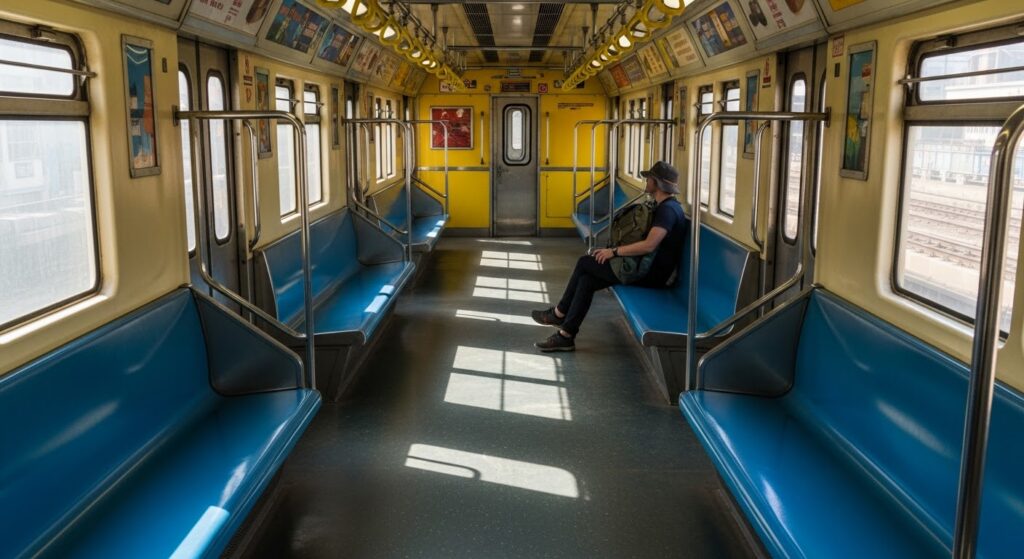
Understanding **fast versus slow trains** is one of the most useful skills for a visitor. A slow train generally stops at every station on its route, while a fast train skips selected stations and reaches major destinations more quickly. If your destination is a smaller station, boarding a fast train without checking its stopping pattern can create unnecessary complications. Conversely, if you are travelling between major stations, a fast train can significantly reduce journey time. Never assume that a train is suitable simply because its destination appears correct; check its stopping pattern first.
The platform indicator is your next source of information. Look carefully at the displayed destination, train type, expected arrival time and platform information. Do not depend entirely on a single letter or abbreviation unless you understand what it means on that particular railway line. If the information is unclear, ask railway staff or experienced commuters rather than guessing. Mumbai passengers move quickly, but most people are accustomed to helping travellers who ask a clear question.
One of the most important things to understand is that **the crowd itself contains information**. Watch where regular commuters are standing. Observe the flow of passengers before the train arrives. Some sections of a platform become extremely crowded because they align with staircases, foot-over-bridges or station exits. Other sections may be comparatively calmer. For a solo traveller who does not need to be first off the train, choosing a less congested area can make boarding much more comfortable.

The idea of a “middle-entry zone” can be useful, but it should not be treated as a universal rule for every station. Coach stopping positions depend on the train formation, platform markings and station layout, and not every rake or platform will align exactly as an online guide suggests. Look for official coach-position indicators and platform markings where provided. The objective is to stand where your intended coach is expected to arrive while avoiding unnecessary congestion around staircases and narrow access points.
If you are travelling in a ladies’ compartment, check the current coach markings carefully. Mumbai suburban trains provide designated ladies’ accommodation, but coach arrangements can vary depending on the service and operating conditions. Do not board based solely on an old photograph or a travel blog. Follow the signs and announcements at the station. If you are unsure, ask another woman waiting on the platform or railway staff.
Then comes the most important part: **boarding etiquette**. Never try to push your way onto a train while passengers are still getting off. The fastest way to create chaos is to stand directly in front of an open door and attempt to enter while a dozen people are trying to exit. Stand slightly to the side, allow passengers to disembark and then board when there is space. Regular commuters make this look effortless because they understand the flow. Once you learn it, boarding becomes much less intimidating.
Do not attempt to run for a closing train. Mumbai locals arrive frequently on many routes, and missing one train is far better than risking a fall or collision. If you are carrying luggage, keep it compact and secure. A large suitcase can make a crowded local extremely difficult, especially around doors and staircases. For tourists, travelling with a smaller backpack or manageable bag can make the entire experience easier.
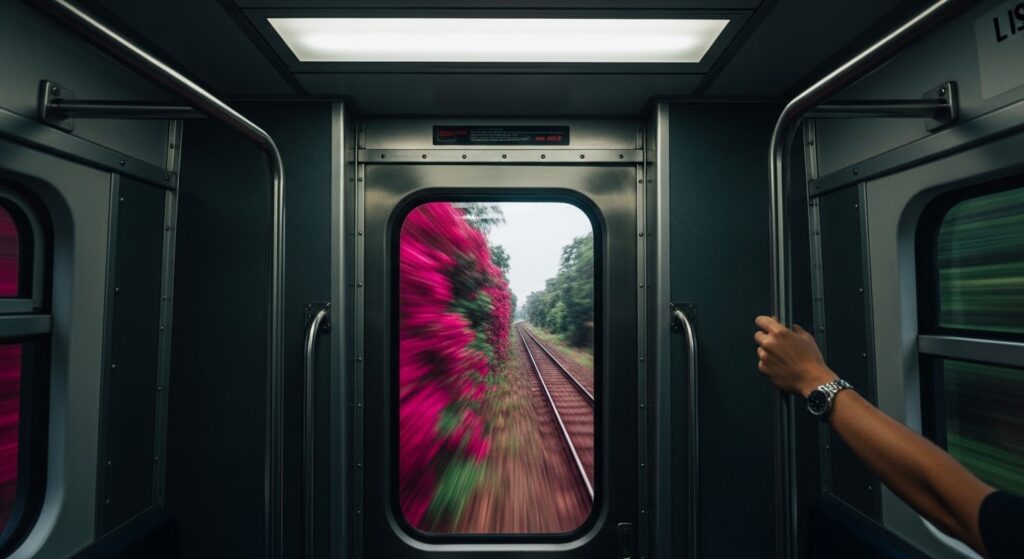
The famous **window seat** is tempting, especially if you want to film Mumbai’s changing landscape. But during busy periods, it should not become the objective of your journey. A seat is a bonus, not a guarantee. If you are travelling during a quieter period, you may have a reasonable chance of finding one, particularly if you board early in the route. During peak periods, however, accept that you may need to stand. A successful Mumbai local experience is about reaching your destination comfortably—not winning a seat.
If you do get a seat, keep your belongings secure. Avoid leaving your phone loosely near an open window or doorway. When filming, remain conscious of your surroundings and avoid blocking other passengers. The local train is public transport, not a sightseeing carriage, so respectful filming is essential.
One useful strategy is to learn the major stations on your route. Even if you cannot pronounce every station name perfectly, recognising them visually can help you understand how much of the journey remains. You will also notice that the carriage gradually changes as passengers get off at major hubs. This can sometimes make a previously crowded compartment more comfortable.
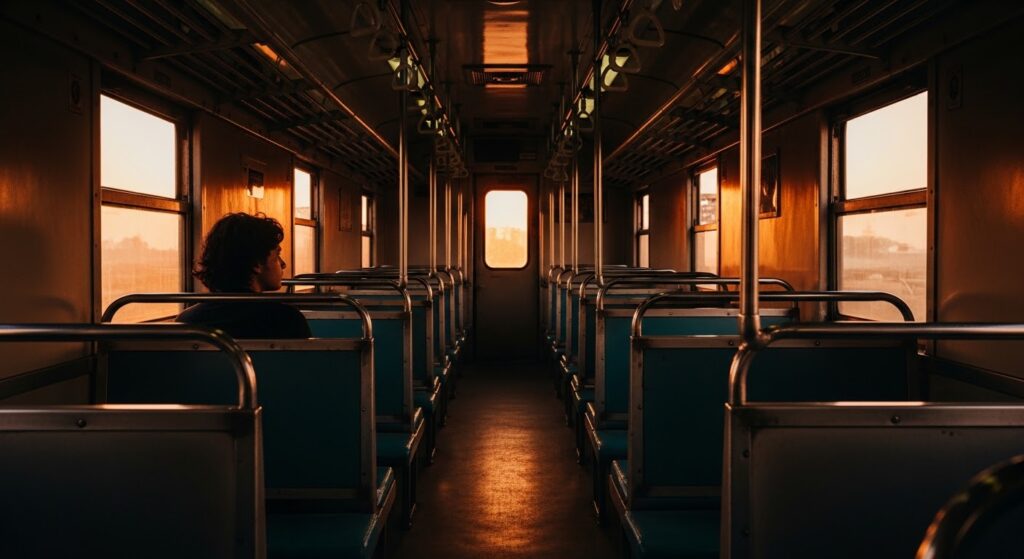
Your approach to **exiting the train** should be just as deliberate as your approach to boarding. If you know that your destination is approaching, prepare gradually rather than suddenly rushing towards the door. Moving closer to the exit shortly before arrival can be sensible, but do not push through a crowded compartment several stations in advance. Keep your belongings secure and wait for the train to come to a complete stop before stepping onto the platform.
Never attempt to step off a moving train. The idea of using a “forward-lean” technique to exit a moving train is unsafe and should not be followed. Wait until the train has completely stopped, hold your belongings securely and step onto the platform normally. Mumbai’s platforms can be crowded, and there is no advantage in taking unnecessary risks simply to save a few seconds.
Once you leave the train, avoid stopping immediately in front of the carriage doors to check your phone or search for directions. Move to the side of the platform first, allowing other passengers to exit. Then check your navigation, identify the appropriate foot-over-bridge or station exit and continue with the flow of pedestrians.
Station exits can sometimes be surprisingly confusing. A station may have several bridges, staircases and exits leading to different roads. If your destination is a particular neighbourhood, shop or hotel, check which exit is closest before leaving the platform. If you are uncertain, ask railway staff rather than following a stranger who offers to guide you. During quieter hours, choose an exit leading towards an active, well-lit road whenever possible.
For solo travellers, **timing is more important than speed**. Instead of trying to master the Mumbai local during the busiest ten minutes of the day, begin with a quieter journey. Take a short route between two familiar stations. Observe how people board and exit. Learn the indicators. Then gradually expand your journeys. Within a few trips, what initially looked like chaos begins to feel like a predictable system.
Technology can help, but it should support—not replace—your understanding of the railway. Journey-planning and train-tracking applications can provide useful information about services and routes, but railway announcements and official station displays remain important sources of current information. Keep your phone charged, but do not spend the entire journey staring at the screen. Looking around you helps you recognise your station and understand the environment.
There is also a psychological trick that makes Mumbai’s local trains much easier: **stop trying to behave like a local immediately**. You do not have to walk at the same speed as someone who has taken the train every day for twenty years. You do not need to know every platform shortcut. You are allowed to stop, look at the indicator and ask a question. Confidence comes from understanding the system, not from pretending you already know it.
For photographers and travel vloggers, the local train offers extraordinary visual storytelling. The movement of commuters, station architecture, changing neighbourhoods and the transition between suburban districts can create fascinating footage. But remember that other passengers have privacy rights and personal boundaries. Avoid intrusive filming, particularly close-up recording of strangers. Be especially careful not to obstruct doors, platforms or passenger movement while recording.
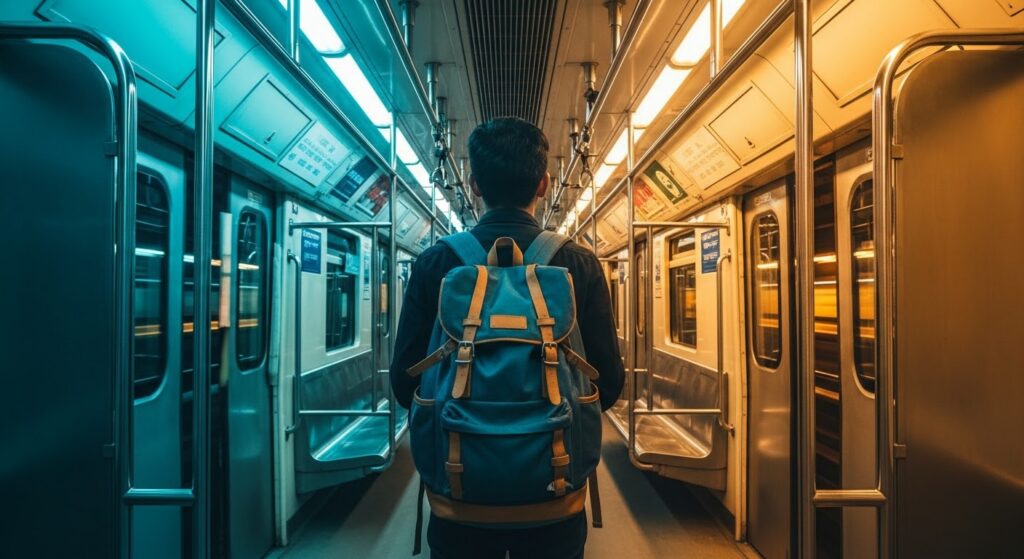
The best way to master Mumbai’s railway system is therefore to break it into simple steps: **check the route, identify fast or slow service, confirm the platform, locate the correct coach area, wait away from the door flow, allow passengers to exit, board calmly, secure your belongings, monitor the stations and exit only after the train stops completely**.
Mumbai’s local train is not something you need to fear. It is a system with its own rhythm. During rush hour, that rhythm becomes incredibly intense; outside peak periods, it becomes much easier for a visitor to observe and learn. For a solo traveller, choosing the right time is perhaps the biggest advantage you can give yourself.
So don’t begin your Mumbai adventure by challenging the busiest train at 8:30 AM. Start when the city gives you a little breathing room. Arrive at the station early, read the indicators, watch the commuters, board calmly and enjoy the journey. Once you understand the rhythm of the rails, Mumbai’s legendary lifeline stops looking like chaos and starts looking like what it really is—a remarkably organised movement of people carrying the city forward, station by station.
Walking Through a Vanishing Landscape

There is the prehistoric geological landscape.
There are centuries-old fishing communities.
There is the Portuguese military presence.
There are later transformations under British and Indian rule.
And now there is the rapidly expanding Mumbai metropolitan region.
All these histories occupy the same landscape.
The challenge is making sure the newest layer does not completely erase the oldest.
As the monsoon waves continue to hit the coast and modern Vasai continues to expand, these forgotten basalt walls remain silent witnesses.
They remind us that Mumbai’s history does not end at its famous landmarks.
Sometimes the most fascinating stories are hidden behind the last building, beyond the paved road and beneath the monsoon vegetation.
And perhaps the real adventure is not simply discovering a forgotten fort.
It is discovering **the forgotten history of the landscape itself.**