Mumbai’s local trains are more than a transport system—they are the rhythm of the city. Every day, millions of people depend on them to travel between home, work, college, markets and neighbourhoods across Mumbai and the suburbs. But when you are a woman travelling alone late at night, the experience requires a different kind of preparation. At 11 PM, a railway platform can look completely different from the same platform during rush hour. The crowds thin out, some exits become quieter, and the journey does not end when the train reaches your destination. The final transition from platform to foot-over-bridge, station exit, taxi or auto-rickshaw and finally your doorstep is equally important. A smart solo traveller therefore does not simply ask, “Which train should I take?” She asks, “Where will I board, where will I stand, which exit will I use, how will I leave the station and how will I complete the last kilometre safely?”
The first principle is **planning before boarding**. Mumbai local stations can have multiple platforms, exits and foot-over-bridges, and the safest route is not necessarily the shortest route on a map. Before reaching the station, check your train, destination, platform and approximate coach position using current railway information or the station’s display boards. Do not rely blindly on social-media posts claiming that a particular coach or platform location is always the safest. Coach compositions and operational arrangements can change. The ladies’ compartment is clearly designated on Mumbai suburban trains, but its exact position should always be confirmed from the current platform indicators and coach markings. If you are unfamiliar with the station, arriving a few minutes earlier is far better than rushing onto a train at the last moment.
Coach positioning can make a major difference to your confidence. During crowded hours, women generally have the advantage of dedicated ladies’ compartments, but late at night the priority should be visibility and access to assistance. Instead of standing at an isolated section of the platform, choose a location where other passengers are waiting and where you can see railway staff or security personnel. Well-lit areas close to station facilities are preferable to empty stretches of the platform. CCTV coverage is widespread across railway stations, but cameras should never be treated as a substitute for personal awareness. Think of them as one layer of a broader safety strategy.
One common mistake is assuming that being inside a ladies’ compartment automatically makes the entire journey risk-free. It certainly provides an important layer of protection, but awareness remains essential. Once inside, sit or stand in a position where you can comfortably observe your surroundings. Keep your handbag securely closed and your phone under control rather than holding it loosely near an open doorway. Avoid standing directly at the open entrance when the train is moving. If the compartment becomes unexpectedly uncomfortable or you notice suspicious behaviour, move closer to other women or towards a more populated section rather than remaining isolated.
Emergency equipment and railway assistance are also worth understanding before you need them. Mumbai suburban trains and stations have emergency communication and alarm systems, but their exact design and location can vary by train type. Rather than memorising an internet guide claiming that one particular button is always in a particular position, look for the official signage and instructions inside the coach. In an emergency, contact railway authorities or security personnel through the officially available channels and follow the instructions displayed on the train or station. Save important railway and emergency contacts in your phone beforehand so that you are not searching for them under stress.
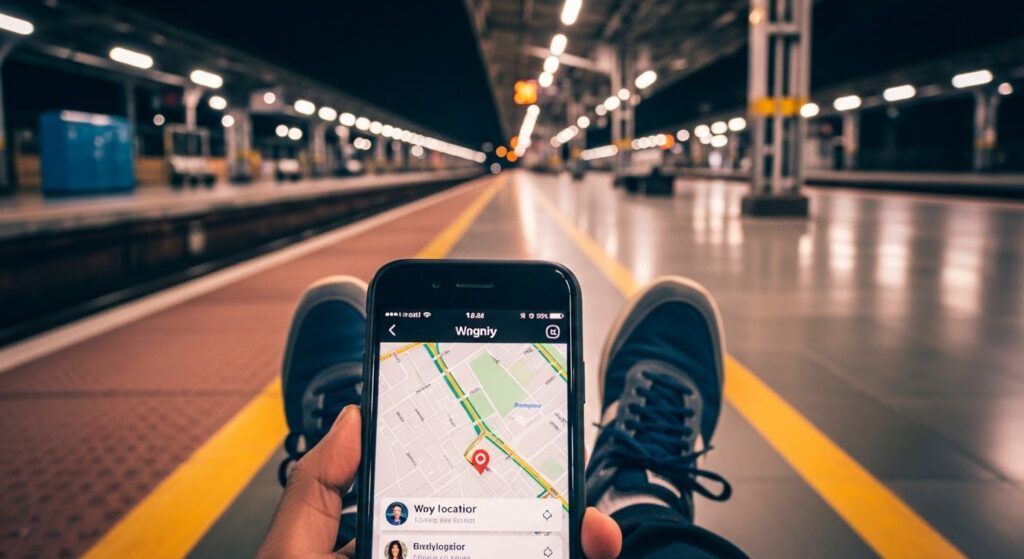
Technology can turn a simple commute into a much more controlled journey. Before boarding, send a quick message to someone you trust: “I am boarding this train and expect to reach around 11:45.” If your phone permits it, share your live location during the journey. Use a trusted railway or transport application to monitor your route, but avoid becoming so absorbed in your screen that you stop observing the people around you. Keep your phone sufficiently charged and carry a power bank if you expect to travel late. A charged phone is not just a convenience—it can be an important communication tool.
There is another important rule for late-night train travel: **do not isolate yourself unnecessarily**. If you are the only woman waiting at one end of a nearly empty platform, move towards an area where other passengers are present. You do not need to know these people personally. Simply being around a small group of commuters can provide greater visibility and access to help. This is particularly useful when waiting for a delayed train. If the platform suddenly becomes empty, consider moving closer to the station’s staffed or more active area rather than remaining at an isolated spot.
When the train finally arrives at your destination, remember that **the journey is only halfway finished**. This is where many people become careless. After spending thirty or forty minutes safely inside a crowded train, they step onto a quiet platform, immediately put on headphones and begin looking at their phone for directions. Instead, maintain what we can call a “transit posture”: phone accessible but not distracting, headphones off, bag secure and attention focused on the surroundings. Check your route before leaving the train whenever possible, so you are not standing on the platform staring at a navigation screen.
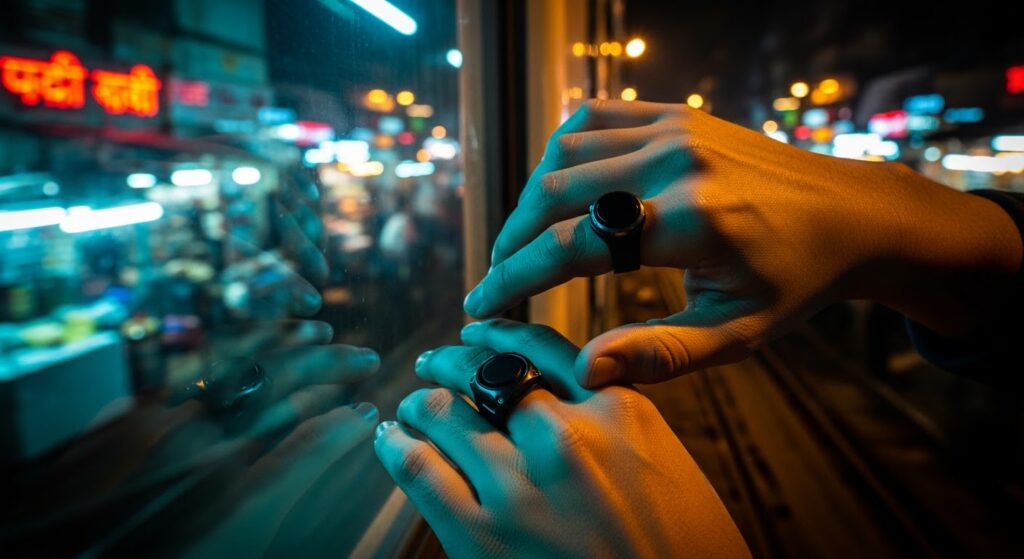
The choice of station exit matters too. Mumbai stations often have several exits, and the nearest exit is not necessarily the best exit late at night. If one exit leads towards a busy main road with taxis, autos, shops and pedestrians while another takes you towards a quiet lane, the active route may be preferable even if it adds a few minutes. Look for official signage and well-used foot-over-bridges. If you are unsure which way to go, ask railway staff or security personnel rather than following a stranger offering unsolicited directions.
The transition from railway station to auto-rickshaw or taxi deserves its own safety protocol. Whenever possible, use recognised taxi or auto-rickshaw services, official stands or reputable app-based booking systems. Avoid accepting an unsolicited ride from someone approaching you inside or immediately outside the station. Before entering an app-based vehicle, verify the registration number, vehicle details and driver information shown in the application. Share the trip with a trusted contact. Once inside, use navigation so you can broadly follow the route rather than assuming that every shortcut is appropriate. If the driver proposes a route that makes you uncomfortable, ask why and consider requesting a return to a major, well-lit road.
For women travelling through areas where auto-rickshaws operate, the final handover should be treated as a planned stage rather than an afterthought. Have your destination ready, preferably with the location pinned on your phone. Keep your phone and wallet secure while paying. Avoid revealing unnecessary personal information such as exactly how long you will be staying at a particular address. If you live in an apartment complex, ask the driver to stop at the recognised entrance or security gate rather than a deserted side lane.
The **last mile** is often the most psychologically challenging part of a late-night commute. You may have completed the train journey and the auto ride successfully, but now you have to walk from the drop-off point to your building or home. Whenever possible, choose a well-lit route with active shops, security guards, residential entrances or other people around. If another woman or family is walking in the same direction and the situation feels comfortable, remaining within the general flow of people can provide additional reassurance. But do not follow strangers into unfamiliar lanes simply because they appear to be heading in the same direction.
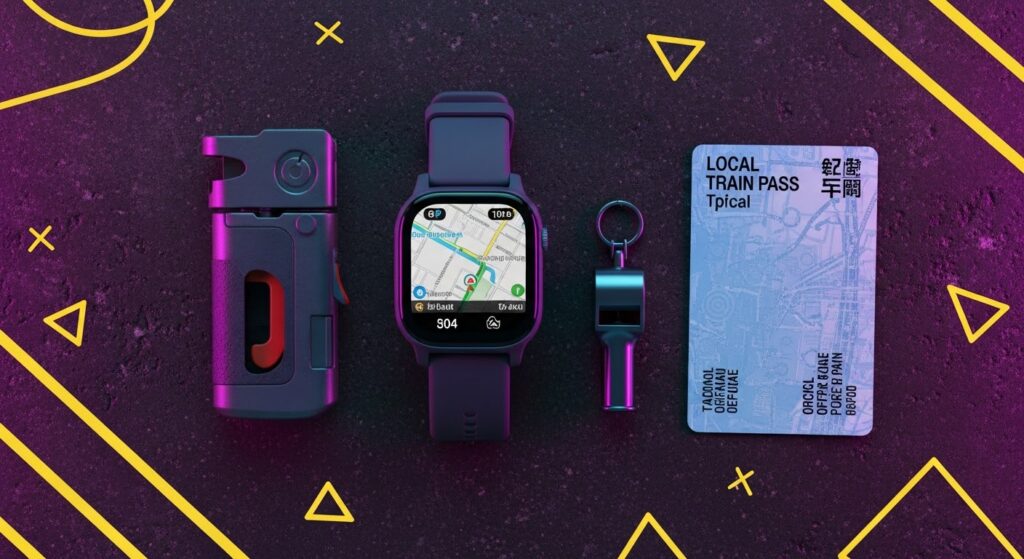
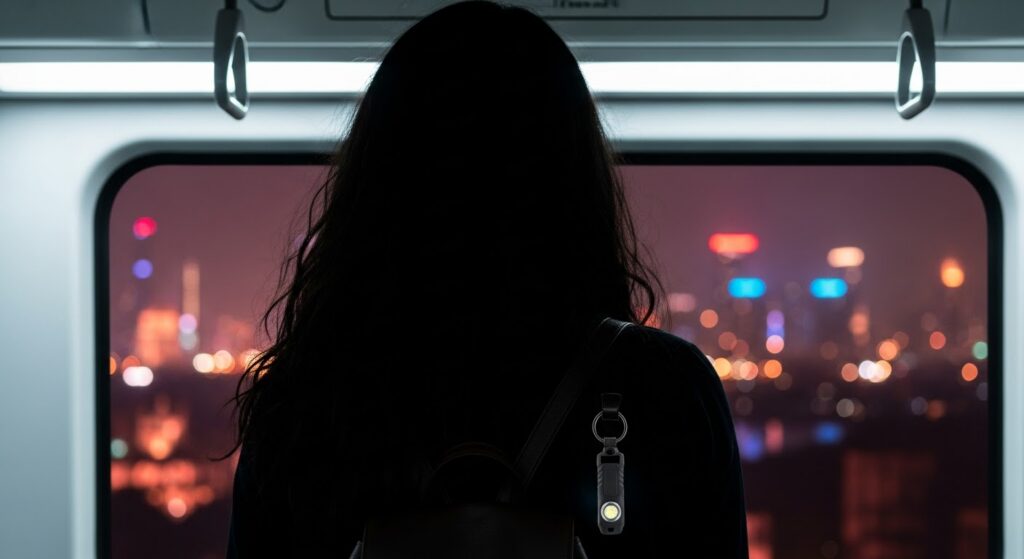
A small personal safety kit can also be useful. Keep your phone charged, carry a power bank, keep a small amount of emergency cash and have essential identification available. A whistle or compact flashlight can be useful for general emergencies, especially during power failures or poorly illuminated stretches. The purpose of carrying these items is not to create a sense of fear but to increase preparedness. The best safety tool remains awareness, early decision-making and the ability to move towards people and assistance.
Perhaps the most valuable skill for a solo woman commuter is learning to **trust discomfort**. You do not need to wait for something dramatic to happen before changing your plan. If a platform feels unusually empty, move. If a particular passenger is making you uncomfortable, change seats or move closer to other women. If a driver takes a route that concerns you, speak up and use your navigation. If you reach the station and suddenly feel that continuing the journey alone is unwise, contact someone you trust or use an alternative transport option. Safety decisions do not have to be justified to strangers.
Mumbai’s local train network can actually teach a powerful lesson in independent travel. Once you understand the system—platforms, coach markings, station exits, railway staff, transport connections and your own safety routines—the city becomes far less intimidating. You learn to read the rhythm of the platform, understand where commuters gather, identify reliable exits and anticipate the final connection before the train even arrives. What initially feels chaotic gradually becomes a system you can navigate with confidence.
For a solo girl travelling late at night, the perfect Mumbai commute is not about creating a “bulletproof” plan because no journey can guarantee zero risk. It is about building several layers of protection: **planned boarding, visible waiting areas, appropriate coach selection, awareness inside the train, reliable communication, careful station exits, verified transport and a controlled final mile**. Each layer reduces uncertainty and gives you another option if circumstances change.
So the next time you find yourself on a Mumbai platform after dark, don’t think of yourself as simply waiting for a train. Think strategically. Know your coach. Know your exit. Know how you will get from the station to your destination. Keep someone informed. Stay visible. Keep your senses switched on. And most importantly, remember that being independent does not mean refusing help—it means knowing when and where to seek it.
Mumbai never really stops moving. Even late at night, somewhere beyond the platform lights, another local is arriving, another food stall is serving its final customers and another commuter is beginning the journey home. With sensible preparation and situational awareness, a solo woman can navigate this extraordinary city confidently—one station, one platform and one safe journey at a time.
**Important:** Railway procedures, coach configurations, station security arrangements, app features and transport rules can change. Verify current information through official Indian Railways/Mumbai suburban railway sources and trusted transport providers before travelling. Never assume that a particular coach position, “safe zone,” app feature or 24-hour facility is guaranteed at every station or on every train.
Walking Through a Vanishing Landscape

There is the prehistoric geological landscape.
There are centuries-old fishing communities.
There is the Portuguese military presence.
There are later transformations under British and Indian rule.
And now there is the rapidly expanding Mumbai metropolitan region.
All these histories occupy the same landscape.
The challenge is making sure the newest layer does not completely erase the oldest.
As the monsoon waves continue to hit the coast and modern Vasai continues to expand, these forgotten basalt walls remain silent witnesses.
They remind us that Mumbai’s history does not end at its famous landmarks.
Sometimes the most fascinating stories are hidden behind the last building, beyond the paved road and beneath the monsoon vegetation.
And perhaps the real adventure is not simply discovering a forgotten fort.
It is discovering **the forgotten history of the landscape itself.**