Beneath the shadows of Mumbai’s aggressive glass skyscrapers lies a hidden portal to another century.
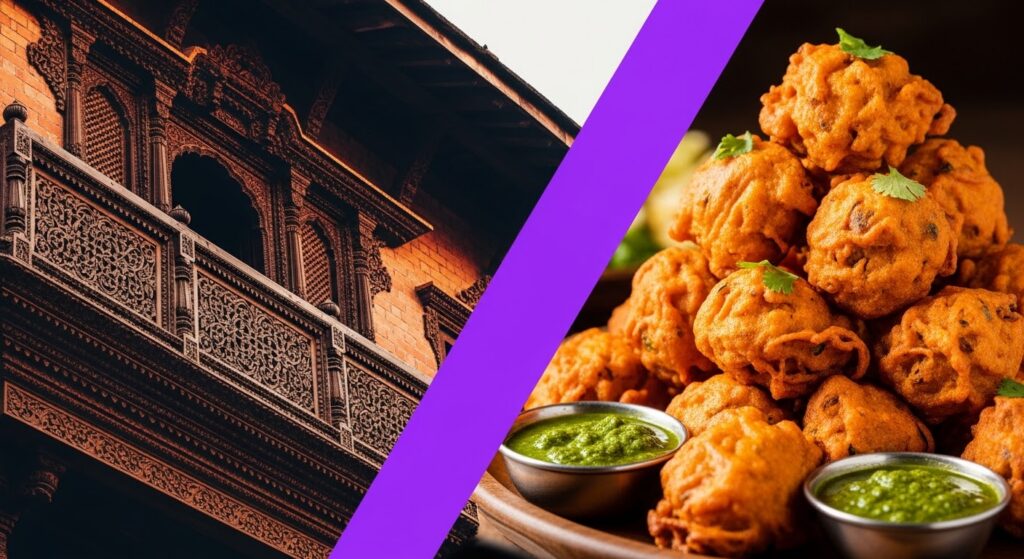
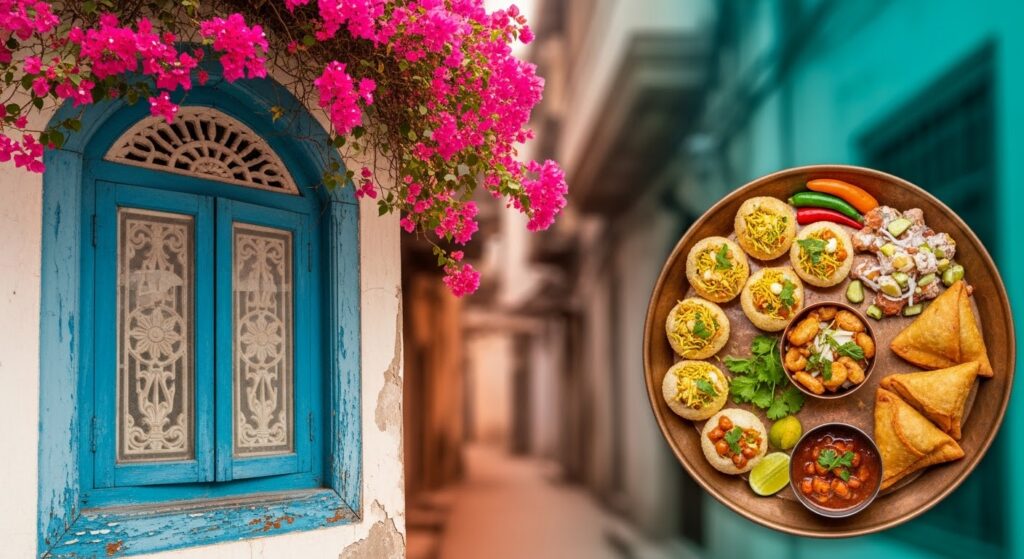
Walk a few minutes away from the chaos of Girgaon and the city seems to change character. The traffic noise begins to fade. Narrow lanes replace crowded roads. Colorful wooden homes appear behind low walls, their balconies decorated with plants, old windows and intricate timber details.
This is Khotachiwadi — one of Mumbai’s most distinctive surviving heritage neighbourhoods.
Here, Portuguese-influenced architecture, East Indian traditions, family kitchens and community life exist within an extraordinarily small urban pocket. But this beautiful village-like landscape faces a question that increasingly confronts historic neighbourhoods across Mumbai:
Can heritage survive when the land beneath it becomes more valuable than the buildings standing on it?
The Hidden Time Capsule
Entering Khotachiwadi feels almost like stepping through a portal.
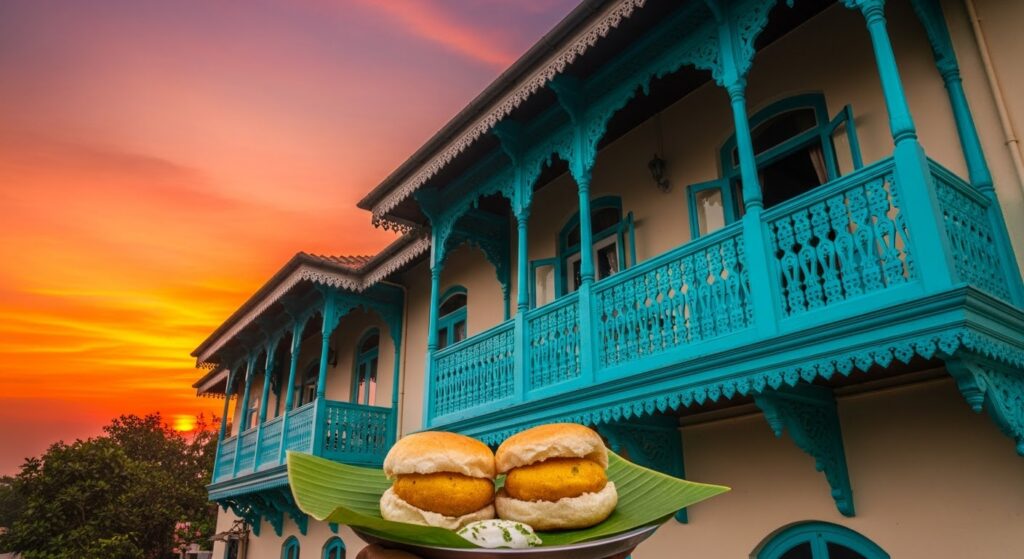
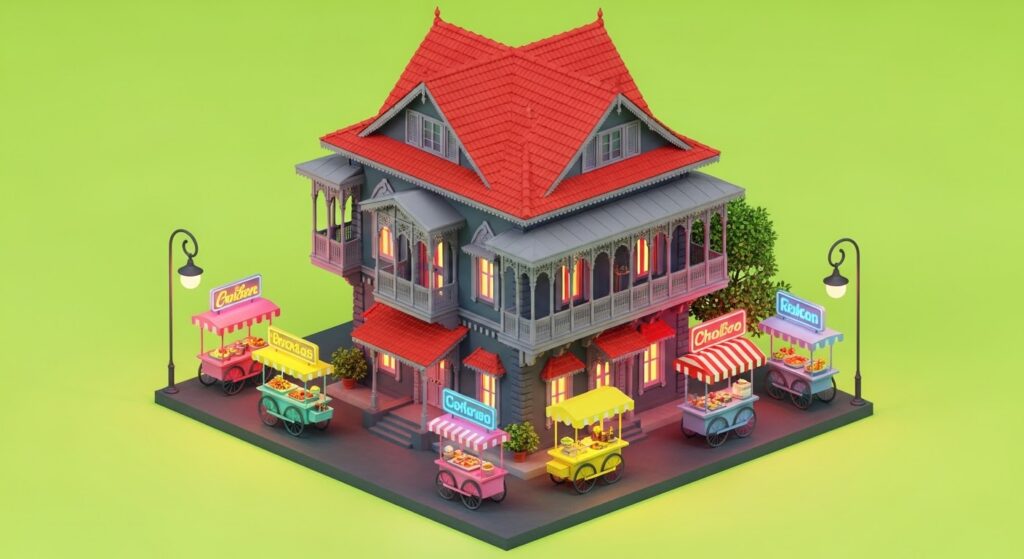
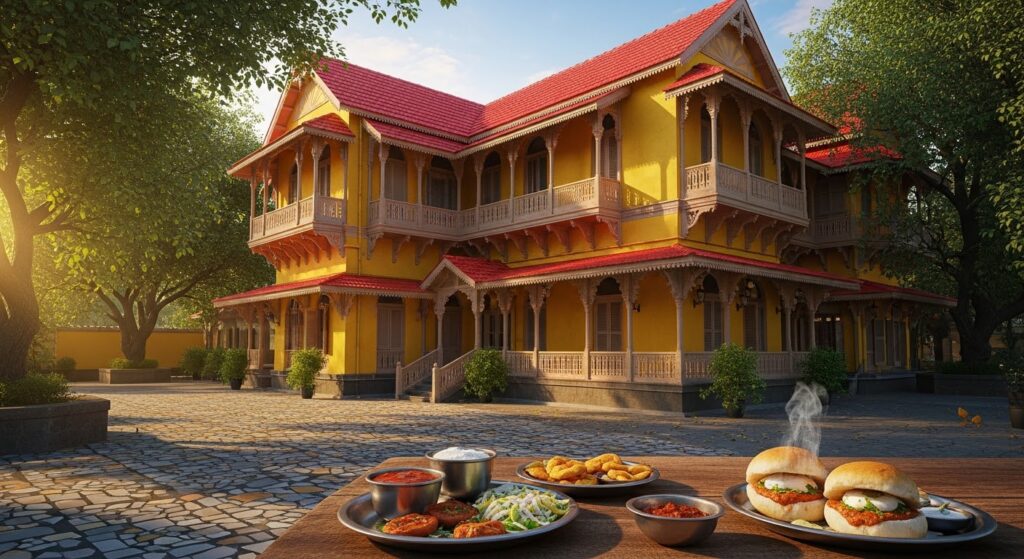
The dense urban landscape of Girgaon gives way to narrow lanes lined with brightly painted homes. Wooden balconies, sloping roofs, decorative railings and aging facades create an atmosphere completely different from the high-rise Mumbai surrounding it.
The neighbourhood’s architectural character is strongly associated with Indo-Portuguese and East Indian influences, reflecting the cultural history of Mumbai’s original communities.
Many of these homes were designed for Mumbai’s tropical climate rather than air-conditioned modern living.
High ceilings help hot air rise. Windows encourage cross-ventilation. Verandas create shaded transitional spaces, while timber construction gives the houses a warmth rarely found in contemporary apartment towers.
And then there are the colours.

Pastel blues, greens, yellows and pinks turn the lanes into an unexpectedly cinematic landscape.
- Every doorway seems to carry a story.
- Every balcony appears to belong to another era.
- Yet Khotachiwadi is not simply an architectural museum.
People still live here.
Families have cooked, celebrated festivals, raised children and maintained traditions in these homes for generations.
- That living connection is what makes the neighbourhood so important.
- The Architecture of Resistance
The most fascinating aspect of Khotachiwadi is not simply the age of its buildings.
It is the craftsmanship.
Look closely at the houses and you begin noticing details that disappear when viewed from a passing car — wooden columns, carved brackets, external staircases, decorative window frames and intricately constructed balconies.
These details represent a period when houses were built by craftsmen rather than assembled through standardized construction systems.
Timber was not merely a structural material.
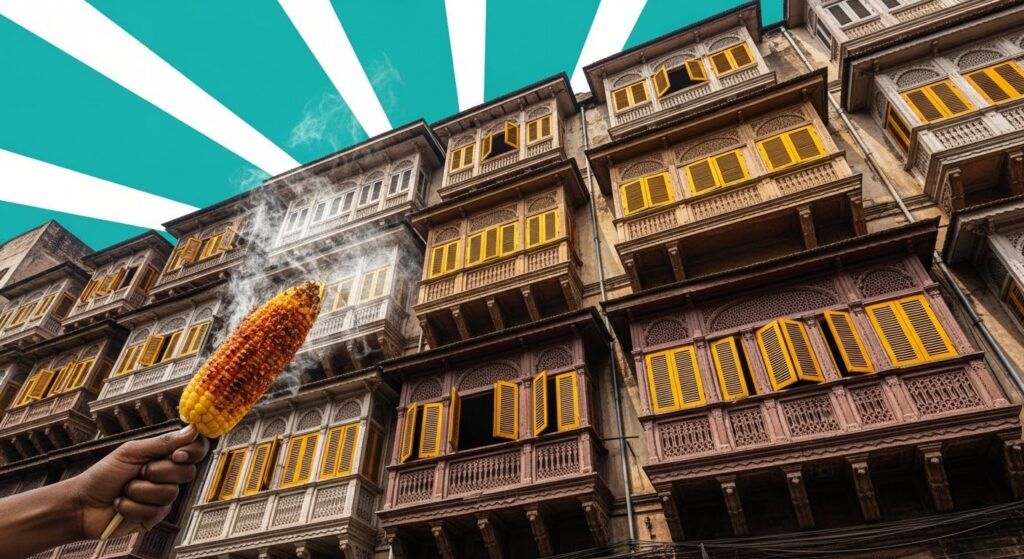
It was part of the architectural language.
Inside some traditional homes, the relationship between architecture and climate becomes even clearer.
Large rooms, high ceilings, ventilation openings and shaded verandas create a natural cooling system suited to Mumbai’s humid environment.
Before air conditioners became ubiquitous, architecture itself had to respond to the weather.
- That makes these homes more than beautiful relics.
- They are examples of climate-responsive urban design.
- But maintaining such structures is expensive.
Old timber requires constant care. Roofs need repairs. Plumbing and electrical systems have to be upgraded without destroying historic character.
For residents, preserving a heritage home can therefore become a financial and logistical challenge.
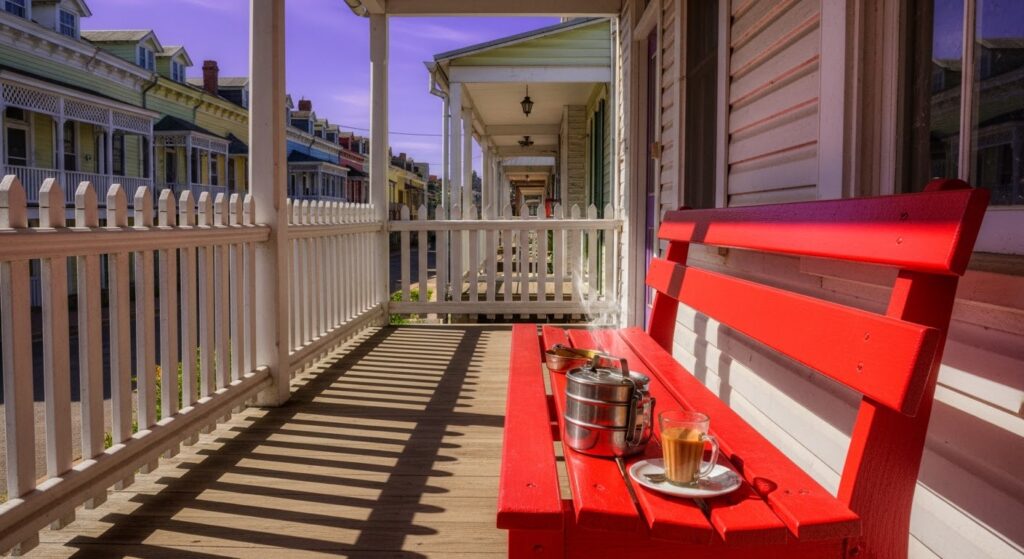
For developers, however, the land can represent something entirely different.
- Potential.
- Heritage on a Plate
There is another way to understand Khotachiwadi — through food.
- Architecture tells us how people lived.
- Food tells us what they remembered.
Walk through the lanes and the sensory experience can change completely. The smell of spices, fried fish, coconut and traditional masalas can emerge from family kitchens.
The culinary traditions of Mumbai’s coastal communities are deeply connected to the geography of the Konkan.
Fish, coconut, rice, chillies, tamarind and locally prepared spice blends form the foundation of countless home recipes.
A traditional fish curry is therefore much more than a meal.
It represents generations of knowledge.
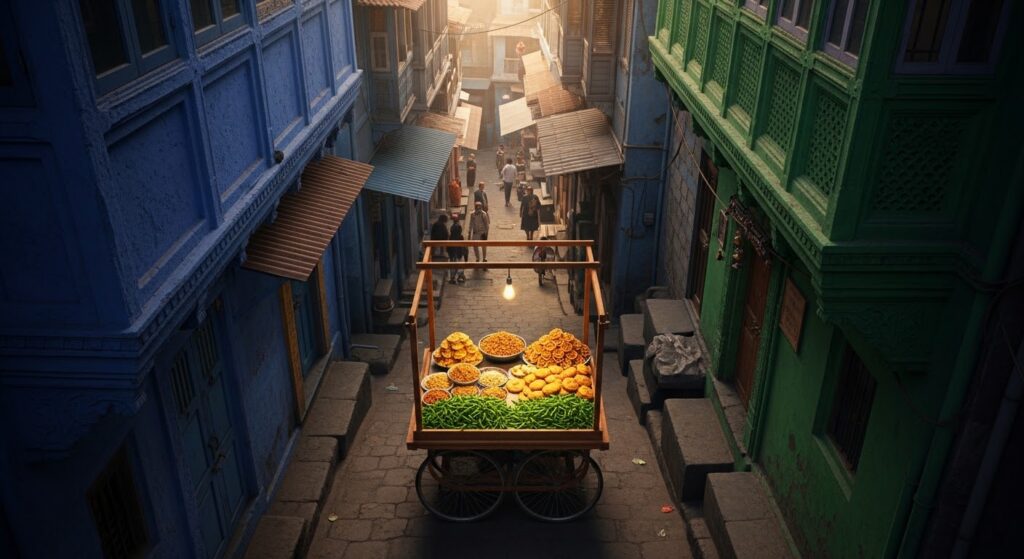
The preparation of the masala, the choice of fish, the balance between sourness and heat and even the cooking vessel can vary from one family to another.
- Some recipes are never written down.
- They are learned by watching a grandmother cook.
- Then a mother teaches her daughter.
- A son learns from his family.
And slowly, a recipe becomes a form of cultural inheritance.
The kitchen becomes an archive.
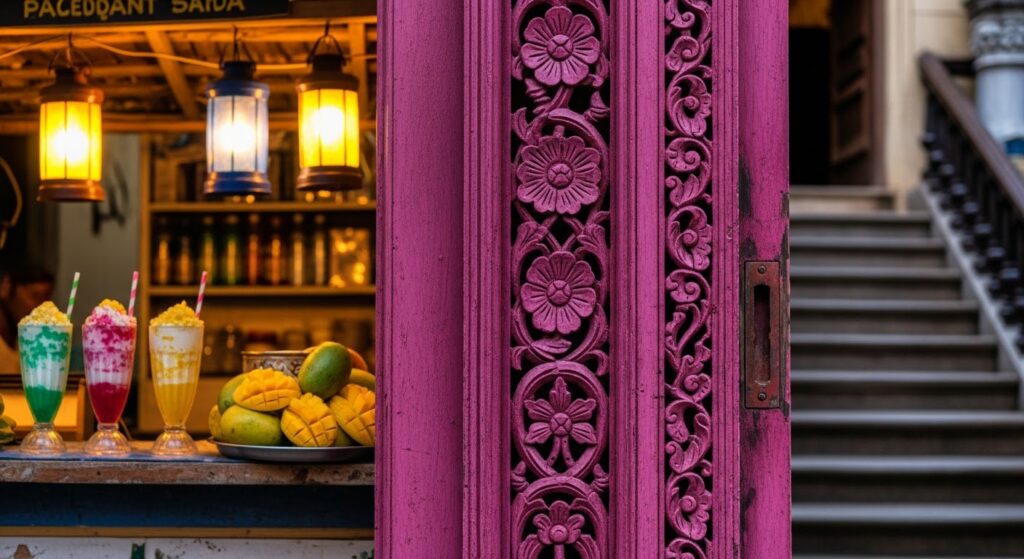
This is why preserving food traditions matters just as much as preserving wooden houses.
A heritage neighbourhood can lose its buildings and still retain photographs of them.
But when traditional recipes disappear from family kitchens, an entire piece of living culture can vanish without leaving a physical monument behind.
- The Shadow of the Skyscrapers
- And then comes the unavoidable contrast.
Step into one of Khotachiwadi’s open spaces and look upward.
The low-rise village suddenly appears surrounded by Mumbai’s vertical ambition.
- Glass facades.
- Concrete towers.
- Construction cranes.
- Luxury apartments.
The contrast is almost surreal.
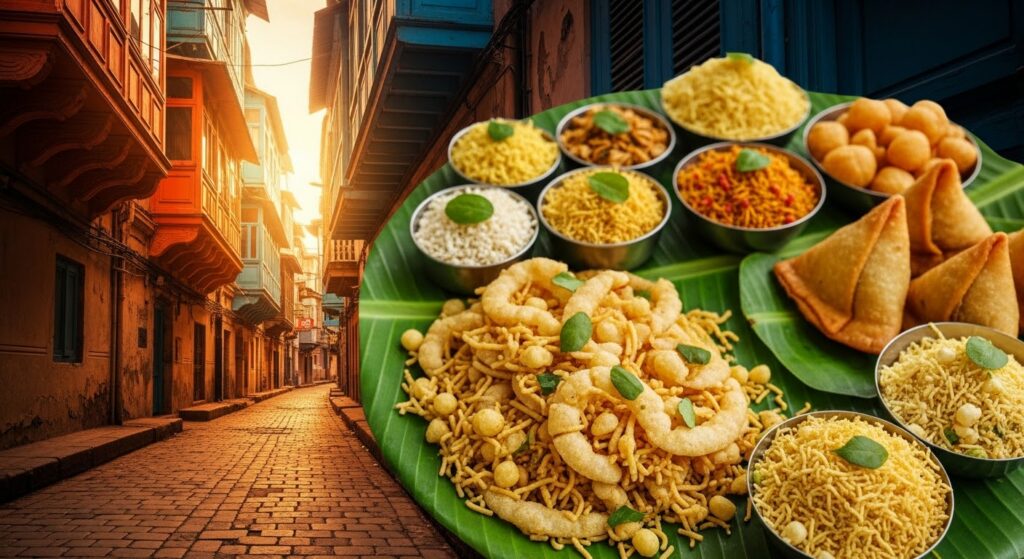
- On one side are small houses with sloping roofs and wooden balconies.
- On the other are buildings reaching dramatically into the sky.
- This is the central tension facing Khotachiwadi.
- The city sees land. The community sees home.
Mumbai’s extraordinary property prices create powerful incentives for redevelopment. A small historic house may occupy land that could potentially support a much larger modern development.
For an elderly homeowner facing expensive maintenance, selling can sometimes appear financially irresistible.
For a developer, assembling multiple adjoining properties can create an even greater opportunity.
And for the city, redevelopment promises additional housing and economic activity.
But the cost can be difficult to measure.
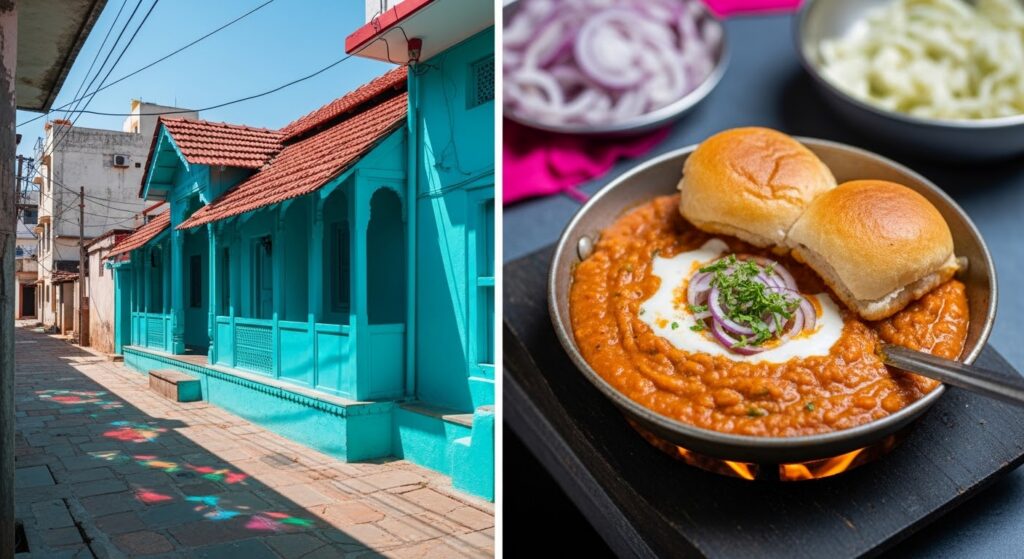
What happens when a neighbourhood loses its scale?
What happens when the lanes disappear?
What happens when a century-old wooden house becomes a basement parking area?
The loss isn’t simply architectural.
It is social.
- When the Skyline Changes the Climate
- The arrival of large buildings also changes the physical environment around heritage neighbourhoods.
- Tall structures can alter airflow, sunlight and the visual relationship between streets and buildings.
- The small gardens and open spaces surrounding traditional homes were never designed to exist beneath walls of high-rise construction.
The contrast is particularly striking in the morning and late afternoon.
A traditional tiled roof may be illuminated by sunlight while a neighbouring lane sits in the shadow of a modern tower.
The image becomes a metaphor for Mumbai itself.
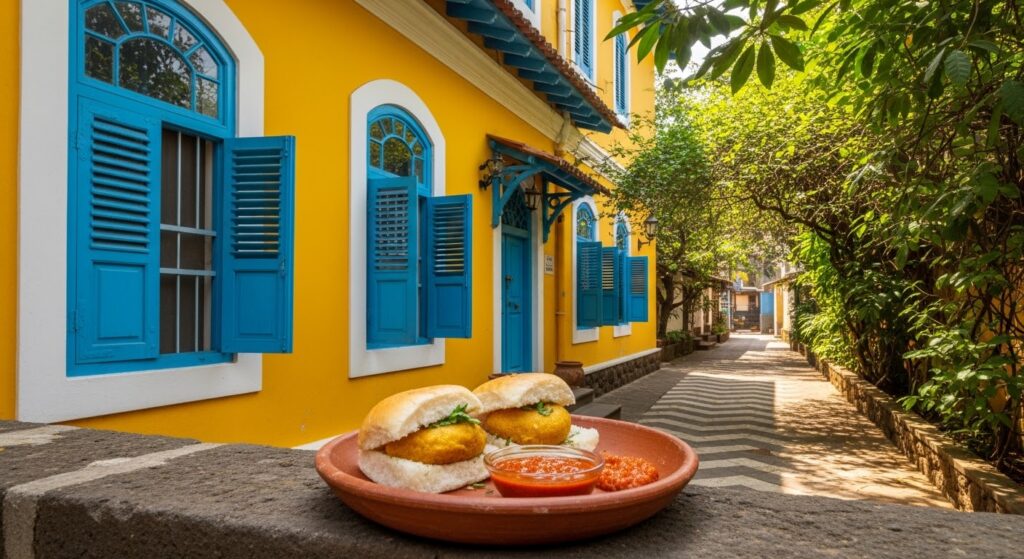
The old city is literally standing in the shadow of the new one.
Yet the answer cannot simply be to freeze Khotachiwadi in time.
A neighbourhood that becomes economically unsustainable will eventually struggle to survive.
- Heritage needs residents.
- Residents need viable livelihoods.
- And historic buildings need investment.
That means preservation cannot depend solely on nostalgia.
It needs an economic model.
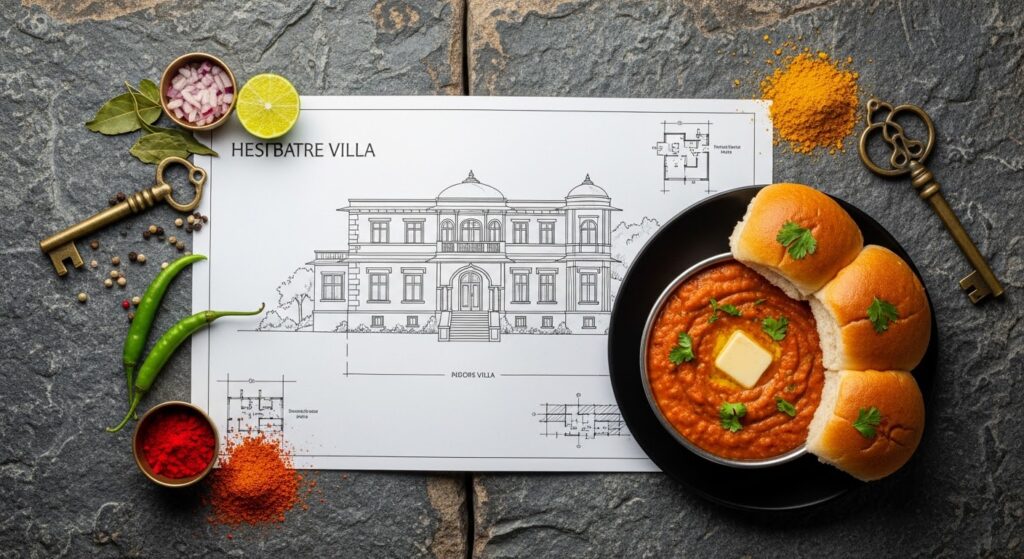
A Blueprint for the Future
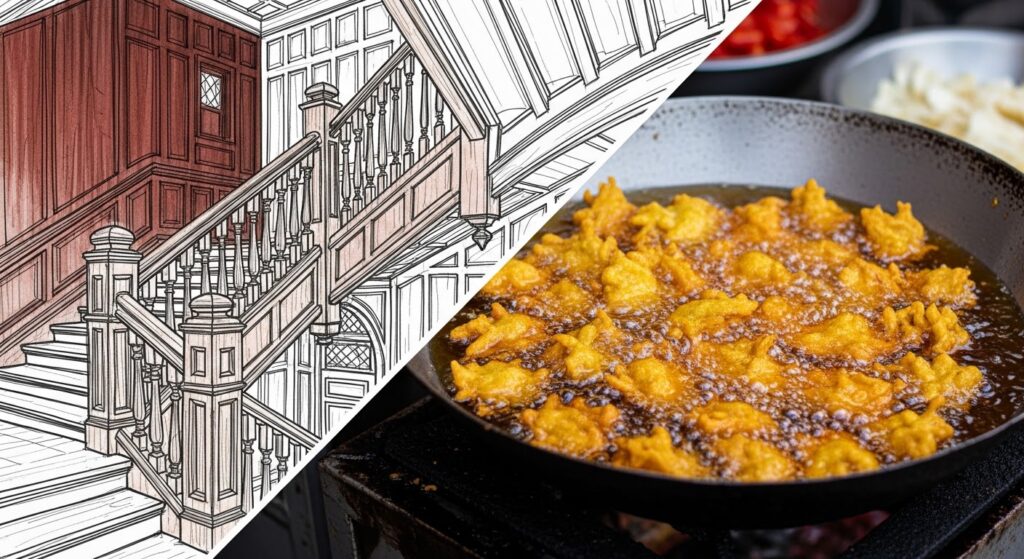
Perhaps the most promising future for Khotachiwadi lies somewhere between preservation and adaptation.
Traditional homes can accommodate new uses without losing their architectural identity.
Creative studios, galleries, design spaces, boutique businesses, cultural workshops and carefully managed cafés can potentially generate revenue while keeping the historic structures active.
Tourism can also help — but only if it respects the community.
Khotachiwadi should not become a theme park.
Its greatest attraction is precisely the fact that it remains a living neighbourhood.
Digital technology could play another role.
Detailed architectural documentation, digital mapping, photographic archives and virtual heritage projects can create records of buildings that may otherwise disappear.
But documentation should not become an excuse for demolition.
A digital replica can preserve information. It cannot preserve a community.
That distinction matters.
Why Khotachiwadi Matters to Mumbai
- Mumbai is famous for its ability to reinvent itself.
- Factories become offices.
- Mill lands become towers.
- Old roads become highways.
- Fishing villages become suburbs.
- The city constantly rebuilds itself.
But a city that only knows how to replace its past eventually loses the very character that made it unique.
Khotachiwadi represents another version of Mumbai.
A slower Mumbai.
A Mumbai of verandas and courtyards.
A Mumbai of neighbourhood conversations.
A Mumbai where food recipes travel through generations instead of algorithms.
A Mumbai where architecture responds to climate rather than simply maximizing floor space.
And perhaps most importantly, a Mumbai where history is still lived rather than merely displayed.
The Village Inside the Megacity
Standing in one of Khotachiwadi’s narrow lanes, it is easy to forget that one of the world’s great megacities is moving at full speed just outside.
- You can hear distant traffic.
- You can see skyscrapers rising above the rooftops.
- But inside these lanes, the rhythm is different.
- A wooden door opens.
- Someone tends to a balcony garden.
- A family prepares food.
- An old house catches the morning light.
- And for a moment, Mumbai seems to slow down.
- That is the real heritage of Khotachiwadi.
- Not merely the teak wood.
- Not merely the pastel facades.
- Not even the architecture.
- It is the continuity of everyday life.
The challenge for Mumbai is therefore not simply to preserve old buildings.
It is to find a way for history and modernity to occupy the same city.
Because once these homes, recipes, lanes and community memories disappear beneath concrete, no amount of redevelopment can recreate what was lost.
Khotachiwadi is not just a village trapped inside Mumbai.
It is a reminder of the Mumbai that existed before the skyline became the city’s defining identity — and a warning that the future should not require us to erase everything that came before it.