Remote Hospitality Has Entered the Infrastructure Economy
Traditional hospitality has always depended on one variable: location.
Remote hospitality changes that equation.
Historically, breathtaking destinations suffered from one fundamental limitation—poor digital connectivity. Guests accepted temporary disconnection because no alternative existed.
That assumption has collapsed.
Remote workers, digital entrepreneurs, creators, consultants, software developers, financial professionals, and startup founders increasingly expect enterprise-grade internet regardless of location.
Satellite broadband has transformed connectivity from a constraint into an investment asset.
For glamping operators, internet infrastructure is no longer an operating expense.
It has become revenue-generating capital.
Why Starlink Changes the Economics of Premium Glamping
Luxury travelers increasingly evaluate destinations through two parallel questions:
Is the experience exceptional?
Can I continue working without interruption?
Reliable satellite connectivity answers the second question.
Instead of marketing “digital detox,” many premium operators now market:
- Work-from-mountains
- Forest offices
- Lakeside board meetings
- Remote executive retreats
- Creator residencies
Connectivity expands the customer base dramatically beyond vacation travelers.
Potential guests now include:
- Remote employees
- Startup founders
- Corporate retreats
- Influencers
- Online educators
- International freelancers
- Digital nomads
Technology therefore increases occupancy rather than simply enhancing convenience.
Capital Expenditure: Building a Starlink Enabled Glamping Unit
Every scalable franchise begins with standardized capital allocation.
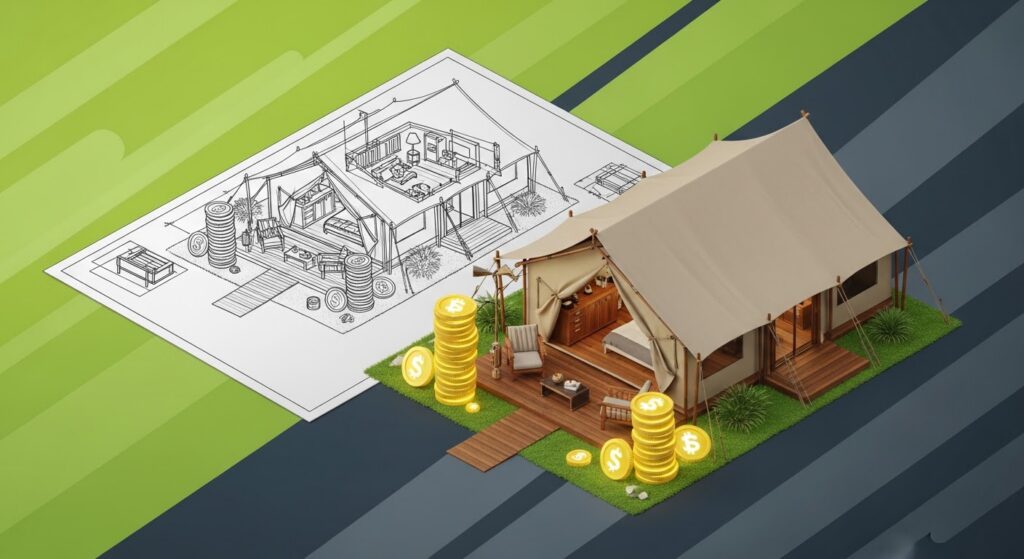
A typical premium off-grid unit includes:
- Land Development
- Site preparation
- Internal roads
- Drainage
- Landscaping
- Utility trenches
These costs vary significantly depending on terrain but should follow standardized engineering templates across franchise locations.Every scalable franchise begins with standardized capital allocation.
A typical premium off-grid unit includes:
- Land Development
- Site preparation
- Internal roads
- Drainage
- Landscaping
- Utility trenches
These costs vary significantly depending on terrain but should follow standardized engineering templates across franchise locations.
Modular Accommodation

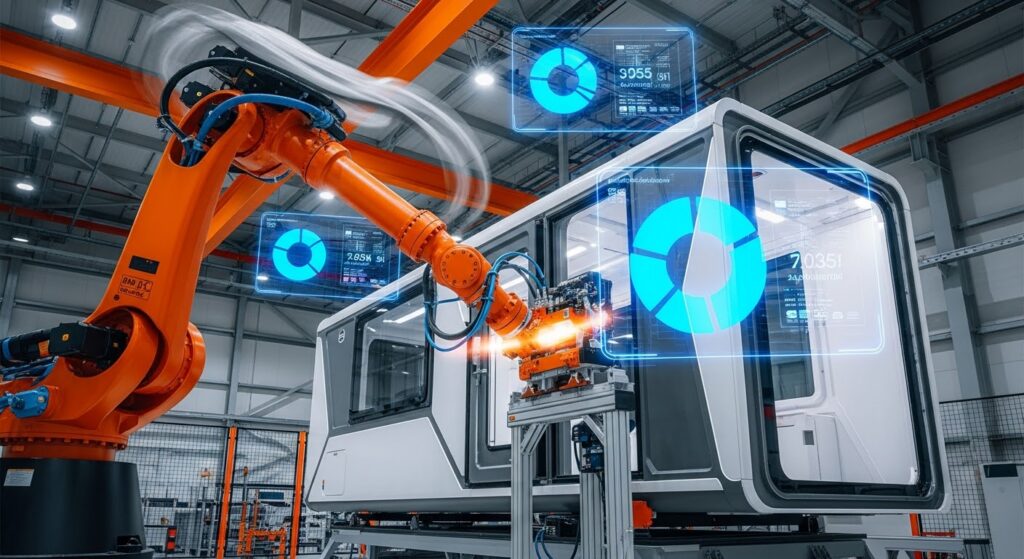
Instead of conventional construction, scalable operators increasingly deploy:
- Steel modular cabins
- Luxury safari tents
- Engineered timber pods
- Prefabricated bathrooms
- Plug-and-play kitchens
Advantages include:
- Lower labor dependency
- Faster deployment
- Easier quality control
- Predictable construction timelines
- Simplified franchise replication
The objective is repeatability—not architectural uniqueness.
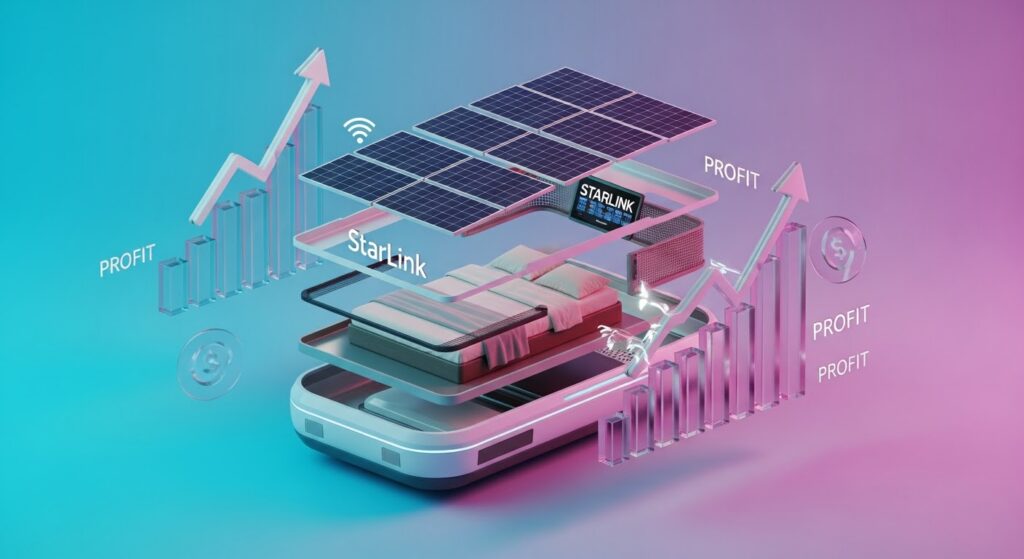
Starlink Infrastructure
Technology capital expenditure includes:
- Satellite hardware
- Mounting systems
- Weather protection
- Power backup
- Network switches
- Wi-Fi distribution
- Security firewalls
- Remote diagnostics
Unlike conventional internet infrastructure, satellite deployment minimizes dependence on local telecom networks.
For remote hospitality, connectivity becomes location-independent.
Renewable Energy Systems
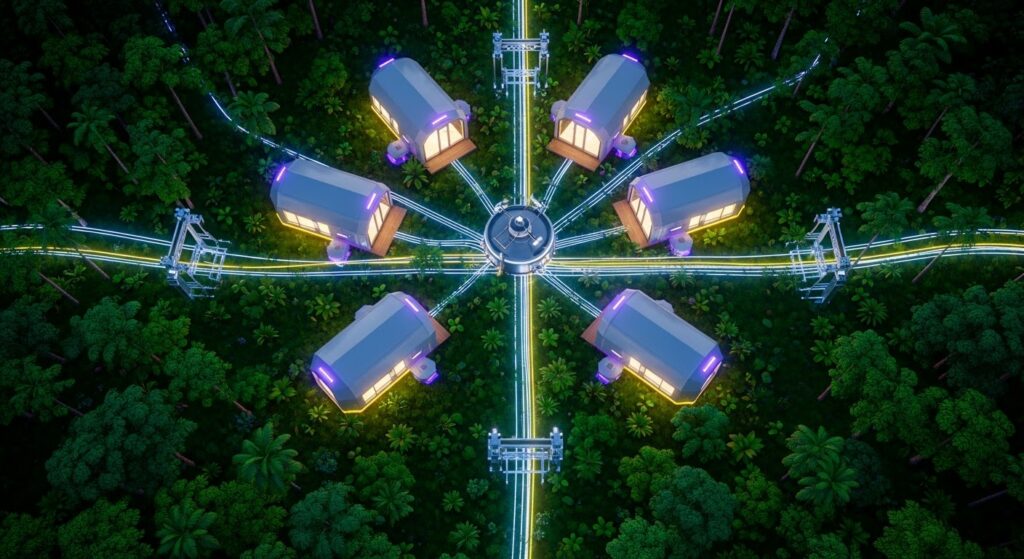
Premium off-grid resorts increasingly integrate:
- Solar panels
- Battery storage
- Smart power management
- Backup generators
- Energy monitoring systems
Reducing utility dependence also reduces operating volatility.
- Connectivity as a Revenue Multiplier
- The greatest mistake in hospitality financial modeling is treating technology as overhead.
- Technology often expands revenue.
- Consider two comparable glamping properties.
- Property A offers beautiful accommodation.
Property B offers identical accommodation with enterprise-grade satellite connectivity.
Property B attracts:
- Longer average stays
- Remote workers
- Corporate teams
- International guests
- Higher weekday occupancy
- Premium pricing
The internet connection itself becomes part of the product.
Rather than selling rooms, operators sell uninterrupted productivity in extraordinary locations.
Occupancy Transformation Through Digital Infrastructure
Traditional glamping often experiences:
- Strong weekends
- Holiday peaks
- Seasonal demand
Technology-enabled properties reduce these fluctuations.
Guests working remotely may stay:
- One week
- Two weeks
- One month
- Entire project cycles
Longer stays improve operational efficiency by lowering:
- Marketing costs
- Cleaning frequency
- Check-in expenses
- Booking platform commissions
Higher occupancy directly improves return on invested capital.
Operational Leaness Through Automation
Modern franchise models rely on automation to reduce labor intensity.
Examples include:
- Mobile self check-in
- Digital room access
- Remote surveillance
- IoT-based utility monitoring
- Smart energy management
- Predictive maintenance
- Automated guest messaging
- Dynamic pricing software
Satellite connectivity enables centralized management across geographically dispersed locations.
Instead of staffing every site heavily, operators supervise multiple properties through a central operations center.
This dramatically improves scalability.
Understanding Technology Depreciation
Technology assets depreciate faster than traditional buildings.
Examples include:
- Networking equipment
- Routers
- Satellite hardware
- Smart devices
- Security systems
- Computing infrastructure
These accelerated depreciation schedules can reduce taxable income depending on local accounting standards and tax regulations.
Franchise owners should work with qualified accountants to determine the appropriate depreciation treatment under the applicable financial reporting and tax framework.
Proper asset classification becomes an important component of financial planning.
The Unit Economics of a Single Glamping Franchise
Every franchise should first demonstrate profitability at the individual-unit level.
Core metrics include:
- Capital invested per accommodation unit
- Average Daily Rate (ADR)
- Occupancy percentage
- Revenue per Available Unit (RevPAU)
- Operating margin
- Maintenance cost
- Technology subscription cost
- Franchise royalty
- EBITDA margin
Without positive unit economics, network expansion simply multiplies losses.
Scalability never fixes poor fundamentals.
Scaling from One Property to Ten
Once one location demonstrates stable profitability, network economics begin to improve.
Centralized operations create efficiencies through:
- Shared reservation systems
- Unified marketing
- Bulk purchasing
- Standardized training
- Central accounting
- Shared technology infrastructure
- Common maintenance procedures
Fixed costs become distributed across multiple sites.
This operating leverage improves profitability as the franchise expands.
Estimating Internal Rate of Return
Internal Rate of Return (IRR) remains one of the most useful metrics for evaluating long-term investment performance.
Variables affecting IRR include:
- Initial capital expenditure
- Occupancy growth
- Premium pricing
- Maintenance costs
- Financing structure
- Asset replacement cycles
- Tax treatment
- Exit valuation
Because these variables differ by project, there is no universal IRR for Starlink-enabled glamping. Investors should build project-specific financial models using realistic assumptions and sensitivity analysis rather than relying on generic benchmark figures.
Well-managed operations that maintain high occupancy and disciplined capital allocation are generally better positioned to generate attractive long-term returns.
Regulatory Compliance Cannot Be an Afterthought
Many hospitality projects fail because regulation is addressed too late.
Operators must evaluate requirements such as:
- Land-use permissions
- Environmental approvals
- Building safety regulations
- Fire compliance
- Waste management
- Water extraction permissions
- Electrical certification
- Hospitality licensing
- Satellite equipment rules where applicable
- Local tax registration
A standardized compliance framework simplifies multi-location expansion and reduces execution risk.
Franchise Standardization Creates Enterprise Value
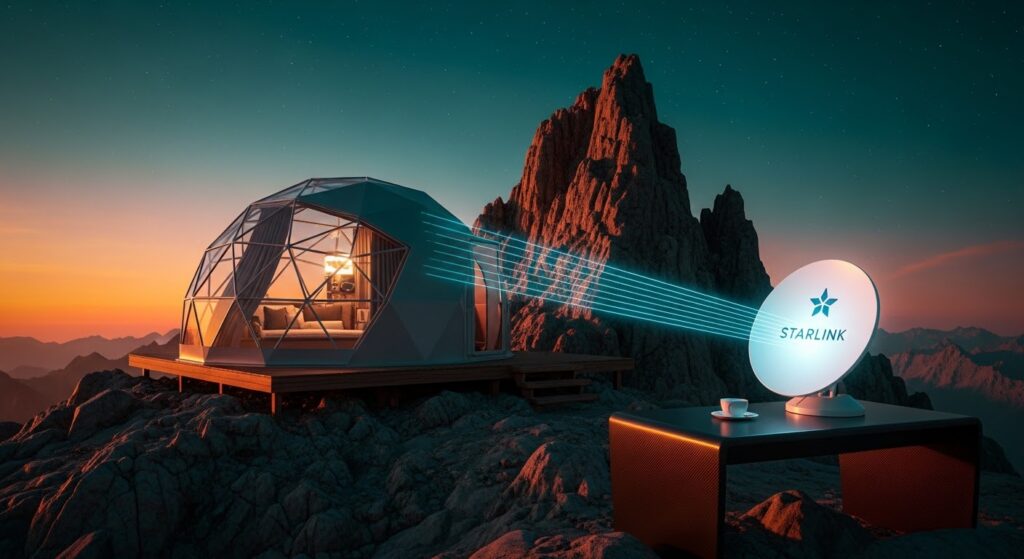
Individual luxury resorts are valuable.
Standardized hospitality systems are significantly more valuable.
A successful franchise documents every process:
- Construction
- Procurement
- Guest experience
- Technology deployment
- Maintenance
- Accounting
- Branding
- Staff training
- Compliance
- Quality audits
The business evolves from owning properties to licensing a proven operating system.
That distinction often drives higher enterprise valuations.
Data Becomes a Competitive Asset
Connected hospitality generates continuous operational intelligence.
Operators can analyze:
- Booking behavior
- Seasonal demand
- Energy onsumption
- Guest preferences
- Maintenance cycles
- Internet usage patterns
- Pricing elasticity
- Occupancy forecasts
These insights support better decisions on expansion, pricing, staffing, and site selection.
Over time, data becomes a strategic asset that is difficult for competitors to replicate.
The Five-Year Investment Perspective
Traditional real estate often depends primarily on land appreciation.
A technology-enabled glamping franchise can derive value from multiple sources:
- Hospitality cash flows
- Franchise fees
- Brand equity
- Technology systems
- Operational data
- Expansion rights
- Proprietary site-selection methodologies
- Customer loyalty
Diversified value drivers can make the business more resilient than relying solely on property appreciation.
Final Thoughts
The next generation of hospitality will not be defined by luxury alone. It will be defined by the intelligent integration of technology, standardized operations, disciplined capital allocation, and scalable franchise design.
Starlink-enabled glamping represents more than an upgrade to guest connectivity—it reflects a broader shift toward infrastructure-driven hospitality, where digital access, automation, and modular construction work together to improve operational efficiency and unlock new revenue opportunities.
The winners in 2026 and beyond are unlikely to be those who simply build more resorts. They will be the operators who master unit economics, maintain regulatory discipline, leverage data for decision-making, and scale repeatable business models. In an increasingly connected world, the most valuable hospitality asset may not be the view from the cabin—it may be the network that powers the entire ecosystem.