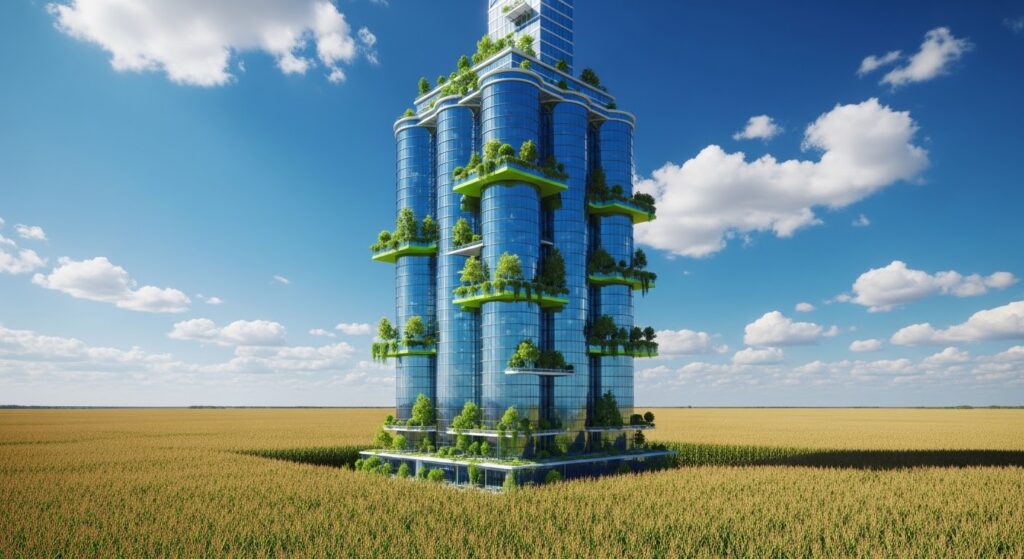
Your Most Valuable Crop May No Longer Be Growing in the Soil
For generations, farmland has been valued by a simple equation: acres multiplied by agricultural productivity. The more crops harvested, the greater the land’s worth. That formula is rapidly becoming obsolete.
It is July 2026, and a fundamental shift is underway across global rural economies. The highest-margin product produced by many farms is no longer wheat, corn, rice, or vegetables. It is something far more profitable—a premium guest experience.
While commodity agriculture continues to battle unpredictable weather, volatile prices, rising fertilizer costs, labor shortages, and shrinking margins, another industry is quietly transforming rural land into one of the fastest-growing hospitality assets.
That industry is glamping-based agritourism.
Luxury safari tents, geodesic domes, eco-cabins, treehouses, and off-grid farm experiences are allowing landowners to generate hospitality income without abandoning agriculture. Instead of choosing between farming and tourism, successful operators are combining both into diversified revenue ecosystems.
The result is a completely different method of valuing farmland.
Instead of asking:
“How many tons can this acre produce?”
Investors now ask:
“How much recurring hospitality cash flow can this acre generate?”
That single question is redefining farmland economics across 2026.
The Post-Commodity Farm Revolution
Agriculture has always been cyclical.
Farmers understand droughts.
- Floods.
- Market crashes.
- Input inflation.
Government policy changes.
- Global exports.
None of these risks are new.
What has changed is the ability to generate entirely different revenue streams from the same piece of land.
Instead of relying exclusively on commodity prices, many farms are evolving into multi-income businesses where hospitality supports agriculture rather than replacing it.
The modern farm now produces:
- Food
- Experiences
- Wellness retreats
- Farm-to-table dining
- Nature education
- Corporate retreats
- Photography tourism
- Sustainable travel experiences
This diversification dramatically reduces dependence on crop prices.
Why Mono-Cropping Is Losing Financial Efficiency

Climate volatility has increased production uncertainty.
- Input costs continue rising.
- Farm labor remains difficult to secure.
Meanwhile commodity prices fluctuate with global supply chains.
- The financial challenge is simple.
- Expenses rise every year.
- Selling prices often do not.
Many farms therefore experience shrinking operating margins despite producing similar yields.
Hospitality follows a completely different pricing model.
Instead of competing with global commodity markets, agritourism sells experiences directly to consumers.
That pricing power changes everything.
The Experience Economy Is Paying Massive Premiums
Urban travelers increasingly seek:
- Farm stays
- Organic food
- Stargazing
- Wellness retreats
- Nature escapes
- Sustainable travel
- Digital detox vacations
Guests are not paying for accommodation alone.
They pay for:
- Privacy
- Storytelling
- Authenticity
- Local culture
- Fresh food
- Scenic landscapes
- Instagram-worthy experiences
A single premium weekend booking can generate revenue that would otherwise require months of agricultural production on the same land area.
This is the central economic advantage of agritourism.
Farmland Is Becoming a Hospitality Asset
Traditional agriculture measures productivity by:
- Yield per acre
- Yield per hectare
- Cost per ton
Hospitality measures productivity differently:
- Revenue per guest
- Average Daily Rate (ADR)
- Occupancy
- RevPAR (Revenue Per Available Room)
- Guest Lifetime Value
These hospitality metrics often produce significantly higher gross revenue per acre than low-margin commodity farming, though actual profitability depends on occupancy, operating costs, financing, and local regulations.
Instead of thinking like farmers alone, successful agritourism entrepreneurs increasingly think like hotel operators.
The Mathematics of Marginal Land
One of the most overlooked opportunities lies in underutilized farmland.
- Steep slopes.
- Rocky corners.
- Lake edges.
- Forest boundaries.
- Unused orchards.
These locations may contribute little to agricultural output but can become premium hospitality zones.
Consider a simplified comparison.
- Traditional Crop Model
- One acre produces seasonal crops.
Revenue depends upon:
- Weather
- Pest control
- Market prices
- Transportation costs
- Storage losses
Profit margins may remain relatively thin after expenses.
Glamping Model
The same acreage accommodates a small cluster of luxury glamping units.
Income depends upon:
- Occupancy
- Pricing strategy
- Experience quality
- Customer reviews
- Seasonal demand
Instead of harvesting once or twice annually, hospitality generates revenue throughout the year whenever guests book stays.
The economics become particularly attractive in destinations with strong weekend or holiday demand.
Weekend Economics Versus Seasonal Economics
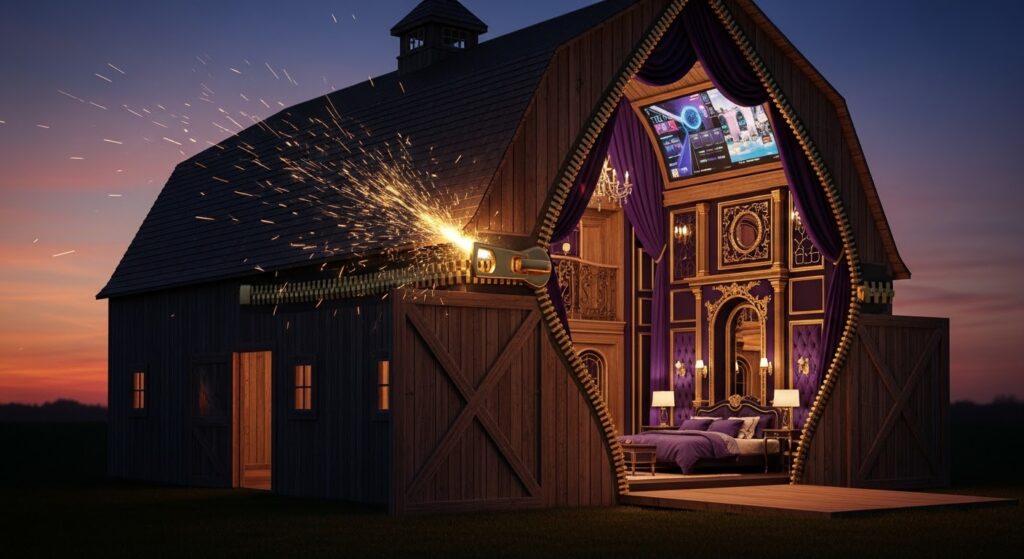
Imagine a premium glamping property operating near a major metropolitan area.
Strong occupancy during weekends and holiday periods can produce a substantial share of annual revenue.
The important observation is not that every farm should become a resort.
It is that even a small hospitality component can meaningfully diversify farm income compared with relying solely on seasonal crop sales.
Plug-and-Play Hospitality Infrastructure
Traditional orchards may require years before reaching full production.
Glamping infrastructure follows a different timeline.
Many modular hospitality units can be installed far more quickly than permanent buildings, subject to local approvals and infrastructure requirements.
Investment typically focuses on:
- Luxury tents
- Geodesic domes
- Eco cabins
- Utility systems
- Landscaping
- Guest amenities
- Online booking systems
Once operational, revenue begins as soon as bookings commence.
This shorter path to cash flow attracts entrepreneurs seeking faster returns than long agricultural investment cycles.
The New Regulatory Opportunity
Across many regions, policymakers increasingly recognize agritourism as a tool for rural development, employment, and local economic diversification.
Specific regulations differ significantly by country, state, and district. Before investing, landowners should consult local authorities and legal professionals regarding land-use permissions, environmental approvals, tax treatment, and building requirements.
Where supportive frameworks exist, opportunities may include:
- Simplified approvals for certain non-permanent structures
- Incentives for rural tourism
- MSME support programs
- Sustainable infrastructure subsidies
- Renewable energy incentives
These policies can improve project feasibility when combined with sound financial planning.
Understanding Dual-Use Land
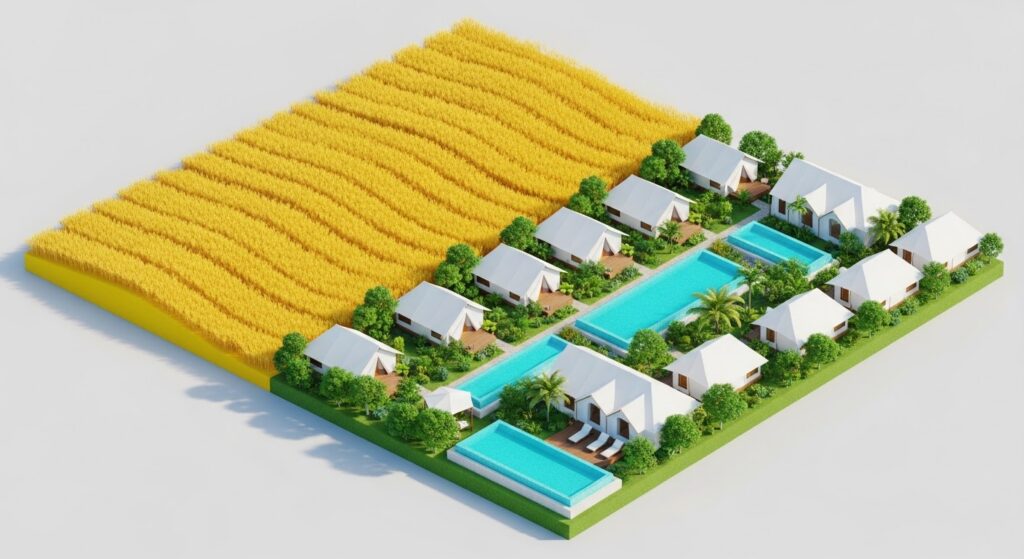
One of the strongest agritourism models preserves agriculture while introducing hospitality.
Rather than converting an entire farm into accommodation, operators create dedicated zones.
Examples include:
- Active cultivation
- Guest lodging
- Organic gardens
- Recreational trails
- Farm activity areas
- Waterconservation zones
- Native forest restoration
Agriculture remains operational.
Hospitality becomes an additional income stream.
The farm gains resilience without losing its agricultural identity.
Tax Planning for MSMEs
Many countries encourage rural entrepreneurship through programs that may support tourism, hospitality, renewable energy, or small businesses.
Depending on jurisdiction, businesses may benefit from:
- Accelerated depreciation on qualifying assets
- MSME financing support
- Tourism development grants
- Infrastructure subsidies
- Renewable energy incentives
Eligibility varies widely, and professional tax advice is essential before relying on any incentive.
The objective is not simply reducing taxes but improving overall project viability.
Farmland as a Diversified Investment Portfolio
The traditional farm generated one primary cash flow.
Modern agritourism creates multiple independent income sources.
A diversified rural property may include:
- Agricultural Income:- Seasonal crops, fruits, vegetables, dairy, or livestock.
- Hospitality Income:- Luxury stays, glamping, cabins, retreats.
- Experience Revenue- Farm tours, cooking classes, workshops, adventure activities.
- Food Services:- Farm cafés, local cuisine, organic dining experiences.
- Events:- Destination weddings, corporate retreats, festivals.
- Environmental Income:- Carbon sequestration projects, biodiversity initiatives, ecosystem restoration where supported by applicable programs.
This diversification reduces dependence on any single market.
Technology Is Making Rural Hospitality Easier
Today's agritourism businesses increasingly rely on smart technologies.
Examples include:
- Online reservation platforms
- Digital payments
- Remote property monitoring
- Smart irrigation
- Solar-powered systems
- AI-assisted customer communication
- Occupancy forecasting
- Precision agriculture
Technology allows farmers to manage hospitality without abandoning agricultural operations.
The two businesses increasingly complement each other.
The Rise of Gen-Alpha Travel
The next generation of travelers is reshaping destination preferences.
Families increasingly choose locations offering:
- Sustainability
- Interactive learning
- Farm experiences
- Wildlife encounters
- Outdoor activities
- High-speed connectivity
- Unique visual appeal for social media
Children influence travel decisions more than ever before.
Properties that combine authentic rural experiences with modern comfort are well positioned to benefit from these changing preferences.
Off-Grid Is Becoming Premium
Luxury no longer means marble lobbies and skyscrapers.
Many travelers now associate premium experiences with:
- Silence
- Nature
- Privacy
- Sustainability
- Dark skies
- Fresh food
- Local culture
Off-grid infrastructure powered by solar energy, rainwater harvesting, and environmentally responsible design can become a competitive advantage rather than a limitation.
The New Economics of Land Valuation
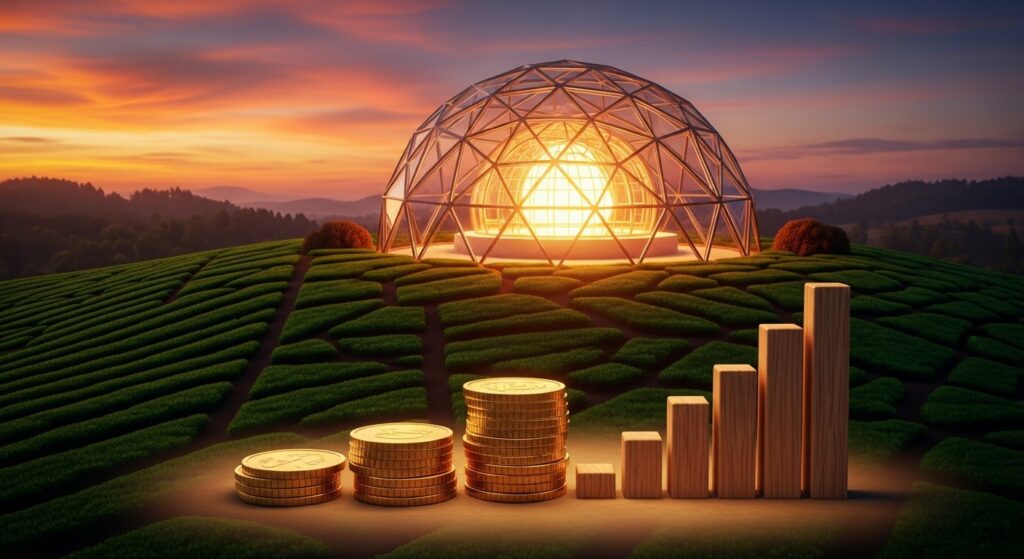
Real estate markets increasingly evaluate income-producing assets based on their cash-flow potential rather than physical acreage alone.
A property with an established agritourism business may command a higher valuation than comparable agricultural land without diversified income, although any premium depends on factors such as profitability, location, legal compliance, demand, and market conditions.
This reflects a broader shift from valuing land purely as a production asset to recognizing its business-generating capacity.
Preparing for the 2027 Rural Economy
Several trends are likely to shape agritourism in the coming years:
- Growth in domestic and hyper-local tourism
- Increased demand for sustainable travel
- Expansion of wellness tourism
- Greater use of AI in hospitality operations
- Higher adoption of renewable energy on rural properties
- Continued integration of agriculture with experiential tourism
Landowners who begin planning today may be better positioned to benefit from these evolving opportunities.
Practical First Steps for Landowners
Transitioning into agritourism does not require abandoning farming.
Instead, begin with careful planning.
- Evaluate underutilized areas of the property.
- Study local tourism demand and accessibility.
- Confirm applicable zoning and land-use permissions.
- Prepare a detailed business and financial plan.
- Start with a small pilot project rather than large-scale expansion.
- Integrate local culture, food, and agricultural experiences into the guest offering.
- Build strong digital marketing and online booking capabilities.
- Measure performance using both agricultural and hospitality metrics.
The most successful agritourism businesses typically evolve gradually, expanding as demand and operational experience grow.
Conclusion: The Future Harvest Is Diversification
The biggest transformation in agriculture during 2026 is not a new seed variety or a revolutionary fertilizer.
It is a new way of thinking about rural assets.
Farmland is no longer valued solely by the crops it produces.
It is increasingly valued by the experiences it enables, the businesses it supports, and the diversified cash flows it can generate.
For many landowners, the future may not involve choosing between farming and hospitality.
It will involve combining both.
The farms that thrive over the next decade are likely to be those that produce more than food—they will produce memorable experiences, resilient businesses, and multiple streams of income from the same landscape.
In the evolving economics of rural investment, the most valuable harvest may no longer come from the field—it may come from the guests who choose to experience it.