
The global hospitality industry is witnessing one of its most significant leadership shifts in decades, and at the center of this transformation stands an unexpected story of talent migration from India to the Middle East. Across luxury hotels, palace resorts, ultra-premium desert retreats, branded residences, integrated entertainment districts, and futuristic smart cities, Indian hotel executives are increasingly accepting leadership positions in destinations such as Dubai, Abu Dhabi, Riyadh, Jeddah, Doha, Muscat, and emerging mega developments like NEOM, The Red Sea Project, Diriyah Gate, Amaala, and other large-scale tourism investments backed by sovereign wealth funds. This movement is not simply another wave of overseas employment driven by salary differences. Instead, it represents a structural realignment of the global hospitality leadership ecosystem where experienced Indian General Managers, Operations Directors, Food and Beverage leaders, Revenue Management experts, Executive Housekeepers, Human Resource Directors, Finance Controllers, Culinary Masters, and Commercial Heads are becoming indispensable to some of the world’s most ambitious luxury tourism projects. For decades, India’s iconic luxury hotel brands have served as the training ground for some of the finest hospitality professionals in the world. Organizations like Taj Hotels, Oberoi Hotels & Resorts, ITC Hotels, Leela Hotels, Marriott India, Hyatt India, Hilton India, Accor India, and several boutique luxury brands have built generations of managers capable of delivering exceptional guest experiences despite operational complexities, high guest volumes, staffing challenges, and demanding customer expectations. These executives have mastered the difficult balance between personalized luxury and large-scale efficiency, making them uniquely qualified for the operational demands of the Middle East’s rapidly expanding hospitality sector. What is unfolding today is not merely a search for higher salaries but the migration of intellectual capital, operational expertise, cultural adaptability, and leadership capability toward regions investing hundreds of billions of dollars into tourism infrastructure. As Middle Eastern governments diversify their economies beyond hydrocarbons and position tourism as a central pillar of national development strategies, the demand for proven hospitality leaders has exploded. The result is a growing talent vacuum within India’s premium hospitality ecosystem as experienced executives leave domestic leadership positions for opportunities offering greater global exposure, significantly enhanced compensation, and the chance to shape projects unlike anything previously attempted in the industry.
नकद दान से डिजिटल अर्थव्यवस्था तक

The timing of this migration is closely linked to the unprecedented expansion of hospitality infrastructure throughout the Gulf region. Saudi Arabia’s Vision 2030 has accelerated investments into luxury tourism, entertainment districts, cultural heritage destinations, island resorts, wellness retreats, business convention centers, and futuristic smart cities at a pace rarely seen in modern economic history. Simultaneously, the United Arab Emirates continues expanding its reputation as a global luxury tourism hub while Qatar, Oman, and Bahrain invest aggressively in high-end hospitality experiences designed to attract international travelers. These projects require thousands of experienced managers capable of opening new hotels, establishing operating standards, recruiting multinational teams, implementing technology-driven guest experiences, and maintaining service excellence from day one. Building world-class hotels is ultimately not about constructing impressive buildings but about creating memorable guest experiences through leadership, systems, culture, and execution. Since such leadership cannot be manufactured overnight, developers increasingly recruit executives from mature hospitality markets where operational excellence has already been demonstrated. India naturally emerges as one of the strongest talent pools because its hospitality leaders combine international brand exposure with the ability to manage large operations under resource constraints while maintaining premium guest satisfaction. This combination has become one of the most valuable competencies in today’s global hospitality market.
One of the strongest drivers behind this migration is the mathematics of compensation rather than the headline salary alone. Discussions often focus on higher annual packages offered by Gulf employers, but the more meaningful comparison involves effective purchasing power after taxation, benefits, and living expenses. Many leadership positions in Gulf countries provide tax-efficient or tax-free salary structures depending on local regulations and individual circumstances, allowing professionals to retain substantially more of their earnings than they might under different tax systems. When this increased net income is combined with employer-provided accommodation, transportation allowances, annual air travel, family medical insurance, relocation support, children’s education assistance, performance incentives, end-of-service benefits, and executive club memberships, the overall financial package becomes significantly more attractive than a simple salary comparison would suggest. A hotel General Manager who previously evaluated compensation primarily through monthly salary now analyzes an integrated wealth-building proposition where housing costs are minimized, tax liabilities may be lower, healthcare expenses are covered, schooling assistance reduces family costs, and international exposure enhances long-term career value. The cumulative impact of these factors often produces effective purchasing power that can be several times greater than comparable domestic compensation, making the decision less about incremental income and more about long-term financial transformation.
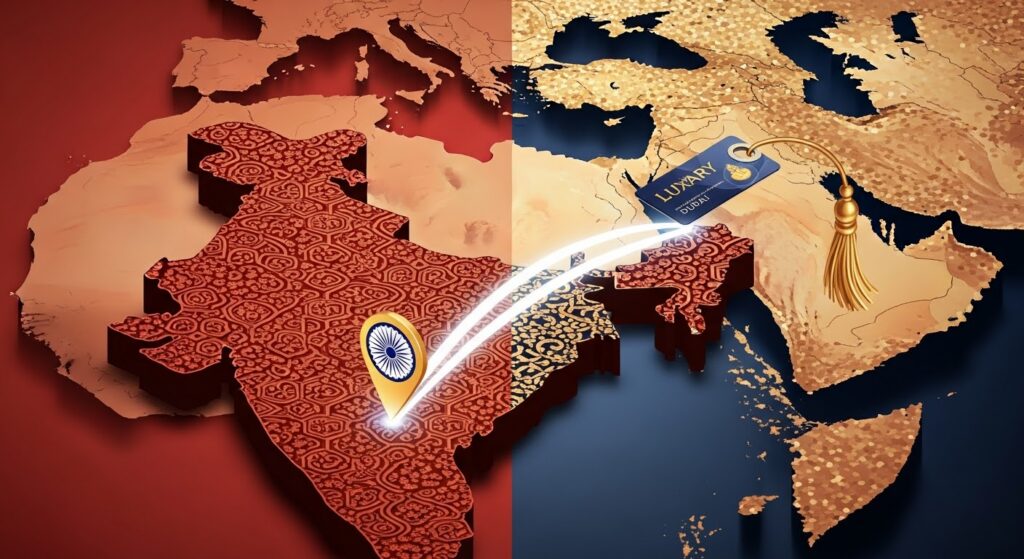
Currency arbitrage further strengthens this financial equation. Earnings denominated in UAE Dirhams or Saudi Riyals often carry substantial purchasing power when remitted to India for investments, savings, family support, or retirement planning. Professionals earning in stronger regional currencies while investing in Indian real estate, mutual funds, equities, education, or family businesses can accelerate wealth creation far more rapidly than would typically be possible through domestic income alone. Instead of merely increasing monthly consumption, many executives strategically deploy overseas earnings to reduce housing loans, purchase residential properties, establish commercial investments, finance children’s higher education, support aging parents, or build diversified investment portfolios. Over a decade, disciplined financial management combined with higher savings rates can create meaningful intergenerational wealth. This economic advantage explains why experienced hospitality executives increasingly evaluate international opportunities through the lens of long-term capital accumulation rather than short-term salary comparisons. Their objective is often financial independence, educational security for future generations, and accelerated asset creation rather than simply earning a larger paycheck.
The attractiveness of Middle Eastern hospitality roles also lies in the scale of operations being managed. Many luxury hotel executives in India have successfully led heritage palaces, city business hotels, iconic resorts, and convention properties with remarkable distinction. However, the new generation of Gulf tourism projects often operates at an entirely different scale. Integrated destinations combine multiple luxury hotels, branded residences, retail districts, entertainment venues, convention centers, marinas, golf courses, wellness facilities, cultural attractions, and transportation infrastructure into unified guest ecosystems. Managing such developments requires expertise extending beyond traditional hotel operations into urban planning coordination, digital infrastructure, sustainability integration, advanced security systems, predictive maintenance technologies, artificial intelligence applications, smart room ecosystems, automated guest engagement platforms, renewable energy utilization, water conservation systems, and sophisticated revenue optimization strategies. Executives overseeing these projects gain exposure to operational complexity rarely available elsewhere in the global hospitality sector. This experience dramatically enhances professional credibility because future employers recognize that managing a billion-dollar integrated destination demands competencies extending far beyond conventional hotel management.

Technology has become another defining factor in career acceleration. Hospitality is undergoing rapid digital transformation as artificial intelligence, machine learning, robotics, predictive analytics, Internet of Things infrastructure, facial recognition systems, digital concierge platforms, contactless check-in technologies, blockchain-enabled loyalty ecosystems, advanced cybersecurity frameworks, and personalized guest recommendation engines become integral components of luxury operations. Many new Middle Eastern hospitality developments incorporate these technologies from inception rather than retrofitting existing properties. Consequently, executives joining these projects participate in designing operating procedures around next-generation hospitality technology rather than adapting legacy systems. This exposure significantly increases professional market value because future hospitality leadership increasingly depends upon digital transformation expertise alongside traditional operational excellence. Executives who successfully integrate technology with personalized luxury service position themselves among the industry’s most sought-after leaders.
Indian hospitality professionals possess several competitive advantages that Middle Eastern developers particularly value. One of the most important is experience managing extremely diverse guest profiles. Indian luxury hotels regularly serve domestic business travelers, international tourists, wedding guests, government delegations, celebrities, multinational executives, religious pilgrims, and luxury leisure travelers simultaneously. Successfully balancing these varied expectations develops remarkable adaptability. Additionally, Indian managers frequently operate in environments characterized by high occupancy, complex banquet operations, elaborate destination weddings, extensive food and beverage programs, multicultural staffing, and dynamic customer expectations. These experiences cultivate resilience, problem-solving ability, operational discipline, and customer-centric thinking under pressure. Middle Eastern employers recognize that executives capable of consistently delivering exceptional guest experiences within such demanding environments possess leadership qualities that transfer effectively into international luxury operations.
Another distinguishing characteristic is India’s service culture. Hospitality in India has historically emphasized personalized relationships, emotional intelligence, cultural sensitivity, and anticipatory guest service. The philosophy that exceptional hospitality extends beyond procedural excellence into genuine human connection aligns strongly with luxury tourism expectations worldwide. Middle Eastern luxury properties seek leaders capable of embedding these values into multinational workforces comprising employees from dozens of nationalities. Creating unified service cultures across diverse teams requires communication skills, empathy, coaching ability, conflict resolution expertise, and inclusive leadership. Indian managers often excel in these areas because they have extensive experience coordinating employees from multiple linguistic, cultural, educational, and regional backgrounds within India’s own highly diverse workforce.
The professional prestige associated with participating in globally recognized mega projects cannot be underestimated. Hospitality executives increasingly seek opportunities where their contributions shape landmark developments rather than simply maintaining established operations. Being part of the founding leadership team for internationally celebrated tourism destinations creates enduring professional distinction. Opening a flagship luxury resort within a globally publicized destination becomes a defining career milestone recognized across the industry. Such experiences generate opportunities to speak at international conferences, participate in advisory panels, mentor emerging leaders, contribute to industry publications, and influence global hospitality best practices. Instead of managing an existing brand reputation, these executives help create entirely new luxury destinations from the ground up, leaving a permanent imprint on hospitality history.

Networking opportunities further enhance the appeal of Gulf hospitality careers. Luxury developments attract global investors, sovereign wealth fund executives, international architects, technology providers, sustainability experts, celebrity chefs, luxury retail brands, aviation partners, real estate developers, destination marketing organizations, and multinational hospitality corporations. Operating within this ecosystem dramatically expands professional networks. Relationships developed through these projects often generate future leadership opportunities across continents, creating career mobility extending well beyond the Middle East itself. Executives build reputations among decision-makers controlling billions of dollars in tourism investments, positioning themselves for future regional, global, or corporate leadership roles.
Lifestyle considerations also influence migration decisions. Modern expatriate packages increasingly prioritize quality of life alongside compensation. Luxury housing, family healthcare, safe urban environments, world-class infrastructure, international schools, efficient transportation, recreational amenities, multicultural communities, and international connectivity collectively reduce many challenges traditionally associated with overseas assignments. For families relocating together, these benefits create stability while enabling spouses and children to access educational and professional opportunities unavailable in many domestic settings. Consequently, relocation becomes a carefully planned family investment rather than a professional sacrifice. Employers understand this dynamic and increasingly design comprehensive relocation packages intended to ensure executives remain focused on operational success rather than logistical challenges.
Nevertheless, this migration also creates significant challenges for India’s hospitality industry. Losing experienced General Managers, department heads, and senior operational leaders generates leadership gaps that cannot easily be filled through internal promotions alone. Hospitality leadership requires years of practical experience across front office operations, housekeeping, engineering, food production, food and beverage service, finance, sales, marketing, revenue management, procurement, human resources, and guest relations. When multiple experienced executives depart simultaneously, organizations must accelerate leadership development programs while competing more aggressively to retain remaining talent. Salary structures, incentive plans, career progression pathways, leadership training investments, international exchange programs, employee well-being initiatives, and succession planning processes increasingly become strategic priorities rather than routine human resource functions.
Indian hotel companies are therefore reassessing traditional retention strategies. Competitive compensation remains important, but organizations increasingly recognize that ambitious executives also seek international exposure, strategic influence, technological innovation, and meaningful career progression. Several hospitality groups have expanded global mobility programs allowing high-potential leaders to gain overseas experience without permanently leaving their organizations. Others invest more heavily in executive education, leadership coaching, digital transformation training, sustainability certifications, and innovation initiatives designed to create intellectually stimulating career environments. The objective extends beyond matching overseas salaries toward building compelling long-term professional journeys capable of retaining top talent.
Educational institutions must also adapt. Hospitality management programs increasingly emphasize international business, digital transformation, sustainability leadership, multicultural workforce management, financial analytics, strategic asset management, and technology integration alongside traditional operational disciplines. Graduates entering the profession today will likely manage careers spanning multiple countries, cultures, and technological paradigms. Institutions preparing students exclusively for domestic hotel operations risk producing graduates insufficiently equipped for evolving global opportunities. Industry partnerships, international internships, exchange programs, simulation-based learning, and leadership development initiatives become essential components of future hospitality education.
The migration of Indian hospitality leaders also generates important benefits for India despite concerns regarding brain drain. Professionals who eventually return after years of international leadership often bring advanced operational knowledge, global best practices, technological expertise, financial discipline, sustainability capabilities, multicultural management experience, and international networks capable of transforming domestic hospitality organizations. These returning executives frequently assume corporate leadership positions, establish consulting firms, launch boutique hospitality ventures, mentor emerging professionals, invest in tourism infrastructure, or contribute to policy discussions regarding destination development. Their international experience strengthens India’s hospitality ecosystem through knowledge transfer rather than representing a permanent loss of expertise.
Entrepreneurial opportunities also emerge from this international exposure. Executives who accumulate financial capital alongside global operational knowledge may establish luxury resorts, boutique hotels, experiential travel companies, hospitality technology startups, management consulting firms, culinary ventures, wellness destinations, or specialized training academies upon returning to India. Such ventures contribute to employment generation, tourism development, and industry innovation while leveraging expertise acquired through overseas assignments. Thus, talent migration can ultimately stimulate domestic entrepreneurship if appropriate investment environments exist.
The broader geopolitical context reinforces these trends. Middle Eastern governments increasingly view tourism as a strategic economic diversification engine capable of generating employment, attracting foreign investment, enhancing global influence, and reducing dependence on energy revenues. Massive infrastructure investments demonstrate long-term commitment rather than temporary expansion cycles. Consequently, hospitality leadership demand appears likely to remain robust as new airports, convention centers, entertainment districts, museums, cultural attractions, cruise terminals, and integrated tourism destinations continue entering development pipelines. Experienced executives capable of delivering operational excellence across these assets will remain highly valued.

Sustainability further reshapes leadership expectations. Luxury hospitality increasingly incorporates renewable energy systems, water conservation technologies, circular economy practices, responsible sourcing, biodiversity protection, carbon reduction initiatives, and environmental certification frameworks into core operations. Middle Eastern mega projects frequently position sustainability as a foundational design principle rather than a regulatory obligation. Executives participating in these initiatives develop expertise increasingly essential across global hospitality markets as investors, regulators, and travelers prioritize environmental responsibility. Such knowledge enhances long-term career resilience within an industry experiencing accelerating sustainability transformation.
Another significant development involves the convergence of hospitality with real estate, entertainment, healthcare, sports, retail, and technology. Modern luxury destinations increasingly function as integrated lifestyle ecosystems rather than standalone hotels. Hospitality executives therefore collaborate closely with urban planners, architects, digital engineers, medical tourism specialists, event organizers, luxury retailers, transportation providers, and cultural institutions. This multidisciplinary environment broadens leadership competencies beyond traditional operational management into strategic destination development. Executives capable of coordinating these complex ecosystems become exceptionally valuable because they understand how hospitality contributes to broader economic development strategies.
Competition for leadership talent is expected to intensify further as additional tourism investments reach operational phases. Every newly completed luxury property requires experienced leadership teams capable of recruiting staff, implementing systems, establishing service standards, achieving financial performance targets, and building brand reputation. Since leadership development requires considerable time, demand consistently outpaces immediate supply. Recruitment firms specializing in hospitality executive search increasingly report strong interest in Indian candidates due to their operational experience, communication abilities, international adaptability, and demonstrated performance across premium hotel brands.
For aspiring hospitality professionals within India, this evolving landscape presents extraordinary opportunities alongside increased competition. Career planning increasingly emphasizes acquiring cross-functional expertise, international certifications, language skills, financial literacy, digital competence, sustainability knowledge, and leadership capabilities from early career stages. Professionals seeking future global mobility benefit from exposure across multiple departments rather than remaining narrowly specialized. Strong performance, continuous learning, technological adaptability, and international mindset become decisive differentiators in an increasingly global labor market.
The migration of Indian hotel managers should therefore be understood not as an isolated employment trend but as evidence of deeper structural changes transforming global hospitality. Capital flows increasingly determine where infrastructure is built, while talent flows determine who successfully operates that infrastructure. Middle Eastern investment has created unprecedented demand for proven hospitality leadership, and Indian professionals have emerged among the world’s preferred candidates due to decades of operational excellence developed within one of the planet’s most demanding service environments. This relationship reflects complementary strengths rather than simple labor migration: Gulf economies provide capital-intensive development opportunities while Indian hospitality contributes leadership, execution capability, and service expertise.